
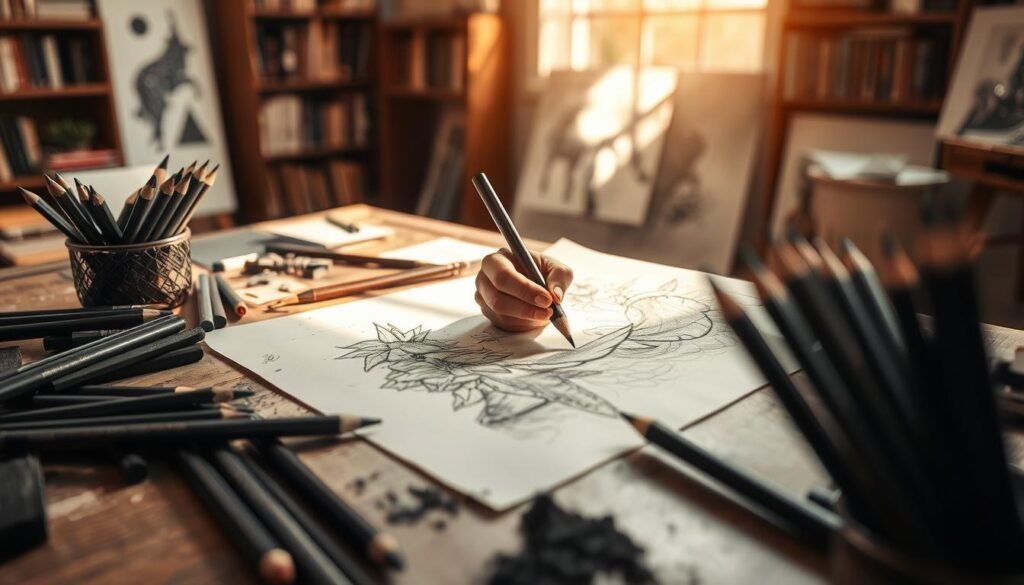
Did you know that over 70% of professional illustrators use some form of rich, dark medium to create foundational sketches? This simple fact highlights the incredible power and popularity of tools that offer deep, expressive marks.
We are thrilled to introduce you to a world where bold, expressive darkness meets precise control. This unique combination opens up a creative pathway for everyone. It is perfect for those just getting started and seasoned artists looking to refine their technique.
Our comprehensive guide will walk you through the entire creative journey. We begin with selecting the right materials and setting up your initial sketch. Then, we move on to advanced methods that add depth, texture, and a professional finish to your work.
Our approach blends technical know-how with supportive encouragement. We believe that understanding the core principles empowers you to experiment with confidence. This helps you develop your own unique artistic voice.
By the end of this resource, you will have a complete understanding of how to plan and execute compelling artwork. You will gain the practical knowledge to make your drawings truly stand out. We are here to support your creative journey every step of the way.
Key Takeaways
- This medium combines expressive darkness with the precision of a fine point.
- The guide is designed for all skill levels, from absolute beginners to experienced artists.
- You will learn the entire process, from the first sketch to the final polished piece.
- Gaining a solid foundation empowers confident experimentation and personal style development.
- The goal is to provide practical, actionable knowledge you can use immediately in your projects.
Exploring Art Materials and Tools
Choosing the right drawing tools is the first exciting step in bringing your artistic vision to life. We explain the main options so you can start with confidence.
Each type offers unique benefits for different stages of your work.
Understanding Vine Charcoal and Compressed Charcoal
Vine charcoal is made by burning grapevines without air. It creates soft, light gray marks.
These marks are easy to blend and erase. This makes them perfect for initial sketches.
Compressed charcoal is denser. It is made with binders like gum or wax.
It produces much darker, bolder lines. Softer versions give intense black tones. It is harder to remove from paper.
For a deeper dive into selecting your starter kit, see our guide on essential materials for charcoal drawing.
Benefits of Using Charcoal Pencils vs Traditional Sticks
Charcoal pencils contain compressed material inside a wood or paper case. They offer the best of both worlds.
You get the rich, dark tones of the medium. You also get the precise control of a fine point.
A key advantage is clean hands. They are ideal for detailed work and fine lines.
We suggest starting with a medium-soft grade, like a 2B or 4B. This provides a good balance of darkness and control.
| Tool Type | Best For | Key Characteristic | Erasability |
|---|---|---|---|
| Vine charcoal | Initial sketches, light shading | Soft, easily blended marks | High |
| Compressed Sticks | Bold lines, deep shadows | Intense, dark tones | Low |
| Charcoal Pencils | Fine details, controlled shading | Precision and clean handling | Medium |
We encourage you to experiment with all three. Each one brings a unique quality to your artwork.
Setting Up Your Composition
A strong foundation is the secret ingredient that transforms a simple sketch into a compelling finished piece. This phase is about making smart choices that support your entire creative journey.
We guide you through selecting the ideal surface and preserving your work. Proper setup gives you the freedom to create with assurance.
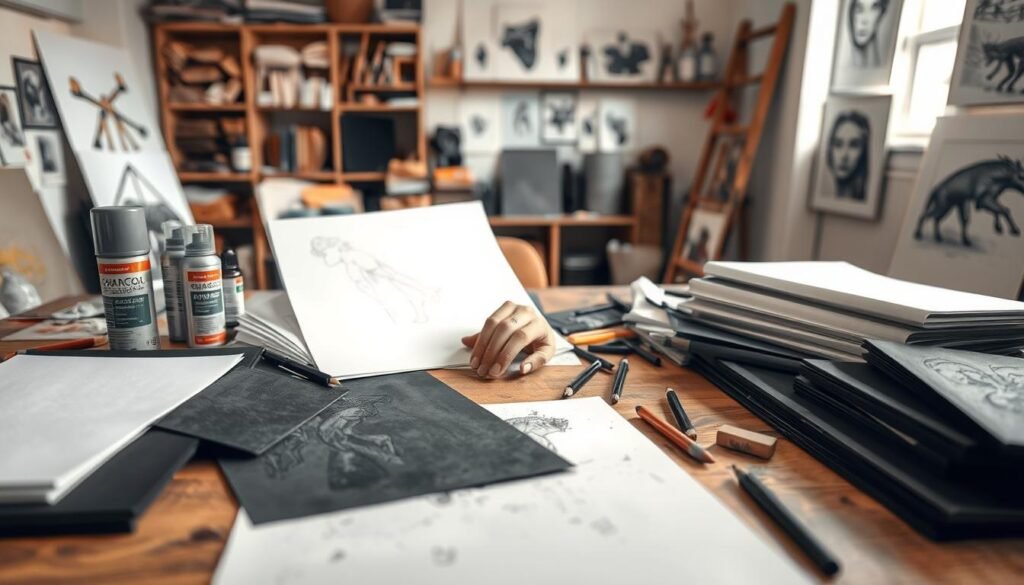
Planning Your Sketch and Layout
Begin your artwork with light, exploratory marks. This approach keeps your initial layout flexible.
Focus on establishing basic shapes and the relationships between your subjects. You can make adjustments easily before committing to darker, definitive lines.
Gradually increase pressure as your confidence in the arrangement grows. This method prevents difficult erasures later on.
Selecting the Right Paper and Fixative
Your choice of paper dramatically affects the final result. Different textures offer unique advantages for your artistic goals.
Rough-textured paper holds more pigment, creating richer tones and interesting textures. Smooth paper is better for highly detailed work.
We also love toned paper. It provides a mid-tone background, allowing you to add both dark shadows and bright highlights for instant depth.
To protect your creation from smudging, a quality fixative spray is essential. It sets the particles in place, allowing you to add layers safely.
| Paper Type | Best For | Surface Characteristic | Ideal Technique |
|---|---|---|---|
| Rough Texture | Bold, expressive marks and deep shadows | Toothy, grabs more material | Layering and blending |
| Smooth Surface | Fine details and precise control | Less tooth, even finish | Linear work and sharp edges |
| Toned Paper | Enhanced contrast and dynamic range | Mid-value base color | Working with both dark and light media |
Understanding these materials empowers you to build your artwork on a solid base. This leads to more successful and satisfying results.
Essential Techniques for Charcoal Pencil Composition
The way you handle your drawing tool can dramatically transform the mood and texture of your creations. We want to share core methods that build artistic confidence.
Applying Light Pressure for Subtle Marks
Developing sensitive touch with your hand is crucial. Start with gentle pressure during early stages.
This approach creates faint marks that are easy to adjust. As your confidence grows, gradually increase the force.
You’ll notice how darker lines emerge with more control. This method prevents permanent errors in your drawing.
Using Smudging and Erasing to Create Texture
Smudging transforms harsh edges into soft transitions. Use your finger or blending tools for smooth effects.
An eraser becomes a creative instrument when used strategically. It can lift pigment to reveal highlights and textures.
Experiment with different smudging techniques and eraser shapes. These methods add depth and realism to your artwork.
Advanced Methods and Artistic Effects
Sophisticated drawing techniques provide the tools to create compelling visual narratives through controlled mark-making and tonal development. We want to show you how subtle changes in approach can yield dramatically different artistic results.
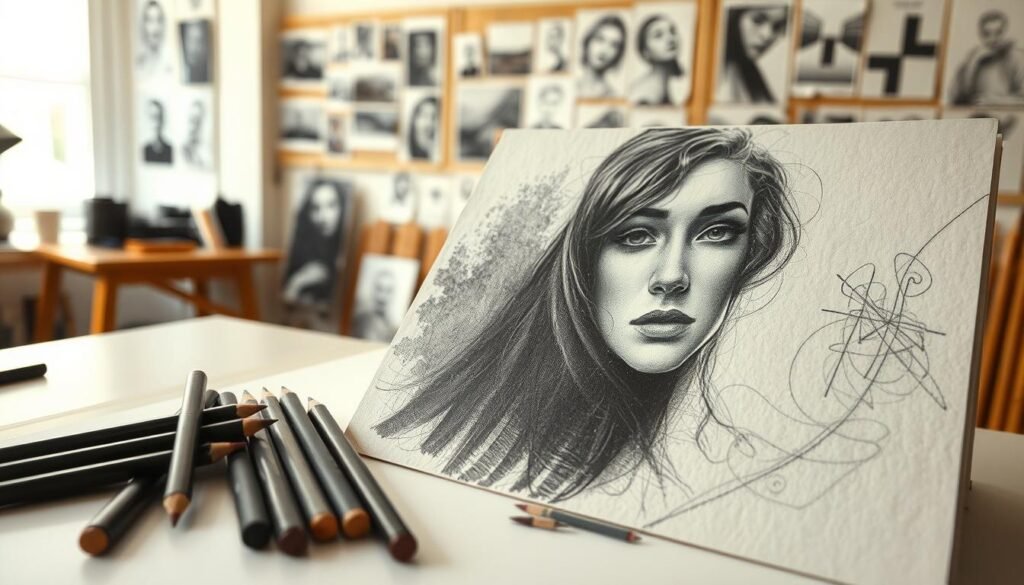
Experimenting with Drawing Grips and Angles
Changing how you hold your tools opens up a world of creative possibilities. A traditional writing grip offers precision for fine details and portrait work.
Try an overhand or underhand position for broader, more expressive strokes. This approach creates energetic marks that add movement to your work.
Varying the distance from the tip and the angle of contact produces different line qualities. You can achieve everything from delicate hairlines to bold, sweeping gestures.
Layering Techniques to Develop Depth and Contrast
Building your artwork through multiple applications creates rich, complex surfaces. Start with a light base layer using soft vine material.
Gradually add darker values with more intense sticks. This method establishes a foundation for pushing both shadows and highlights.
Strategic erasing reveals lighter areas, creating atmospheric effects. For comprehensive guidance on these advanced approaches, explore our complete charcoal drawing guide.
Always protect your finished work with fixative spray. This preserves all the carefully built layers and textures.
Conclusion
As we conclude this exploration of artistic techniques, remember that every mark you make builds your unique style. The journey from initial sketches to finished pieces is one of continuous growth and discovery.
We’ve shared how proper material selection and fundamental methods create a solid foundation for your creative work. Understanding pressure control, blending, and strategic erasing empowers you to handle various subjects with confidence.
The range of effects achievable with this medium—from delicate lines to rich, velvety tones—offers incredible versatility for your artistic expressions. Each drawing becomes an opportunity to explore new forms and textures.
Keep this guide handy as you progress. The techniques that challenge you today will become second nature with practice. Your most important tool remains a willingness to experiment and enjoy the creative process.
FAQ
What is the main difference between vine and compressed charcoal?
Why should I choose charcoal pencils over traditional sticks?
How do I select the best paper for my charcoal drawing?
When should I use a fixative spray on my artwork?
What techniques help create soft textures and smooth gradients?
How can I add depth and contrast to my charcoal composition?
