

Did you know that a single drawing tool can produce over 50 distinct shades of gray? This incredible range is what makes charcoal such a powerful and beloved medium for creators. It bridges the gap between a simple sketch and a masterpiece filled with emotion and depth.
We understand that selecting the right tools can completely transform your creative journey. Whether you are just starting out or have years of experience, the right supplies make a significant difference. They help you achieve rich, expressive marks on paper with confidence.
This guide is crafted to help you navigate the diverse options available. We combine hands-on testing with technical insights from working artists. Our goal is to provide honest, practical advice that goes beyond basic product descriptions.
You will learn what makes certain products stand out for professional results. We explore everything from fundamental characteristics to specific brands that deliver consistent quality. This knowledge empowers you to invest in tools that truly support your creative vision.
Key Takeaways
- The right drawing tools significantly impact the quality and expressiveness of your work.
- Charcoal offers an exceptional range of values, ideal for creating depth and drama.
- This guide is based on real-world testing and expert artist experiences.
- We provide insights tailored for all skill levels, from beginner to professional.
- Understanding the core characteristics of the medium helps in making an informed choice.
- Our recommendations aim to match your specific creative needs and budget.
Introduction to Charcoal Pencils and Their Appeal
What connects the preparatory sketches of the Old Masters to the dynamic studies of modern illustrators is a remarkably adaptable material. This medium offers a direct and physical connection to the creative process. We find its capacity for both bold statements and subtle nuances truly inspiring.
The Versatility of Charcoal in Art
The core strength of this medium lies in its incredible range. Artists can achieve everything from faint, whisper-light lines to intense, velvety blacks. This full tonal spectrum is essential for creating depth, drama, and realistic form.
Unlike graphite, which can have a metallic shine, this tool produces matte finishes. This quality allows for richer darks and a more natural representation of shadow. It is perfectly suited for studies in light and form.
We see its application in quick gesture sketches and highly detailed portraits. The material responds beautifully to different techniques, like blending and erasing. This flexibility makes it a foundational tool for learning and mastering value relationships.
Historical Context and Artist Experiences
This drawing material has a rich history in studios across the globe. Its forgiving nature makes it excellent for initial concepts and finished works alike. The experience is tactile and immediate, connecting the artist’s hand directly to the paper.
It is available in several forms, each with unique properties. Understanding these options helps artists select the right tool for their vision.
| Type | Primary Characteristic | Ideal For |
|---|---|---|
| Willow & Vine Sticks | Soft, crumbly, very light value | Initial sketches, large areas |
| Compressed Sticks | Denser, darker, more durable | Bold lines, intense shadows |
| Carbon Pencils | Blend of charcoal and graphite; oily binder | Controlled detail, smooth application |
Carbon pencils, for instance, blend this medium with graphite. They use an oilier binder, resulting in a distinctively soft feel. Many artists enjoy this unique combination for its control and rich marks.
Exploring the Best Charcoal Pencils
The market offers numerous options for creators, but only a few manufacturers consistently meet the demands of serious artists. We focus on tools that provide reliable performance across different techniques and paper types.
Featured Brands and Their Unique Qualities
After extensive testing, two standout products emerge for Indian artists. General’s charcoal pencils deliver rich, deep blacks with their characteristic dry texture. They blend beautifully and erase reasonably well.
We particularly recommend the 4B and 6B grades from this brand. The softer cores create smoother applications without scratching delicate papers.
For those new to this medium, Conte Pierre Noire offers excellent control. These tools behave like compressed charcoal but with less mess. Their slightly waxier composition makes them perfect for developing confidence.
How Product Roundups Help in Choosing the Right Tools
Side-by-side comparisons eliminate guesswork when selecting art supplies. They reveal subtle differences in texture, blendability, and how each product interacts with various papers.
This approach helps match your specific needs with the right tools. Whether you’re building a complete set or adding individual items, informed choices support your creative growth.
Understanding the unique qualities of each brand ensures every purchase contributes meaningfully to your artistic practice.
Criteria for Evaluating Charcoal Pencil Quality
Our evaluation process focuses on seven key factors that determine how well Charcoal Pencils perform in real artistic scenarios. These criteria help us identify tools that support rather than hinder your creative expression.
Comfort, Ease of Use, and Design
We start with how the tool feels in your hand. A well-designed pencil should have comfortable weight and balance. This allows for extended drawing sessions without fatigue.
The shape and size matter greatly for control. We examine whether the design supports precise line work and broad shading equally well.
Smoothness, Blendability, and Erasability
Smooth application is essential for quality artwork. We test whether each pencil glides across paper without scratching. The mark should be consistent and uninterrupted.
Blendability determines how well charcoal responds to mixing tools. Good products create seamless gradations rather than patchy results.
Erasability is crucial for corrections. We compare how completely different brands lift from paper using kneaded erasers. Minimal residue indicates higher quality.
We also evaluate the range of available grades within each brand. A proper selection should include soft options for deep blacks and harder choices for light values. Consistency across the same grade ensures predictable performance.
Comparative Analysis: General’s vs Conte Pierre Noire
Our hands-on comparison between General’s and Conte Pierre Noire tools uncovered distinct characteristics that serve different creative needs. We conducted side-by-side testing on identical drawing paper surfaces to ensure fair, accurate results.
Test Methods and Quick Gradation Techniques
We immediately noticed physical differences between these brands. Conte Pierre Noire products are slightly thicker and heavier than General’s tools.
Our quick gradation technique involved drawing value scales from light to dark with each grade. This revealed each brand’s natural comfortable range on the same paper.
Smoothness testing yielded balanced results. Both brands offer essentially equivalent application smoothness, with any perceived differences likely due to natural variations.
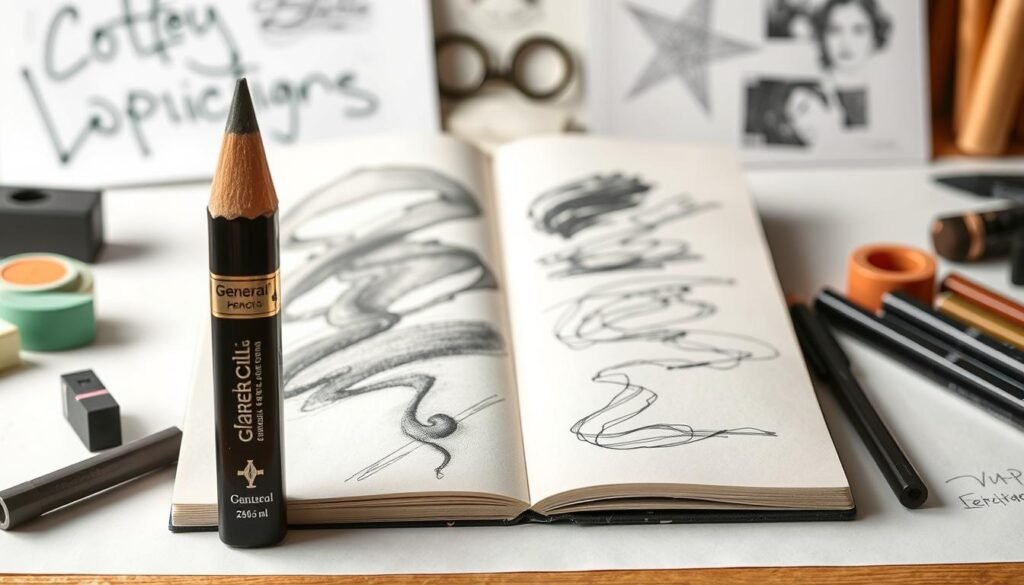
Observations on Range, Consistency, and Mixing with White Pencils
Both brands meet professional standards for range and consistency. Conte Pierre Noire’s four-grade selection provides the minimum range we recommend for serious drawing.
Blendability testing revealed General’s is more powdery and blends with less effort. However, Conte products retain their value better during blending.
The white pencil mixing test produced dramatically different results. General’s combined with their white tool created significantly brighter, more integrated tones.
We recommend Conte Pierre Noire for beginners and students due to their cleaner, easier control. General’s tools suit experienced artists needing rich blacks at an excellent price.
Mastering Techniques with Charcoal Tools
The journey from basic marks to expressive artwork involves developing a personal relationship with your materials. We find that successful artists treat their tools as partners in creation rather than just implements.
Effective blending transforms flat areas into dimensional forms. The right tools make all the difference:
- Soft brushes create subtle atmospheric effects
- Tortillons offer precise control in small areas
- Chamois cloth works beautifully for large tonal passages
- Fingers provide immediate, intuitive connection
Effective Blending and Value Gradation
Building values gradually through layering creates smooth transitions. Pressing harder often damages the surface and creates uneven results.
Start with lighter grades for initial tones. Progress to softer options for richer darks. Consistent stroke direction maintains harmony across your composition.
Practical Tips for Beginners and Experienced Artists
New artists should begin with middle-grade tools on smooth surfaces. Simple exercises like sphere studies build essential control.
Seasoned creators can explore combining compressed sticks with finer instruments. This approach allows for bold statements alongside delicate details. The medium’s forgiving nature encourages experimentation and spontaneous mark-making.
Matching your paper choice to your artistic goals significantly impacts results. Textured surfaces grab pigment aggressively for dramatic effects, while smooth sheets enable subtle gradations.
Additional Drawing Supplies and Essential Tips
Your drawing tools are only part of the equation for creating stunning artwork. The right supporting materials can make the difference between frustration and fluid creative expression.
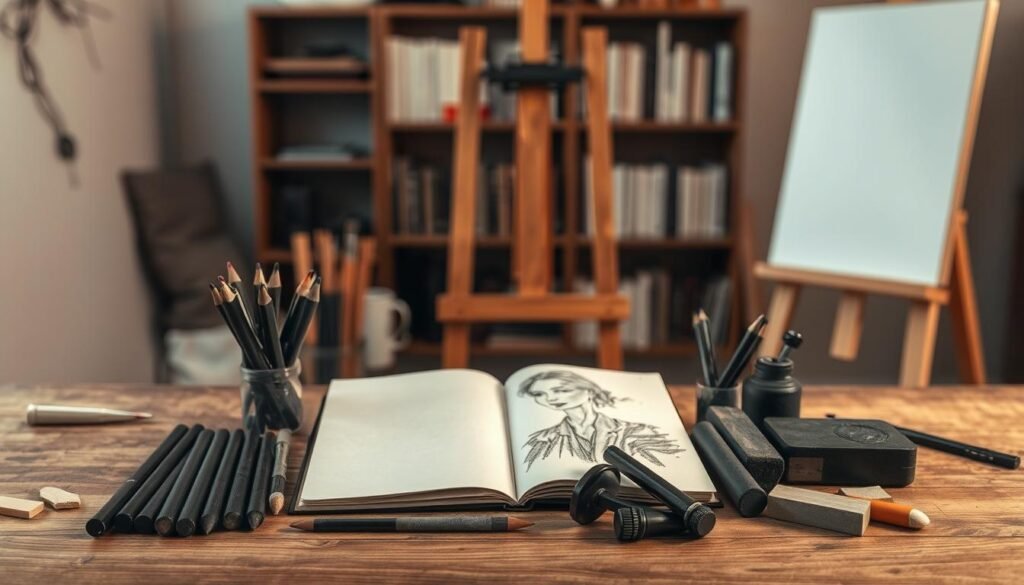
We believe in building a complete toolkit that supports your entire creative process. This approach ensures you have everything needed for both experimentation and finished pieces.
Complementary Materials: Paper, Kneaded Erasers & More
Paper selection dramatically affects your results. Smooth drawing paper works beautifully for detailed work, while textured watercolor paper handles aggressive techniques.
A quality kneaded eraser becomes an active drawing tool rather than just a correction device. It lifts pigment gently and can be shaped for precise highlight work.
For beginners, the Cretacolor Charcoal Drawing Set offers excellent value. This comprehensive collection includes multiple grades of compressed charcoal, Nero pencils, graphite sticks, and essential tools.
The set’s thoughtful organization helps students explore different techniques without overwhelming choices. It provides a solid foundation for building your personal supply stock.
When considering price, we recommend starting with versatile essentials. A mid-range drawing set, smooth paper, and kneaded eraser create an effective starter kit.
As you grow, add specialized items like fixative spray and blending stumps. This gradual approach ensures each new tool genuinely enhances your unique artistic voice.
Conclusion
We believe the most valuable art supplies are those that disappear in your hand, letting creativity flow freely. Our comprehensive testing reveals that both General’s and Conte Pierre Noire tools achieve this ideal balance beautifully.
The right choice depends entirely on your artistic journey. Beginners will appreciate Conte Pierre Noire’s clean handling, while experienced creators may prefer General’s rich blending capabilities. Both offer exceptional quality for their price.
Remember that your complete setup extends beyond individual instruments. Consider comprehensive options like the Cretacolor set that bundle essential supplies together. This approach supports full creative exploration.
We encourage you to start with our recommended brand that matches your skill level. Practice consistently and let your unique artistic voice guide your tool selection. The perfect drawing companion should feel like a natural extension of your vision.
As you continue developing your skills, revisit this guide whenever you consider new techniques or brands. We remain committed to supporting your creative growth with tested, reliable recommendations.
FAQ
What is the main difference between a charcoal pencil and a graphite pencil?
Are charcoal pencils suitable for beginners?
What type of paper works best with charcoal drawing supplies?
How do I prevent my charcoal sketches from smudging?
Can I blend charcoal with other media like graphite or conte pierre noire?
What is the advantage of a kneaded eraser over a standard vinyl eraser for charcoal techniques?
