
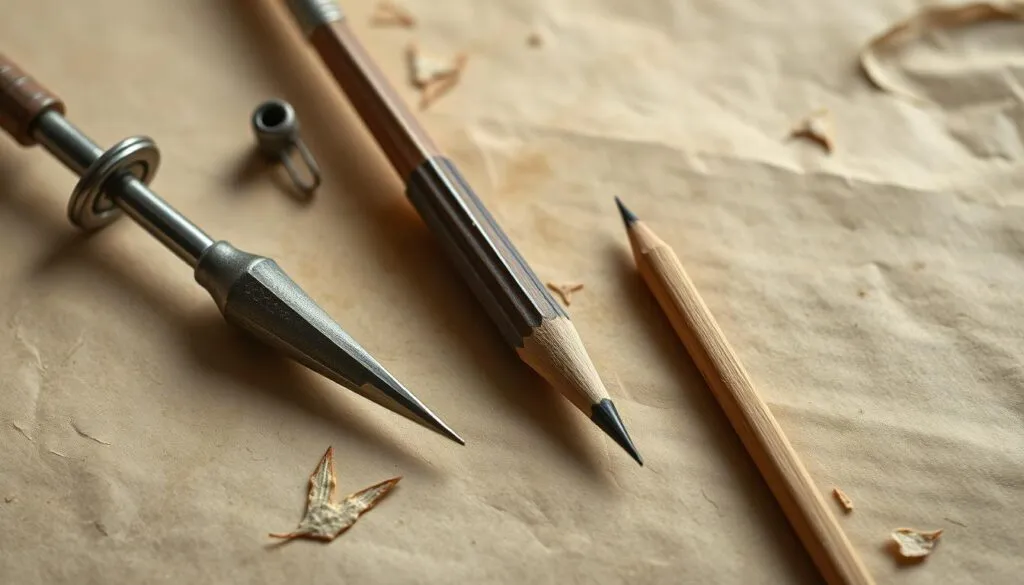
The humble pencil, a tool we often take for granted, has a rich and fascinating history spanning centuries. From ancient writing implements to modern precision instruments, the pencil has evolved alongside human civilization, shaping how we communicate, create art, and record our thoughts. Despite living in a digital age, this simple tool continues to hold its ground as an essential instrument for artists, students, and professionals worldwide. Join us as we trace the remarkable journey of the pencil through time and discover how this unassuming writing tool has left an indelible mark on human history.
The Evolution of Writing Instruments
Ancient writing tools that preceded the modern pencil
Ancient Writing Tools
Long before the pencil came into existence, humans used various tools to record their thoughts and ideas. The earliest writing implements date back to ancient civilizations, where people used sharp sticks to make marks on clay tablets. The Romans developed the stylus, a thin metal stick used for scratching on wax tablets. This tool allowed for corrections, as the wax could be smoothed over to erase mistakes.
In ancient Egypt, reed pens were dipped in ink to write on papyrus scrolls. Meanwhile, in Asia, brushes made from animal hair were used with ink to create beautiful calligraphy. These early writing tools required considerable skill to use effectively and often needed additional materials like ink pots, making them less portable and convenient than modern writing instruments.
The Shift from Quills to Pencils
By the Middle Ages, quill pens made from bird feathers became the dominant writing tool in Europe. Typically crafted from goose, swan, or turkey feathers, quills required regular sharpening and a constant supply of ink. While effective for writing, they were messy and impractical for many everyday uses.
The word “pencil” actually predates the graphite writing tool we know today. Derived from the Latin word “penicillus” meaning “little tail,” it originally referred to fine brushes used by artists. These early artist pencils were essentially small brushes made from camel hair, used for detailed work in painting and writing.
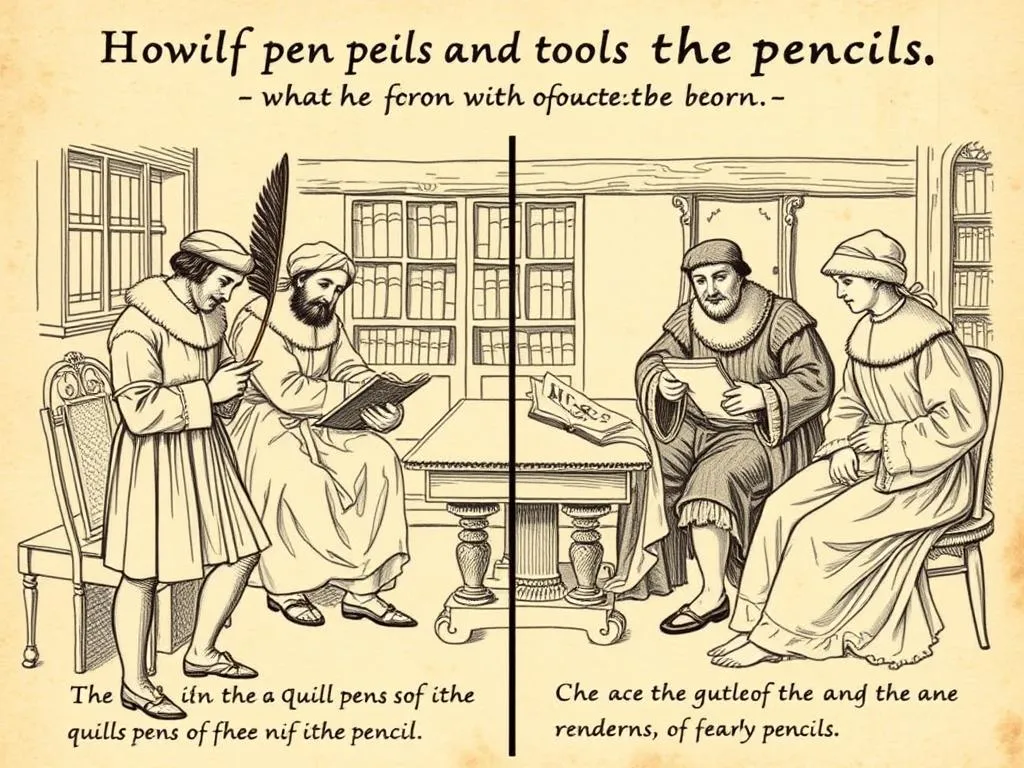
The transition from quill pens to early pencils in the 16th century
The advantages of early pencils over quills were significant. They didn’t require ink, were less messy, could be easily erased, and maintained their writing ability in various conditions. These benefits would eventually lead to the pencil becoming one of the most widely used writing instruments in the world.
The Birth of the Modern Pencil
Graphite Discovery
The history of the pencil as we know it began with a remarkable discovery in Borrowdale, Cumbria, England in the mid-16th century. According to local lore, a violent storm uprooted a large tree, revealing a strange black substance clinging to its roots. This substance was pure graphite – though at the time, it was mistakenly identified as a form of lead, which is why we still refer to pencil cores as “leads” today.
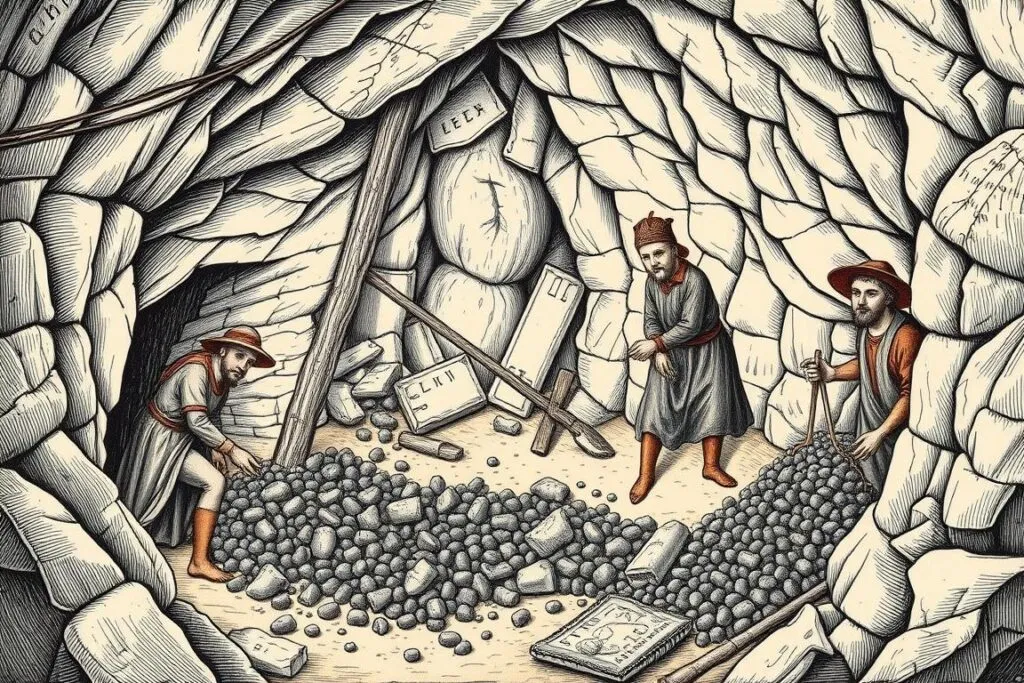
The Borrowdale graphite mine in Cumbria, England – birthplace of the modern pencil
What made this discovery particularly significant was that the Borrowdale deposit contained graphite in an unusually pure, solid form. Most graphite deposits around the world occur as flaky material mixed with other minerals, but the Borrowdale graphite could be sawn into sticks and used directly for writing and drawing. Local shepherds initially used it to mark their sheep, but its potential as a writing instrument was quickly recognized.
The value of this graphite soon became apparent for other applications as well. It was excellent for lining molds used to cast cannonballs, making it strategically important for military purposes. The British Crown took control of the mines, posting armed guards and even deliberately flooding them when not in use to prevent theft. Despite these precautions, graphite smuggling became common, with some historians suggesting that the term “black market” originated from the black hands of graphite smugglers.
The Pencil’s Design Evolution
Early pencils were simply sticks of pure graphite wrapped in string or sheepskin for handling. Around 1560, an Italian couple named Simonio and Lyndiana Bernacotti made a significant innovation by hollowing out juniper wood to create the first wooden pencil casing. This design protected the fragile graphite and made the pencil more comfortable to hold.
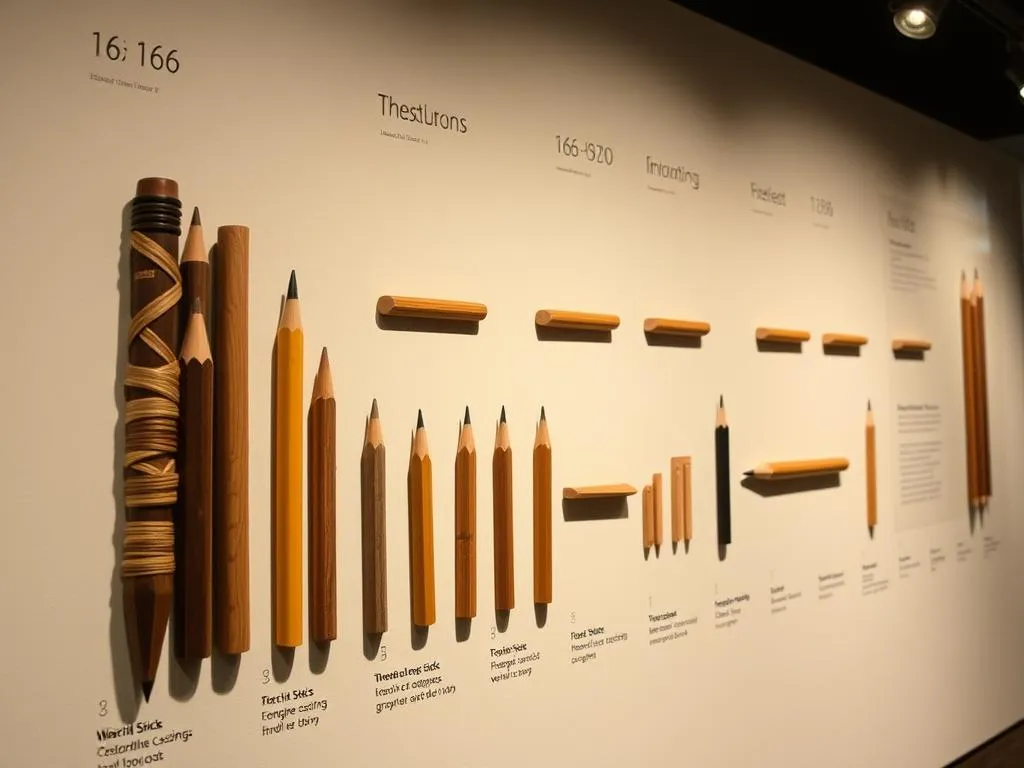
Evolution of pencil designs from wrapped graphite sticks to modern wooden casings
A major breakthrough came in 1795 when French scientist Nicolas-Jacques Conté developed a method of mixing powdered graphite with clay, forming the mixture into sticks, and firing them in a kiln. By varying the ratio of graphite to clay, he could produce pencils of different hardness levels – more clay created harder pencils that made lighter marks, while more graphite resulted in softer pencils that made darker marks.
This innovation was partly driven by necessity. During the Napoleonic Wars, France was unable to import English graphite due to a British naval blockade. Conté’s method meant that even lower-quality graphite could be used to create excellent pencils. Around the same time, Austrian Joseph Hardtmuth developed a similar process, founding what would later become the Koh-I-Noor Hardtmuth company.
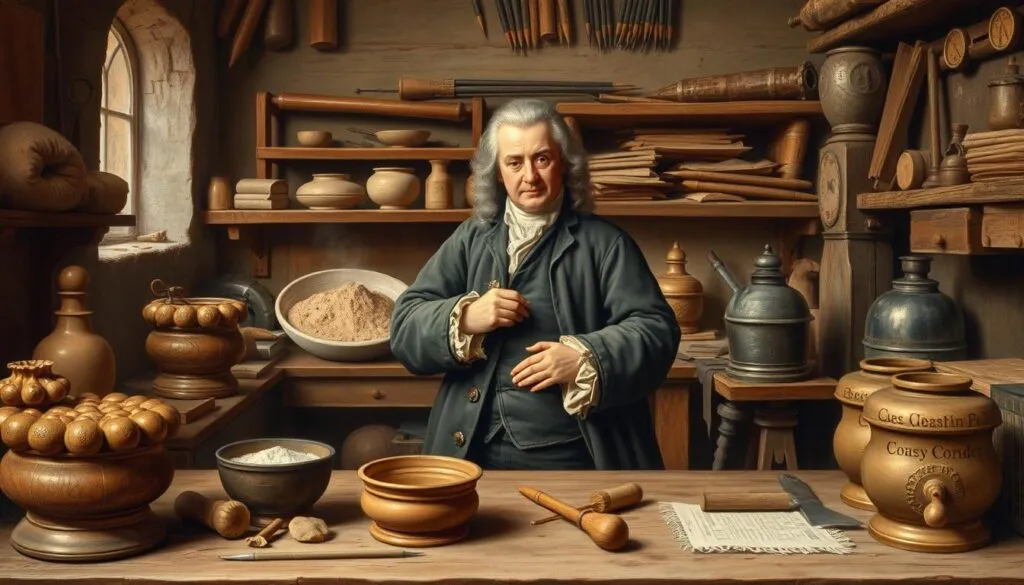
Nicolas-Jacques Conté, whose innovations revolutionized pencil manufacturing
Another significant development was the addition of erasers. In 1858, American Hymen Lipman received a patent for attaching an eraser to the end of a pencil. Although his patent was later invalidated, the eraser-tipped pencil became a standard design that continues to this day.
Explore Historical Writing Tools
Discover how ancient writing implements evolved into the tools we use today. Our comprehensive guide traces the development of writing instruments throughout human history.
The Pencil in Art and Education
The Role of Pencils in Artistic Creation
The pencil revolutionized the world of art by providing artists with a versatile tool that could create everything from the faintest lines to the deepest shadows. The development of different hardness grades, from the soft, dark 9B to the hard, light 9H, gave artists unprecedented control over their mark-making.
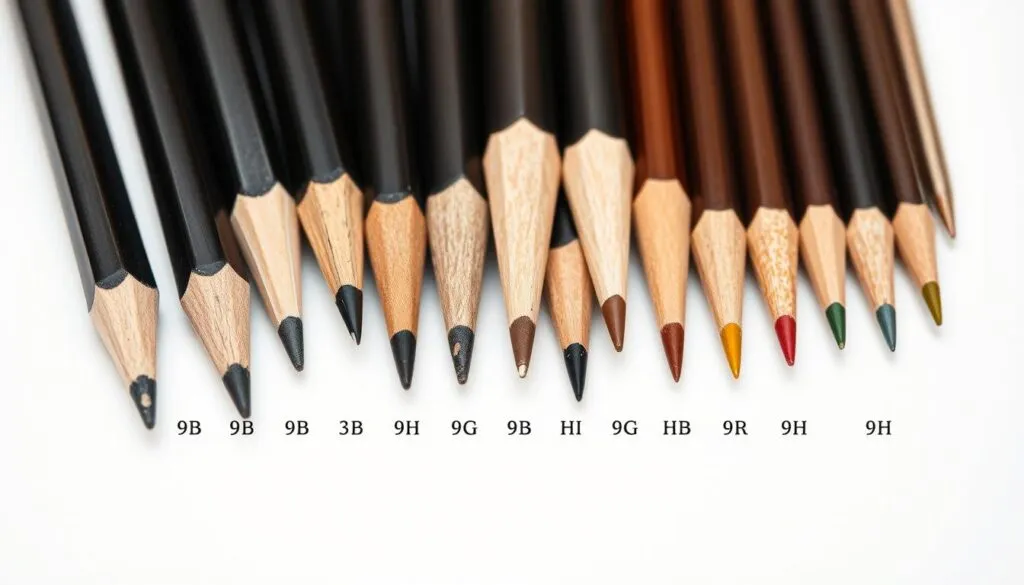
The spectrum of graphite pencil grades from 9B (softest) to 9H (hardest)
Many renowned artists throughout history have relied on pencils for their work. Leonardo da Vinci used metalpoint, a precursor to the graphite pencil, for many of his sketches. Later artists like Michelangelo, Rembrandt, and Vincent van Gogh all used graphite pencils extensively in their preliminary sketches and studies.
In India, the tradition of pencil artistry has flourished, with artists like K.G. Subramanyan and Jogen Chowdhury creating remarkable works using this humble medium. The accessibility and versatility of the pencil have made it an essential tool for artists across all cultural backgrounds and artistic traditions.
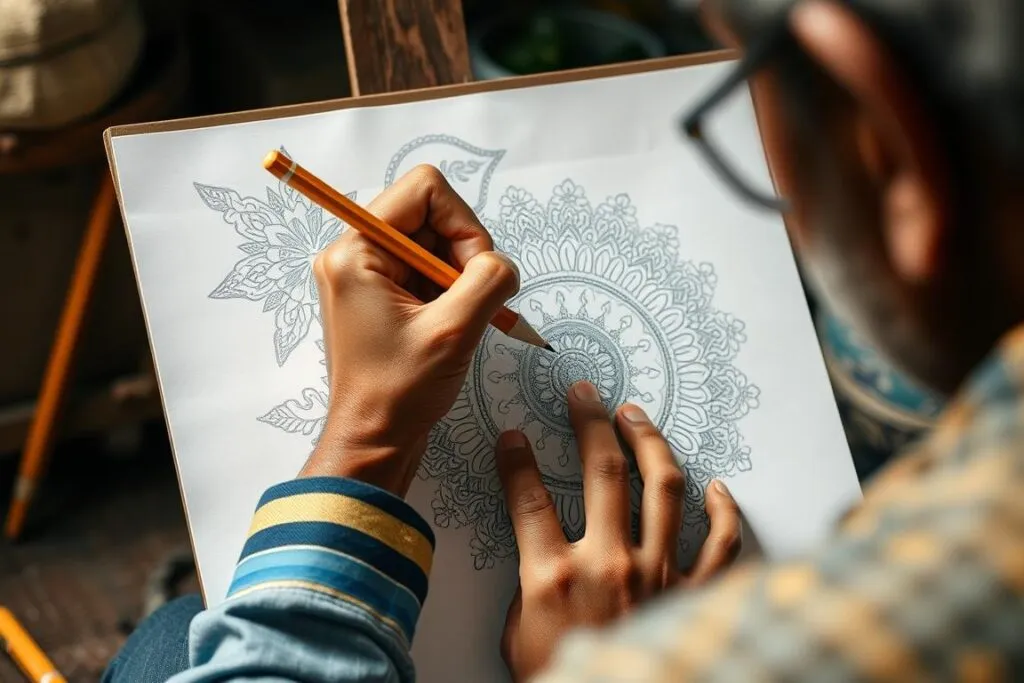
Contemporary Indian artist creating detailed pencil artwork with traditional motifs
The pencil’s importance in art extends beyond just drawing. It’s often the first tool used in the creative process, allowing artists to sketch ideas, plan compositions, and work out problems before committing to more permanent media. This planning stage is crucial for everything from painting and sculpture to architecture and design.
Pencils in Academic Testing
The standardization of pencils, particularly the HB or #2 pencil, has made them essential tools in education and testing. The graphite’s ability to be easily erased and its consistent mark-making properties made it ideal for students and test-takers.

Students using standardized HB pencils for academic testing in India
The development of optical mark recognition (OMR) technology in the mid-20th century further cemented the pencil’s role in education. Standardized tests could now be scored by machines that detected the graphite marks on answer sheets. The #2 pencil became the standard for these tests because it made marks dark enough to be read by the machines while still being easily erasable.
In India, pencils have been integral to the education system for generations. From the iconic Nataraj and Apsara pencils that have been staples in Indian classrooms to the modern mechanical pencils used by engineering and architecture students, these writing instruments continue to play a vital role in learning and assessment.
Perfect Your Pencil Techniques
Whether you’re an aspiring artist or looking to improve your drawing skills, quality pencils make all the difference. Explore our selection of professional-grade drawing pencils.
The Global Impact of the Pencil
The Pencil in Various Cultures
While the modern pencil originated in Europe, it quickly spread worldwide, with each culture adapting and integrating it into their writing and artistic traditions. In Japan, the pencil complemented traditional brush calligraphy, leading to the development of high-quality pencil manufacturers like Mitsubishi and Tombow that are renowned globally today.
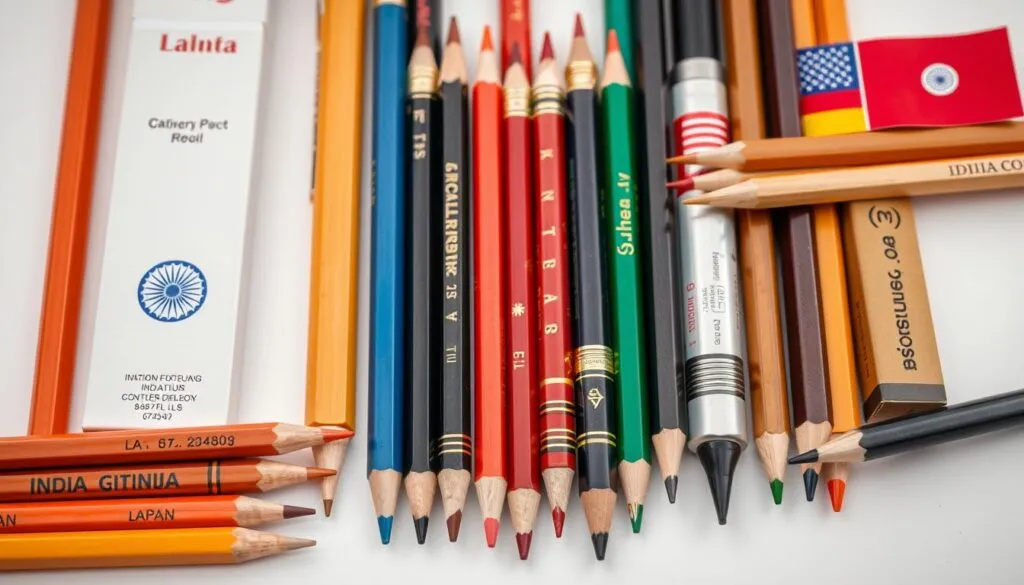
Pencils from around the world showing cultural variations in design and branding
In India, the pencil has a particularly interesting history. The Indian pencil industry began to flourish in the post-independence era, with companies like Hindustan Pencils (makers of Nataraj and Apsara brands) becoming household names. These distinctively colored pencils – often dark red with black bands – have become iconic in Indian education and culture.
Unlike the yellow pencils common in America, pencils in different countries often feature distinctive colors and designs. German pencils are frequently green or blue (influenced by Faber-Castell’s branding), while Indian pencils traditionally feature dark red with black stripes. These regional differences reflect local preferences and manufacturing traditions.
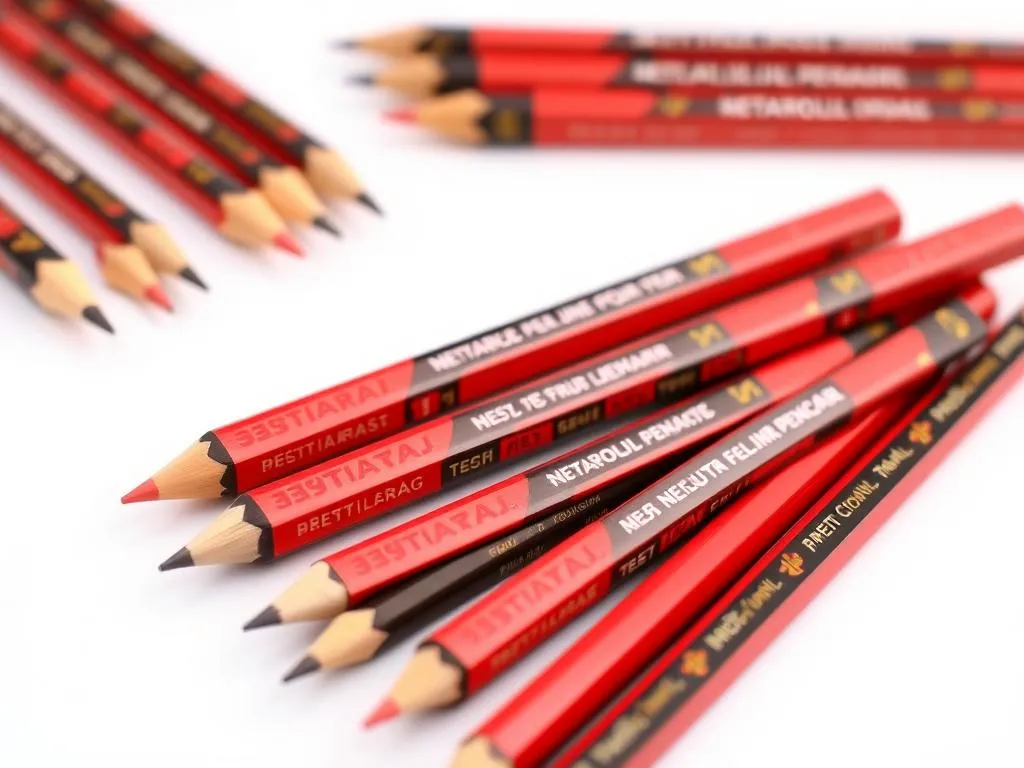
Iconic Indian Nataraj and Apsara pencils with their distinctive red and black design
Economic Influence of Pencil Manufacturing
The pencil industry has had significant economic impacts globally. Major manufacturers like Faber-Castell (Germany), Staedtler (Germany), Dixon Ticonderoga (USA), and Hindustan Pencils (India) employ thousands of workers and contribute substantially to local economies.
In India, Hindustan Pencils has grown to become one of the world’s largest pencil manufacturers, producing over 8 million pencils daily at their factories in Umbergaon (Gujarat) and Jammu. The company exports to over 50 countries, making it a significant contributor to India’s manufacturing sector.
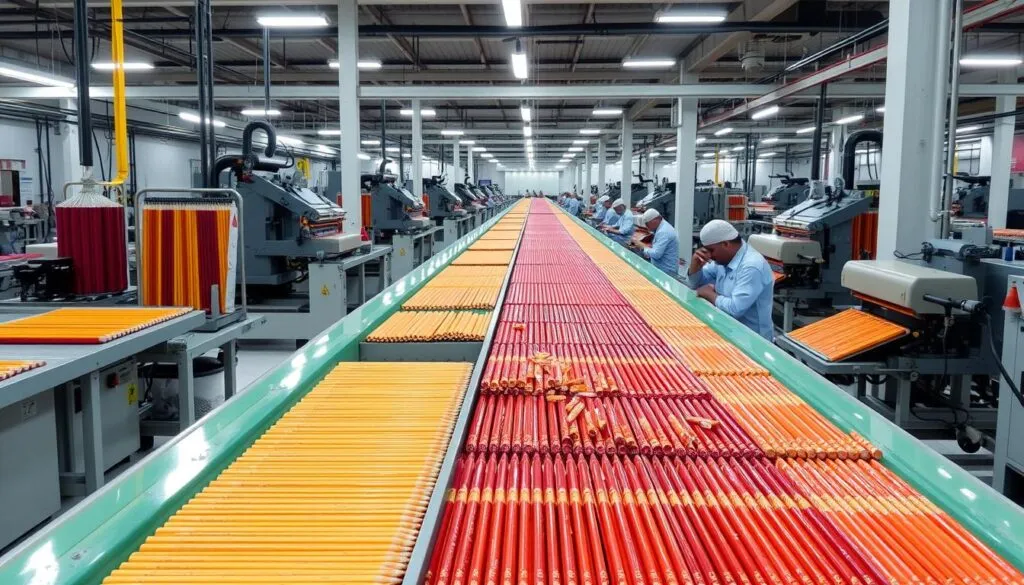
Modern pencil manufacturing facility in India producing millions of pencils daily
The pencil supply chain is truly global. Cedar wood might come from California or Oregon, graphite from China or Mexico, clay from various global sources, and rubber for erasers from Southeast Asia. This interconnected production network demonstrates how even seemingly simple products rely on complex global trade relationships.
Despite the rise of digital technologies, the global pencil market continues to grow. According to industry reports, the worldwide pencil market is projected to expand at a steady rate, driven by educational needs, artistic applications, and the enduring practicality of this simple writing tool.
“The pencil is one of the most elemental human tools. It embodies simplicity, utility, and sustainability – qualities that transcend cultural boundaries and technological change.”
The Future of the Pencil
Innovations in Pencil Design
Despite being centuries old, the pencil continues to evolve with new innovations and designs. Modern developments include ergonomic shapes for improved comfort, color-changing pencils that indicate temperature, and even pencils with seeds embedded in the end that can be planted after the pencil becomes too short to use.
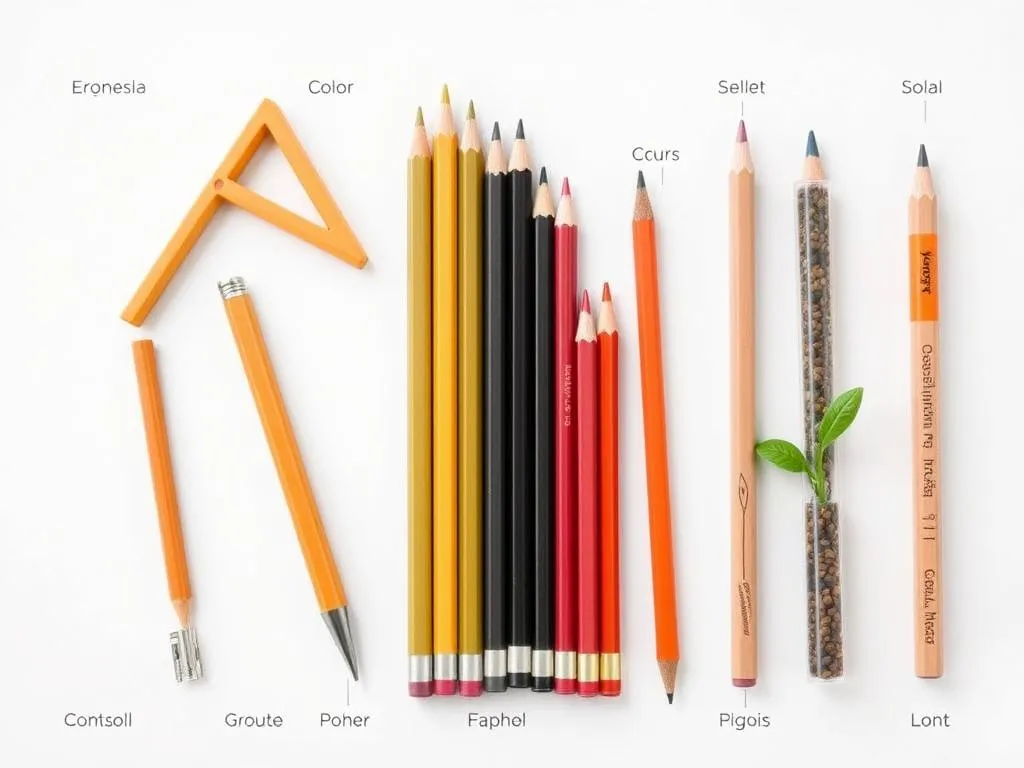
Modern innovative pencil designs including ergonomic shapes and plantable pencils
Digital technology has also influenced pencil design. The development of styluses that mimic the feel and function of traditional pencils allows artists and writers to work on digital devices while maintaining the familiar experience of using a pencil. Products like the Apple Pencil and various graphic tablet styluses bridge the gap between traditional and digital creation.
In India, companies are developing pencils with special features tailored to local needs. These include pencils with built-in protection against bacteria, pencils designed to be more resistant to India’s humid climate, and pencils with innovative grips to help young students develop proper writing technique.
Sustainability in Pencil Production
As environmental concerns grow, the pencil industry has been adapting to more sustainable practices. Many manufacturers now use wood from certified sustainable forests or alternative materials like recycled paper, plastic, or even newspaper.
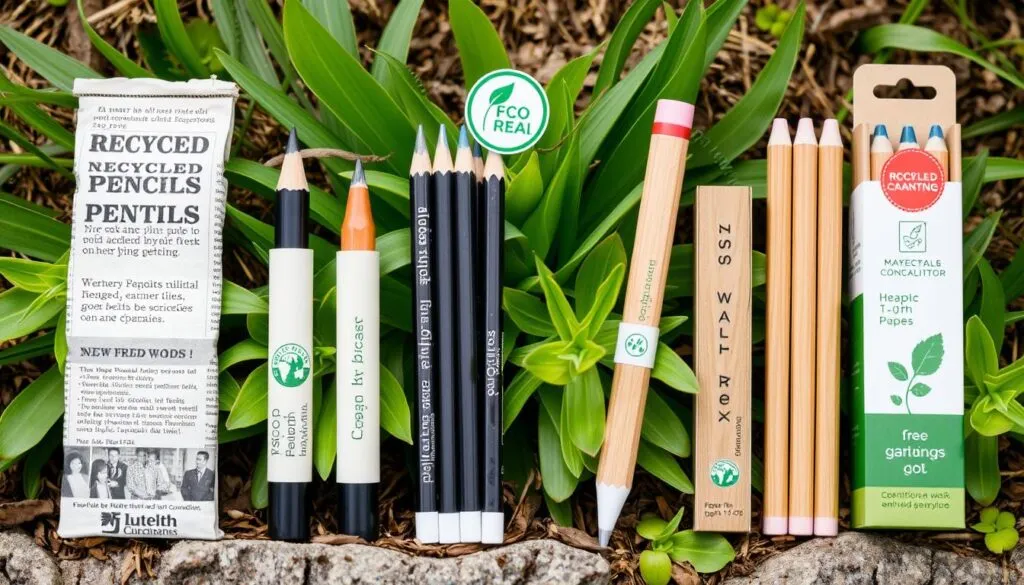
Eco-friendly pencils made from recycled materials and sustainable wood sources
Some innovative companies have developed pencils that can be planted after use. These pencils contain seed capsules at the end, allowing them to grow into herbs, vegetables, or flowers when planted. This approach transforms what would be waste into new life, embodying circular economy principles.
In India, where environmental challenges are particularly pressing, pencil manufacturers are increasingly adopting greener practices. Hindustan Pencils has implemented water recycling systems and energy-efficient machinery in their production facilities. Other Indian companies are exploring locally-sourced alternative materials to reduce the carbon footprint of pencil production.
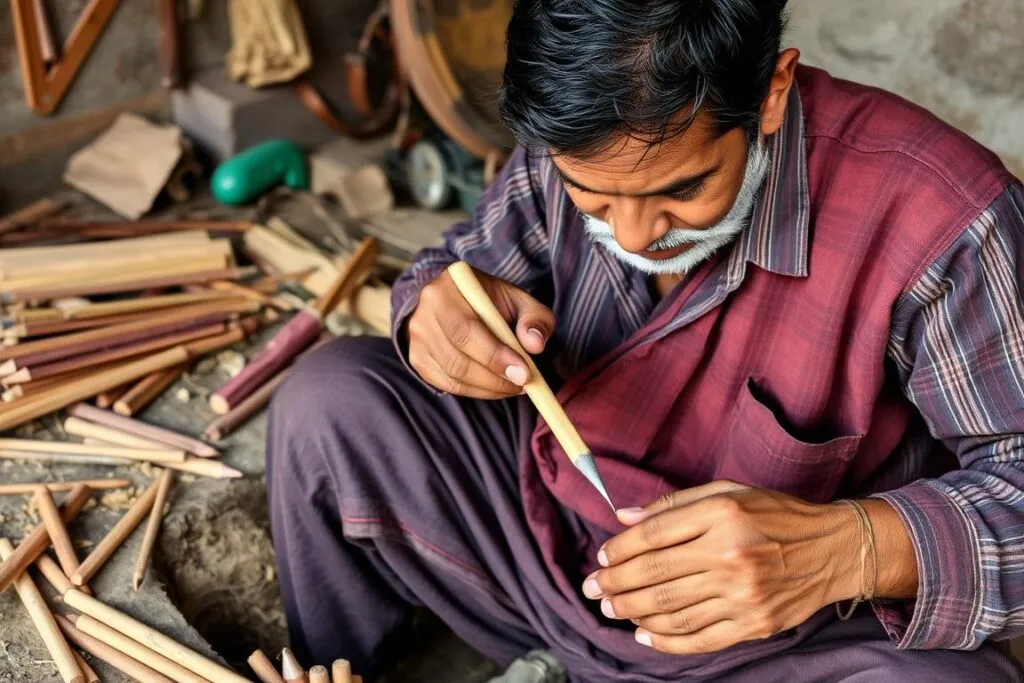
Indian craftsman creating handmade artisanal pencils using traditional techniques
Despite digital alternatives, the pencil remains relevant because of its simplicity, reliability, and tactile nature. It requires no batteries, works in extreme conditions, and creates a physical connection between hand and paper that many find irreplaceable. These enduring qualities suggest that the pencil will continue to have a place in our lives for generations to come.
Embrace Sustainable Writing
Discover our collection of eco-friendly pencils made from sustainable materials. Each purchase supports responsible forestry practices and environmental conservation efforts.
Conclusion: The Enduring Legacy of the Pencil
From its humble beginnings as a shepherds’ marking tool to its status as an essential instrument for artists, students, and professionals worldwide, the history of the pencil reflects human ingenuity and our constant drive to improve even the simplest tools. Through wars, technological revolutions, and cultural shifts, the pencil has remained remarkably consistent in its basic form while continuously evolving in subtle ways.
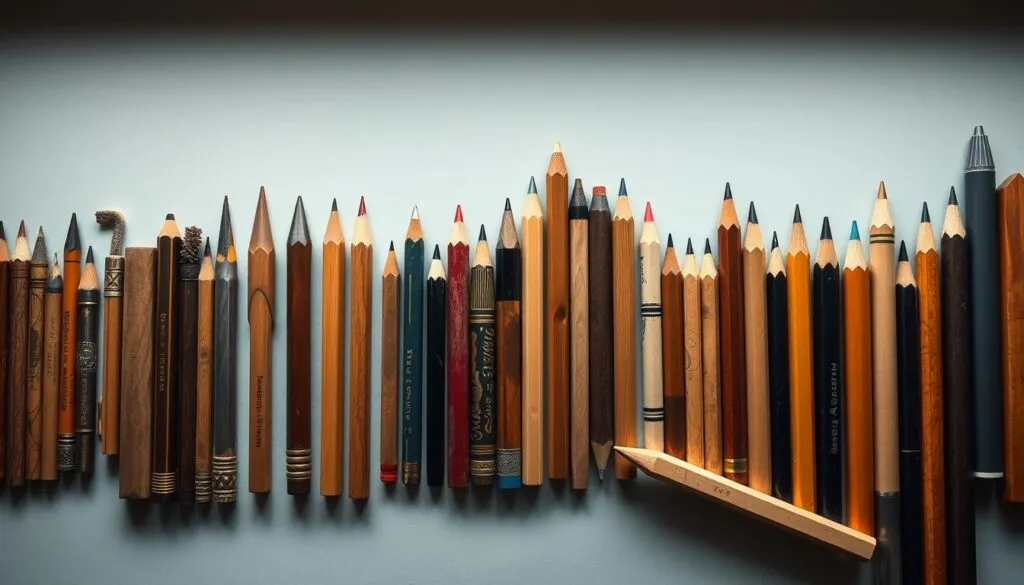
The evolution of the pencil through time – from ancient tools to modern instruments
In India, as in many countries around the world, the pencil holds a special place in cultural memory. For generations of Indian students, the distinctive red Nataraj or Apsara pencil represents not just a writing tool but a symbol of education, creativity, and possibility. These simple instruments have helped shape the minds of countless engineers, artists, writers, and leaders who have contributed to India’s development and cultural heritage.
As we look to the future, the pencil continues to demonstrate remarkable resilience in an increasingly digital world. Its tactile nature, simplicity, and reliability ensure that it remains relevant even as new technologies emerge. Whether for sketching ideas, taking notes, creating art, or simply doodling during a phone call, the pencil offers an immediate connection between mind and paper that digital tools have yet to fully replicate.
The history of the pencil reminds us that even the most ordinary objects have extraordinary stories behind them – stories of innovation, necessity, artistry, and human connection. Next time you pick up a pencil, take a moment to appreciate this remarkable tool and its journey through history.
Continue Your Exploration
Fascinated by the history of everyday objects? Download our comprehensive guide to the evolution of writing instruments throughout human history.
