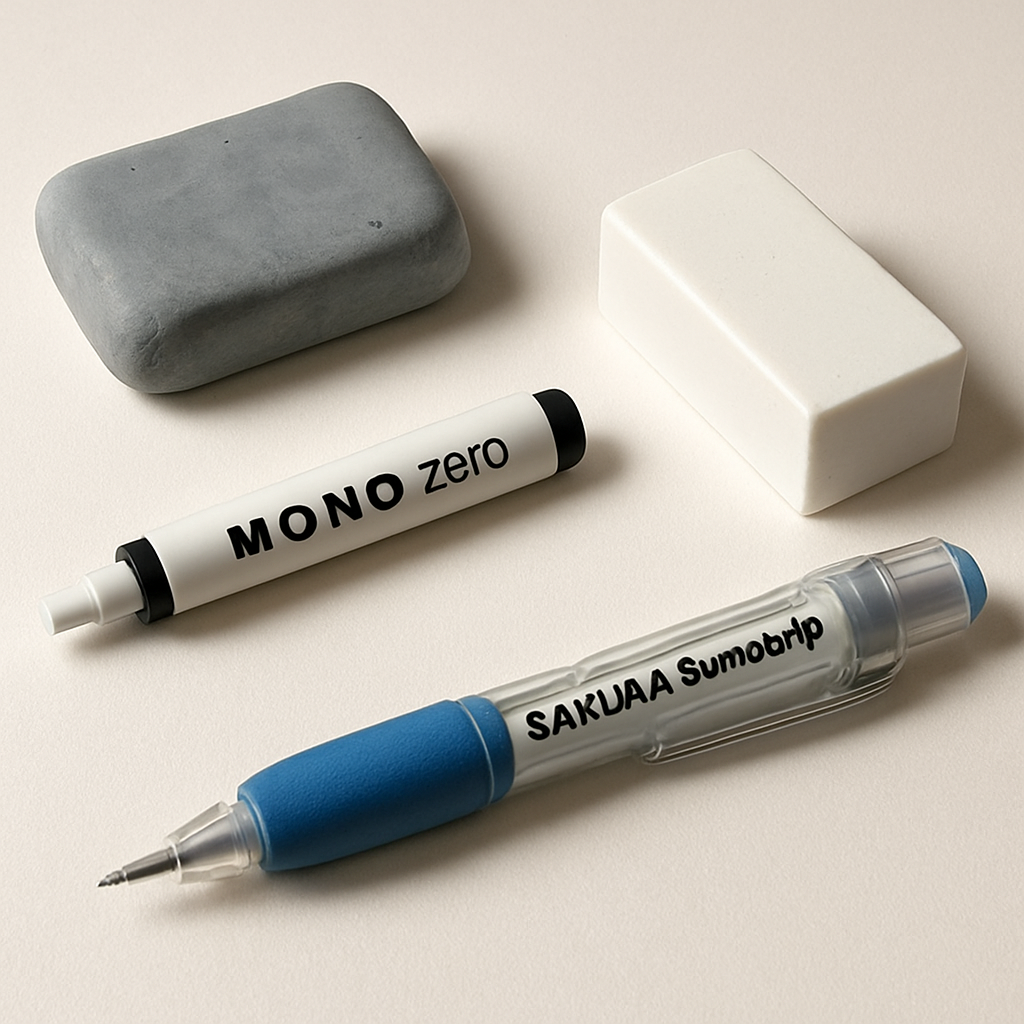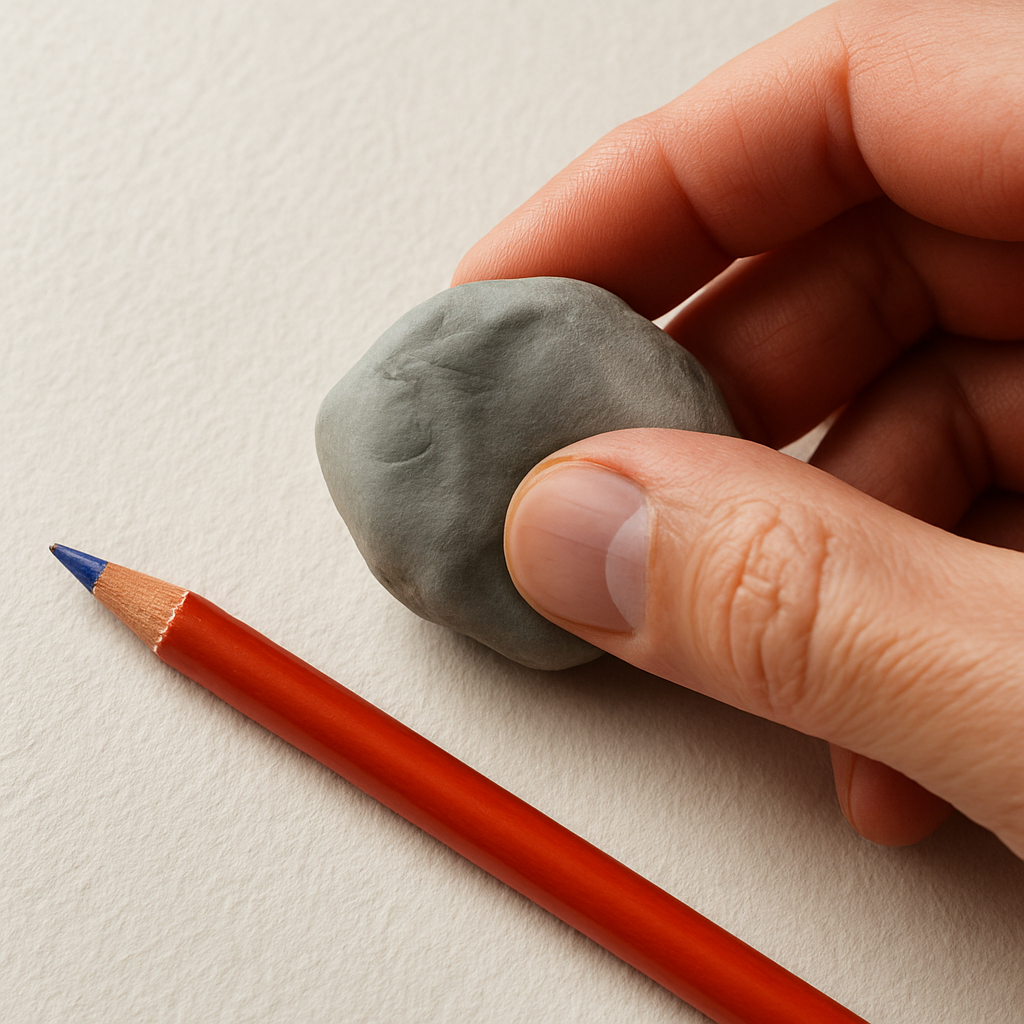
Ever wonder why your bright colored pencil strokes sometimes look like a messy scribble after a few touches? That’s often the eraser’s fault, not yours.
When you’re layering vibrant reds, blues, or earthy greens, the type of eraser you pick can make or break the finish. A hard vinyl eraser is great for quick, clean lifts on light‑to‑medium paper, but it tends to crumble on thicker stock, leaving a gritty trail. A softer kneaded eraser, on the other hand, offers a gentle touch that can lift pigment without pulling away the paper fibers.
Artists across India—from art students in Mumbai’s colleges to hobbyists in rural villages—report that kneaded erasers give them the control needed to tweak shading without disturbing underlying layers. The trick is to shape the eraser into a pencil‑like point for precision, or flatten it for a gentle wipe. Some even blend a vinyl tip with a kneaded core: start with the soft core to lift, then finish with the firm tip to clean up edges.
Imagine you’re sketching a bustling market scene on a heavy paper pad. You’ve built up a dense layer of orange and yellow, but a stray line of black ink cuts through. A kneaded eraser lets you lift the ink gently, preserving the paper’s texture while keeping the colors intact. If you were using a vinyl eraser, you might end up with a smudged patch that looks like you tried to erase with a brush.
Here’s a quick checklist for picking the best eraser for colored pencils:
- Paper weight: Heavier (80+ g/m²) requires softer erasers.
- Desired finish: Sharp edges? Use a vinyl tip.
- Pressure control: Soft erasers give subtle lifts; hard erasers give strong lifts.
- Maintenance: Kneaded erasers can be reshaped; vinyl erasers should be replaced after a few months.
For a deeper dive into erasing techniques that keep your colors vibrant and your paper intact, check out How to Erase Colored Pencil: A Step‑by‑Step Guide for Clean Corrections. It walks you through each type of eraser and shows you how to blend them for flawless results.
Now grab your favorite eraser and give it a try—start small, test on a scrap sheet, and feel the difference. If you can keep your paper clean while preserving the depth of your colors, you’ll wonder why you ever used a single eraser before.
TL;DR
Finding the best eraser for colored pencils feels like a gamble, but knowing kneaded lifts gently, vinyl sharpens edges, and hybrids blend both simplifies selection.
This quick guide walks you through paper weight cues, pressure control, and testing so students and hobbyists across India can keep sketches clean and vibrant.
Top 5 Erasers for Colored Pencils in 2024
Ever feel like you’re fighting an invisible opponent every time you lift a line? That’s the eraser doing a double‑backhand when it shouldn’t. In 2024, the market is flooded with options—some are too stiff, some are too soft, and a few are just right for every color‑pencil artist in India, from college labs in Mumbai to sketch studios in Pune.
1. Vinyl Eraser “Quick‑Lift”
This hard, slick eraser is a staple for quick, clean lifts on light‑to‑medium paper. Its edge stays sharp longer than most, making it great for removing small swaths of pigment without dragging fibers. If you’re working on a 80‑g/m² sketchbook, the Quick‑Lift gives you that crisp finish without grit. Just remember to keep it flat—pressure can leave a faint scar on the paper.
2. Kneaded “Soft‑Touch” Eraser
When you need a gentle lift that won’t disturb layers, kneaded erasers are the secret sauce. They’re moldable, so you can shape them into a pencil tip for precision or flatten them for a sweeping wipe. The Soft‑Touch is especially handy for dense, saturated colors, where a hard eraser would break the paper.
3. Hybrid “Blend‑Pro” Eraser
Blend‑Pro mixes a vinyl tip with a kneaded core. Start with the soft side to lift pigment, then switch to the hard tip to sharpen edges. This hybrid keeps the best of both worlds. It’s a favorite in art schools because it adapts to both paper weights and color density without needing a second tool.
4. Rub‑Dry “Eco‑Erase”
If you’re environmentally conscious, the Rub‑Dry is made from recycled rubber and offers a clean lift without toxic chemicals. It’s slightly softer than vinyl but still holds its shape. The Rub‑Dry is ideal for larger washes where you want to maintain paper integrity. Pair it with a paper with a higher GSM for optimal results.
5. Magnetic “Grip‑Erase”
Magnetic erasers have a tiny magnetic strip that sticks to the paper, preventing accidental slips. They’re great for fine detail work and for artists who work while moving around, like those who paint on the go in Rajasthan. The Grip‑Erase stays in place, so your focus stays on the art, not on the tool.
Now, if you’re looking for a quick visual guide, check out this short demo on using a kneaded eraser without ruining your layers.
The video should clear up any doubt about how to shape and apply pressure. Remember, practice makes perfect.
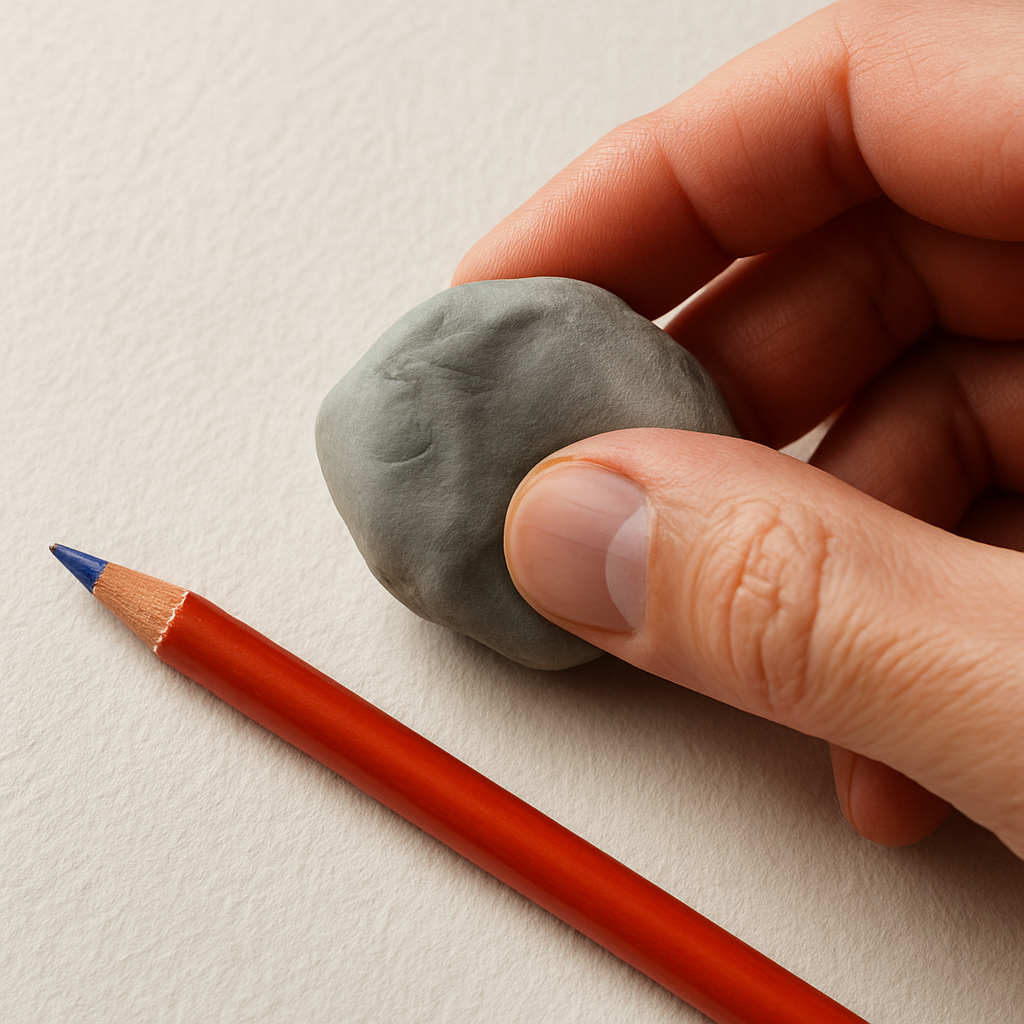
So, which eraser should you pick? If you’re in a hurry, grab a vinyl Quick‑Lift. For deep layers, the Soft‑Touch kneaded eraser is your best friend. And if you want versatility, the Blend‑Pro or Grip‑Erase covers all the bases. Happy erasing, and keep your colors vibrant!
If you’re experimenting with mixed media, remember that erasing on glossy paper can leave a faint sheen. Try a small patch first to gauge the effect.
Give it a try and feel the difference.
Want to learn more about paper choices for colored pencils? Jiffy Print Online offers affordable options. If you’re curious about printing your artwork, this website design cost calculator can help you plan. Also, check out Gratitude Studios for inspirational design ideas.
How to Choose the Right Eraser for Your Colored Pencil Projects
Picture this: you’ve just finished a lush sunset, the colors bleeding into each other beautifully, and then—oh no—a stray line of black ink cuts through the scene. That moment of panic? It’s all too familiar to artists who work with colored pencils.
What makes the difference between a smooth correction and a paper‑damaging disaster is not the eraser’s brand, but the right match between the eraser, the paper, and the pigment you’ve laid down. In this section we’ll break down the three essential factors you need to consider.
1. Match Eraser Texture to Paper Weight
Heavy‑weight paper (80 g/m² and above) tends to hide pigment under its thicker fibers, so you’ll want a softer eraser that lifts without pulling those fibers out. A kneaded eraser or a low‑grade vinyl eraser works like a charm.
On light sketchbooks (60 g/m² or less) a firmer vinyl eraser gives you clean edges without smearing.
How do you test this? Take a scrap piece, apply a uniform layer of your favorite color, then try both a kneaded eraser and a vinyl block. Notice which lifts pigment first and which leaves the paper looking smooth. That’s your match.
2. Decide Between Precision and Coverage
Every color‑pencil piece has two sides: the fine details and the big washes. For the tiny highlights or correcting a single line, you’ll need precision. A small, pointed eraser—like the Tombow Mono Zero or a retractable vinyl eraser—lets you lift just the pigment without dragging the paper.
When you’re clearing a large area or want to level out an uneven layer, a larger, flatter eraser is your friend. A white vinyl brick can sweep away an entire sheet of color in one go, while a kneaded eraser can gently soften the edges for a softer blend.
3. Consider the Color Density
Light, translucent colors (think pastels or early layers) are forgiving; a gentle touch will do. Dark, saturated pigments (like ultramarine or burnt umber) need a stronger lift. A slightly firmer vinyl eraser or a kneaded eraser pressed harder will pull these pigments up more efficiently.
One trick we love is starting with a kneaded core for the first lift, then finishing with a hard vinyl tip to clean up the edges. It gives you the best of both worlds—soft lift and sharp finish.
4. Keep Your Erasers Clean and Ready
Dust, pet hair, or previous pigment residue can clog an eraser’s surface and cause uneven lifting. Before you start a new section, give your eraser a quick wipe.
Storing your kneaded eraser in a sealed bag or airtight container keeps it pliable. Vinyl blocks can be wrapped in a clean cloth to avoid dust buildup.
5. Test, Test, Test
Even the best eraser can behave differently on different pencils and paper. Set up a quick test sheet with a few colors side by side.
Try each eraser type in a controlled way: light lift, medium lift, and strong lift.
After the test, take a moment to observe what worked and what didn’t. That little experiment saves you time and frustration later. And trust me, you’ll thank yourself when the final piece looks polished.
For a deeper dive into how each eraser interacts with different paper textures, you can explore this comprehensive guide from Pencil Topics. And if you’re looking for a quick comparison of vinyl and pink erasers, Blue Summit’s resource gives a side‑by‑side look.
Side‑by‑Side Comparison of Popular Eraser Brands
Ever feel like you’re fighting an invisible war every time you try to lift a stubborn red line? The culprit is almost always the eraser. Below we break down five brands that have earned their stripes in the Indian art scene, so you can match the right tool to the right job without a guess‑work marathon.
Sticky‑Tack Kneaded Eraser (Poster Putty)
Picture a soft, pliable block that you can shape into a pencil tip. That’s Sticky‑Tack. It’s the go‑to for delicate lifts on thick paper because it hugs the pigment without shredding fibers. Artists in Mumbai sketchbooks swear by it for subtle highlights.
White Vinyl Brick – Pentel Hi‑Polymer
This brick is like a clean‑cut blade. Its hard plastic core gives crisp edges, but you can soften the surface by rocking it around. It’s your best bet when you need a sharp lift on lighter paper, like a 60‑g/m² sketchbook.
Tombow Mono Zero – Mini‑Round
Need pinpoint precision? The Mono Zero’s 2.3 mm tip is perfect for a single line or a tiny correction. Its rubbery texture won’t drag fibers, making it a favorite for blending dense greens in a rural village illustration.
Sakura SumoGrip Black – Retractable
The retractable design means you can keep the tip fresh for a long time. Its slightly firmer feel lifts darker pigments quickly, while the retractable core prevents the dreaded split that can ruin a sketch.
Derwent Battery‑Operated Electric Eraser
For artists who tackle large areas, the electric eraser spins a small white eraser across the surface. It delivers a uniform lift with minimal fatigue. Perfect for a wide wash of ultramarine on an 80‑g/m² pad.
Want a real‑world lab comparison? The Art Gear Guide ran an extensive test across five media—graphite, colored pencils, pastels, charcoal, and carbon. Their findings are a goldmine for anyone deciding which eraser fits which paper. The Art Gear Guide’s eraser test details exactly how each brand performed under controlled conditions.
Now let’s turn that data into a quick decision matrix. It’ll help you pick the right eraser without having to run your own test sheet every time.
| Feature | Sticky‑Tack | Pentel Hi‑Polymer | Tombow Mono Zero | Sakura SumoGrip | Derwent Electric |
|---|---|---|---|---|---|
| Ideal Paper Weight | 80+ g/m² | ≤ 60 g/m² | All weights | All weights | All weights |
| Sharpness of Edge | Soft | Very sharp | Fine point | Moderate | Uniform |
| Best For | Delicate lifts, highlights | Clean cuts, large wipes | Single lines, gradients | Dark corrections, bulk lift | Wide areas, high‑volume work |
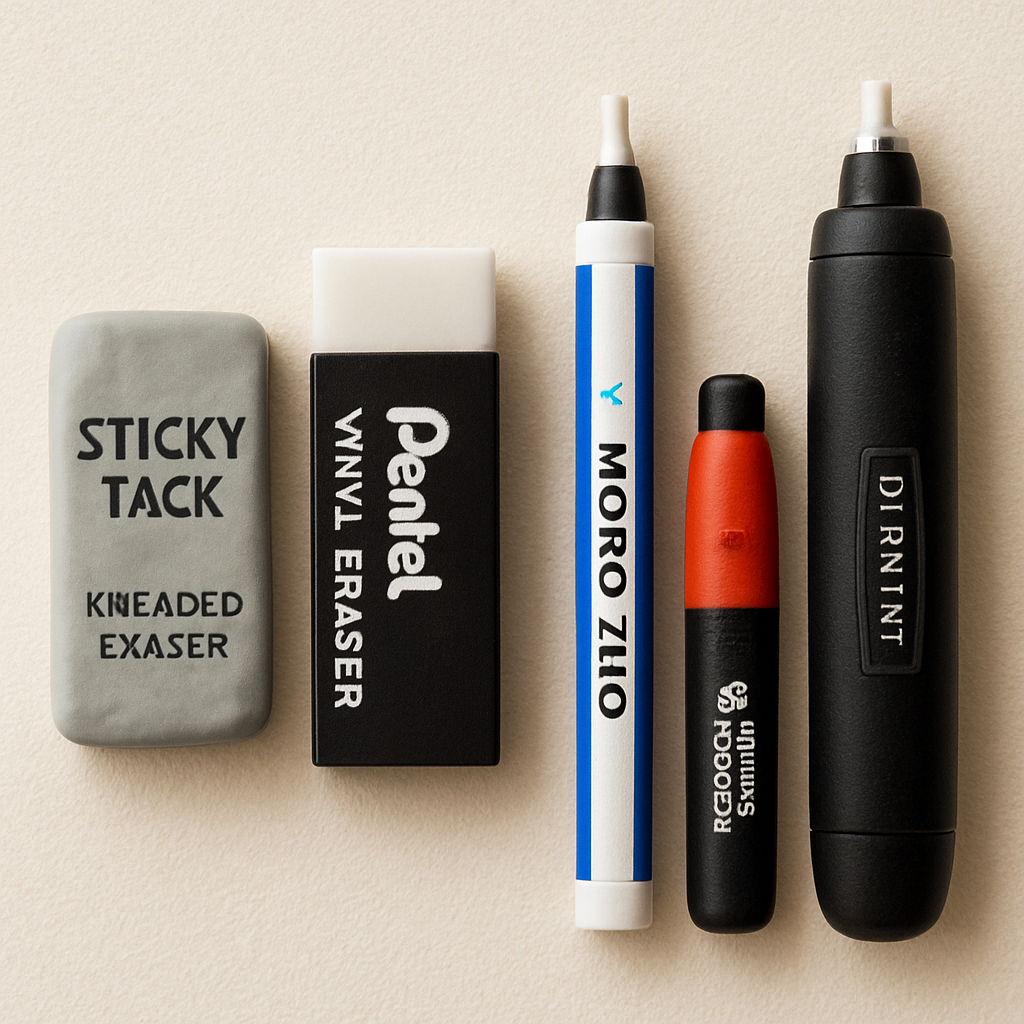
So, how do you decide which one to grab first? Start with the paper you’ll use most often. If you’re into heavy‑weight art papers, the Sticky‑Tack is your friend; if you’re shooting for sharp, crisp lines on a light pad, the Pentel is king. For tiny details—think shading a sunflower petal—the Mono Zero will feel like a natural extension of your hand.
Remember, the Sakura’s retractable core saves you from the split that can ruin a neat block, while the Derwent’s motorized action keeps your arm from getting tired when you need to erase an entire background. All these tools have earned their reputation through hands‑on testing, and the Art Gear Guide’s data backs up every claim.
In short, the best eraser for colored pencils is less about brand and more about matching the right texture and edge to your paper and pigment. Grab a sample pack, try each on a scrap sheet, and feel the difference. Your future self will thank you when the final piece looks clean and polished.
Deep Dive: How Eraser Materials Affect Erasing Colored Pencils
Ever wonder why that bright orange line you just added feels like it’s sticking to the page, while the blue just lifts like a feather? The culprit isn’t the pigment or the paper—it’s the eraser material. Let’s break it down.
Hard Vinyl vs Soft Kneaded: What the Material Really Does
Think of hard vinyl erasers as a steel blade: they cut cleanly, but they can tear through the fibers if you press too hard. Soft kneaded erasers, on the other hand, act like a sponge—they absorb pigment while leaving the paper intact. The key difference is the balance between friction and adhesion.
With a vinyl block, the plastic surface rubs against the pigment, lifting it in one go. Kneaded erasers rely on the waxy binder to “pick up” the color, which works best when you need a gentle touch.
Textures That Interact with Pigment
Every colored pencil has a subtle texture: some are smooth, others tacky. Hard vinyl erasers excel on smooth, translucent colors because the surface slides over them. If the color is thick or opaque—think heavy layers of ultramarine—kneaded erasers grip better and lift more pigment per stroke.
For semi‑opaque tones like burnt umber, a hybrid approach works: start with the soft core to lift bulk pigment, then finish with a vinyl tip to clean up edges.
Real‑World Scenarios: Heavy Paper vs Light Pad
Heavy‑weight paper (80 g/m²+) has more fibers that can get dragged. A kneaded eraser keeps the fibers intact, preventing those dreaded ragged lines. On lighter pads (60 g/m² or less), the vinyl block offers crisp, sharp lifts that don’t smudge the surrounding area.
Picture a student in a Delhi art class layering a vibrant sunset on thick paper. The kneaded eraser gently lifts the orange band without pulling up the paper’s texture—perfect for preserving the subtle gradient.
Practical Tips for Switching Materials
1. Test first: Always run a small test on a scrap sheet before you hit the final piece.
2. Shape the eraser: Kneaded erasers can be molded into a point for precision or flattened for a wide wipe.
3. Layered lift: For dark, dense colors, use the kneaded core first, then the vinyl tip to polish.
4. Pressure control: Light pressure gives a subtle lift; heavier pressure can over‑erase or pull fibers.
Quick Reference Cheat Sheet
- Soft, thick colors on heavy paper: Kneaded eraser first.
- Smooth, translucent colors on light paper: Vinyl block works best.
- Large washes that need even lift: Start with kneaded eraser, finish with vinyl for sharp edges.
- Detail work on dense layers: Kneaded eraser shaped to a point or a small Mono‑Zero.
Remember, the best eraser for colored pencils isn’t a one‑size‑fits‑all tool—it’s about matching the eraser’s material to your paper, pigment density, and the effect you’re chasing. Try these tips, test on a scrap sheet, and you’ll see the difference in how clean and polished your final artwork looks.
Common Mistakes to Avoid When Erasing Colored Pencils
We’ve all been there—pencil in hand, a sudden change of mind, and the dreaded smudge that follows. The real pain? Trying to undo a mistake and ending up looking like a watercolor wash gone wrong. Let’s break down the most common slip‑ups and how to dodge them.
1. Erasing with a hard, straight‑edge block
That firm vinyl brick looks tempting because it promises a clean edge. But if you press too hard on thick paper, it can tear fibers or leave a gritty residue. The result? A patch that feels like you just ran a paintbrush over it.
What if you’re on a heavy Bristol? A kneaded eraser, gently warmed in your palm, will lift pigment while keeping the fibers intact. A quick test on a scrap sheet tells you if your paper tolerates the vinyl or not.
2. Forgetting to control pressure
“Light pressure” is a term that confuses a lot of beginners. The trick is to keep the pencil loose and the eraser light. Too much force pushes pigment deeper into the tooth, making it harder to lift later.
Try this: draw a light line, then erase with a finger‑level pressure. If you feel resistance, back off. Once you get the feel, the eraser becomes a partner rather than a weapon.
3. Using the same eraser for every color
Wax‑based pencils sit higher on the paper than oil‑based ones. If you erase a deep ultramarine with a kneaded eraser, you may strip the surface and damage the paper. An oil‑based tone, however, will lift more readily.
So, what’s the solution? Keep a small set: a soft kneaded eraser for heavy, waxy layers; a semi‑hard vinyl tip for lighter, smoother colors. Swap tools as the layer changes.
4. Ignoring the paper’s tooth
Drafting film has almost no tooth. It’s forgiving for light layers but unforgiving for heavy ones. The same goes for hot‑pressed versus Bristol vellum. If you ignore the paper’s texture, you’ll either over‑erase on smooth stock or under‑erase on rough stock.
Testing on a scrap piece gives you a baseline. Light layers on a smooth sheet can be lifted with a soft eraser; heavy layers on a textured sheet need a firmer tool.
5. Over‑relying on tape or adhesive fixes
Some artists grab tape to lift pigment, but tape can pull up paper fibers and leave a ragged edge. It works better as a quick touch‑up rather than a full‑scale fix.
Remember: tape should be used sparingly, and only on a light color where the tape’s grip is gentle.
Actionable Checklist
Step 1: Before you commit, test each eraser type on a scrap sheet that matches your paper weight.
Step 2: Warm a kneaded eraser in your hands—this increases pliability and reduces friction.
Step 3: Keep the eraser light. If a color resists, try a softer eraser or a lighter touch.
Step 4: Switch erasers when the pigment type changes. Wax vs oil, deep vs light.
Step 5: If a mistake persists, layer a thin, light base color first, then erase. This gives you a “clean slate” to start fresh.
For deeper insights on how to fix colored pencil mistakes, check out Ann Richman’s guide on fixing colored pencil mistakes.
By keeping these points in mind, you’ll spend less time scrubbing and more time creating. Happy erasing, and remember: a thoughtful approach beats a frantic one any day.
FAQ: Everything You Need to Know About Erasing Colored Pencils
1. What is the best eraser for colored pencils when I’m working on heavy‑weight paper?
For 80 g/m² and above, a soft kneaded eraser is your go‑to. Its waxy core gently lifts pigment while preserving the paper’s fibers, preventing those ragged patches you hate. Warm it in your palm to increase pliability—this reduces friction and lets you glide over thick layers without tearing the paper. A vinyl block will crack the fibers on such heavy stock.
2. How do I choose between a kneaded eraser and a vinyl block for a light‑to‑medium paper?
Light or medium stock (60 g/m² or less) benefits from a firm vinyl eraser. The plastic surface cuts cleanly, giving sharp edges without smearing surrounding color. If you need a softer touch for blending, switch to a kneaded eraser. You can even combine them: start with the kneaded core for a gentle lift, then finish with a vinyl tip for crisp lines.
3. What’s the trick to avoid pulling paper fibers when erasing a dense color block?
Apply light pressure and move in the direction of the paper’s tooth. On textured stock, keep the eraser flat and avoid circular motions that tug at fibers. If a color is stubborn, lift it in stages—first use the kneaded eraser to remove the bulk, then a small vinyl tip to polish the edge. This two‑step method keeps the surface intact.
4. Can tape replace an eraser for quick fixes, and when should I use it?
Tape can lift pigment, but it often pulls on the paper and leaves a ragged edge. Use it sparingly for a quick touch‑up on a light color, not for full‑scale correction. The safest approach is a gentle eraser, especially on thick or glossy papers where tape can snag the fibers.
5. How do I keep my erasers working well over time?
Store kneaded erasers in a sealed bag to keep them pliable and prevent dust build‑up. Vinyl blocks should be wrapped in a clean cloth or stored in a drawer away from moisture. Before each use, give both a quick wipe to remove trapped pigment; this ensures a smooth lift and extends the life of your eraser.
6. Is there a single eraser that works for both graphite and colored pencils?
Most artists keep a small set: a soft kneaded eraser for colored pencils and a harder vinyl block for graphite. Graphite sits lower in the paper, so a firm eraser is needed to lift it without damaging the surface. Mixing both tools lets you switch seamlessly between mediums on the same sheet.
7. What should I do if a colored pencil line still won’t lift?
First, test the eraser on a scrap of the same paper; sometimes the issue is paper weight, not the eraser. If the color is very dark or oil‑based, try a slightly firmer eraser or apply a gentle heat (a warm hand) to soften the pigment. Finally, consider layering a thin, light base color over the stubborn line and then erasing—this creates a clean slate.
Conclusion
All the testing, the little experiments, and the messy white‑out moments point to one simple truth: the right eraser feels like a second hand, not a tool you stare at in frustration.
Think about the first time you lifted a stubborn orange band on heavy paper and felt the fibers wiggle. That moment taught us that a soft kneaded eraser, warmed up in your palm, can lift pigment without tugging the paper. It’s the same principle that makes the hard vinyl block cut clean lines on light sketchbooks.
So, what should you keep in your kit? A small set: a kneaded core for heavy layers, a vinyl brick for quick wipes, and a mono‑zero for those pesky single‑line tweaks. Rotate them as the density changes, and always test on a scrap sheet that matches your paper weight.
Remember, erasing is a conversation with the paper. If you’re in India, where paper textures vary from hot‑pressed to rough, adjusting pressure and eraser type can save you from a ruined sketch.
Finally, don’t just erase—plan. Lay a thin base color over a stubborn line, then erase; you’ll get a clean slate and a smoother finish. Keep your tools fresh, practice pressure control, and you’ll see your colored pencils thrive.
Where to Buy the Best Eraser for Colored Pencils: Top Retailers and Online Stores
Finding the right eraser feels a lot like hunting for that elusive art supply on a rainy afternoon. The good news? The market is bigger than you think, and with the right map, you can land the tool that fits your style and budget.
Below is a straightforward list of places that actually stock the erasers you’ve seen in our reviews, from soft kneaded sticks to sharp vinyl blocks. Each stop offers a different vibe—whether you’re a student on campus, a freelance illustrator in Mumbai, or a hobbyist in a quiet suburb.
1. Specialty Art Boutiques
These shops, found in markets like Bandra, Commercial Street, and Lajpat Nagar, keep a steady supply of kneaded, vinyl, and hybrid erasers. Online versions usually ship nationwide and let you ask quick questions.
2. Major E‑commerce Platforms
If speed matters, Amazon India and Flipkart list thousands of erasers, and filters let you narrow by “coloring pencils” or “soft kneaded.” Check the seller rating and read a few reviews; they often reveal whether the eraser holds up on heavy‑weight paper.
3. Dedicated Art Supply Chains
Stores like Hobby Ideas and Art World India focus solely on drawing tools. Their online sites carry the same items we feature, and they run seasonal promos—great for snagging a quality eraser at a discount.
4. Brand Direct Websites
Ordering from a manufacturer’s site guarantees you’re getting the latest release. For example, the Kneadable Eraser for Colored Pencils from Odd Nodd is a fan favorite. Direct orders often include a free sample or bulk‑pack discount.
5. Local Art Co‑ops and Schools
Many towns host co‑ops run by art schools, buying in bulk for lower prices. Dropping by lets you test an eraser on a sample sheet before buying.
6. Online Marketplaces for Handmade or Vintage Supplies
Etsy features artisans selling unique or vintage erasers. Prices can be higher, but the quality and personal touch often justify the cost. Check seller ratings and product descriptions to ensure suitability.
If you’re new to erasing, many online art communities on Reddit, Facebook groups, and Instagram have threads where users post before‑and‑after shots of their eraser picks. Browsing these can give you a sense of what works on the specific paper you own.
Remember that the paper you use dictates the eraser’s performance. Heavier papers need a softer kneaded eraser, while light sketchbooks thrive on a firm vinyl block. Matching the eraser to the paper weight saves time and keeps your surface intact.
Quick sanity check before you buy:
- Confirm eraser type—kneaded, vinyl, or hybrid.
- Read at least three customer reviews.
- Verify return policy.
- Look for bulk or multi‑pack deals if you use erasers often.
- Ask for a sample or test sheet if possible.
With this map in hand, you’re ready to score the best eraser for colored pencils without the guesswork. Happy hunting, and may your new eraser bring clarity to every stroke.