
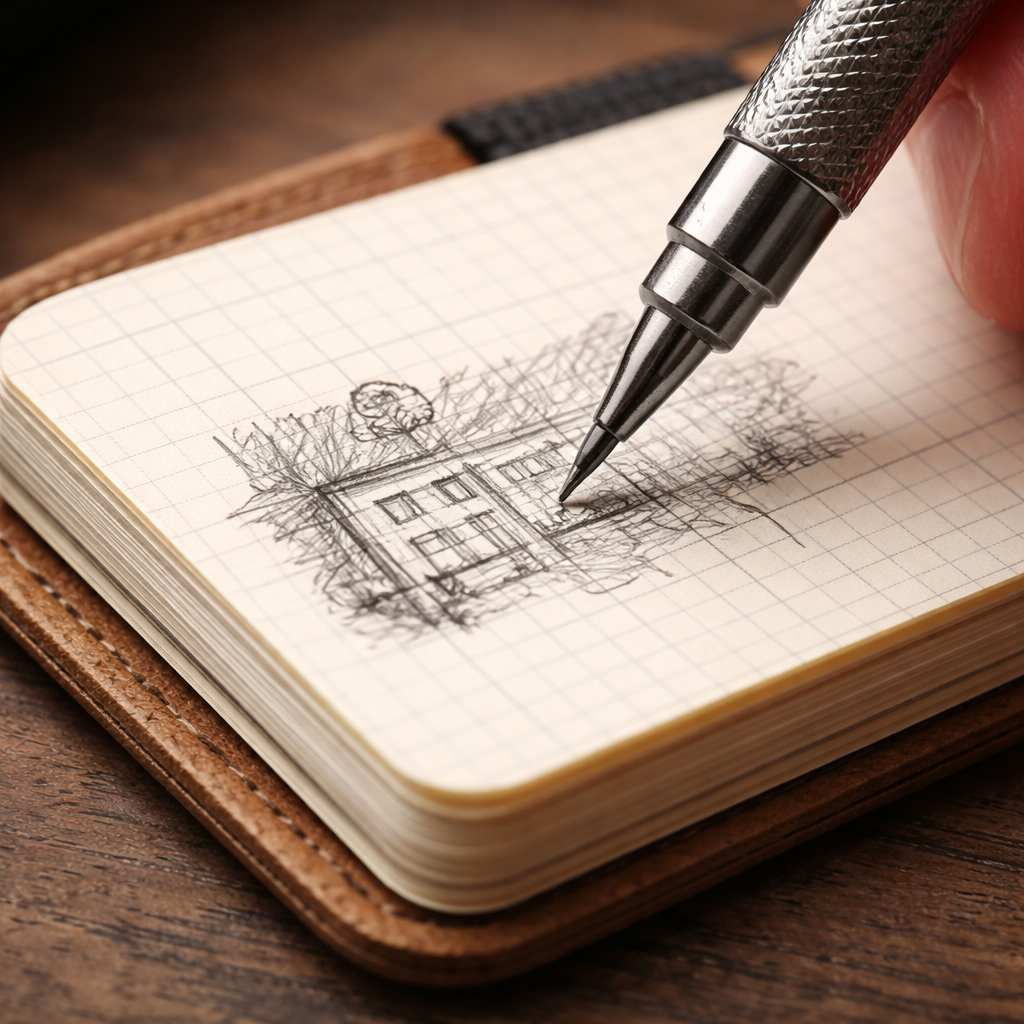
Finding the right pencil for a tiny notebook can change the whole sketching experience.
Small pages leave little room for error. A heavy lead can tear the paper, while a too‑hard lead can look faint and force you to press harder, which smudges the page.
Imagine you’re sketching a quick character study in a 5 × 7 cm pocket notebook. A 2B graphite gives a nice dark line but stays soft enough to erase cleanly, while a 4H stays light and crisp for fine details.
Here’s a quick way to pick the best pencil for those tiny sheets:
- Choose a lead between HB and 2B for balanced darkness.
- Pick a thin barrel (0.3 mm to 0.5 mm) so the tip fits the narrow margin.
- Use a mechanical pencil with a sturdy clip to keep it from slipping out of your pocket.
- Test the pencil on a scrap of the same paper; you should see a clear line that lifts without tearing.
Once you know the feel you like, you can expand your set. Our guide to starter tools walks you through the top picks for beginners, so you won’t waste money on the wrong brand. Check out Best Drawing Pencils for Beginners: Top Picks and How to Choose for a curated list.
By following these steps you’ll get clean, consistent lines in any small notebook, whether you’re a student in Delhi, a hobbyist in Mumbai, or a teacher prepping quick lesson sketches. The next few pages of this article will show you how to keep those lines sharp and your notebook tidy.
1. Classic Graphite Pencils – The All‑Rounder
When you pull a pencil from your pocket, you want it to feel right the first time. Classic graphite pencils hit that sweet spot. They give you a dark enough line to see, but stay soft enough to lift without tearing the thin paper of a tiny notebook.
Most artists pick a lead between HB and 2B for everyday sketching. HB sits in the middle – not too hard, not too soft. It’s the go‑to for quick notes, light shading, and clean outlines. If you like a bit more depth without losing control, 2B adds a richer dark while still erasing cleanly.
Here’s a quick check list to make sure a pencil works for you:
- Barrel size: 0.3 mm–0.5 mm fits the narrow margin of a 5 × 7 cm notebook.
- Clip: sturdy metal keeps the pencil from slipping out of your pocket.
- Grip: a soft rubber or textured grip reduces hand fatigue during long sketch sessions.
- Test: draw a line on a scrap of the same paper. The line should lift off cleanly, no tearing.
Many beginners find that a trusted brand like Staedtler or Faber‑Castell delivers consistent performance. Their classic graphite range is built for small‑format work, so you won’t have to chase rare specialty leads.
Want a visual guide? Check out this short video that shows how to test a pencil on your notebook paper.
Once you’ve nailed the feel, you can start mixing in a few harder leads for fine detail or a softer 3B for richer shadows. The classic graphite pencil stays the all‑rounder because it adapts to every line you need, whether you’re drawing a quick character or planning a detailed study.
2. Mechanical Pencils – Precision on a Small Scale
When you swap a wood pencil for a mechanical one, the line stays the same width every time. That steadiness matters when your page is only a few centimeters wide.
Mechanical pencils also let you change lead hardness without buying a new pencil. Grab a 0.5 mm or 0.3 mm lead, pick HB or 2B, and you’ve got a tool that fits right into a tiny pocket.
So, which picks work best for a small notebook? Here are three that feel right at home in a pocket‑size sketchbook.
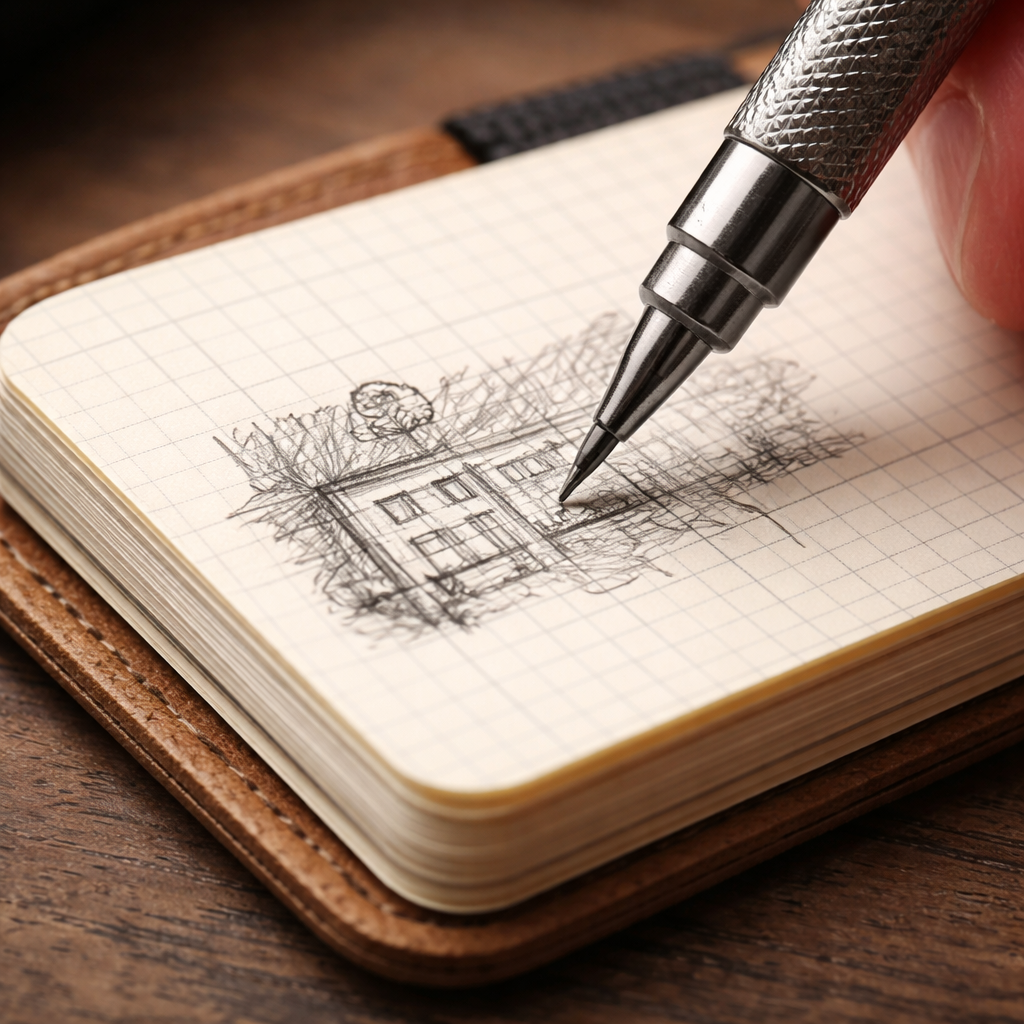
- Blick Premier Mechanical Pencil: All‑metal body, smooth knurled grip, and a double‑click that extends or retracts the tip. The lead‑cushion stops breaks, so you can draw short, clean strokes without the lead snapping.
- Uni Kuru Toga Pipe Slide: This lightweight model rotates the lead each time you lift it, keeping the tip sharp for the whole sketch. It comes in 0.3 mm and 0.5 mm sizes, perfect for fine hatching on thin paper.
- rOtring 600: A heavy‑duty metal drafting pencil with a textured grip. The fixed sleeve holds the lead steady, giving you exact lines that don’t wobble – ideal for technical diagrams or precise ink‑like sketches.
Does a heavier pencil feel awkward in a small hand? Not for most artists in India or students in Delhi – the grip texture lets the pencil stay put even on a bumpy bus ride.
One quick test: draw a line on a scrap of your notebook paper. If the line lifts cleanly and stays dark, you’ve found a good match. If it looks fuzzy or the lead snaps, try a finer lead size or a softer grip.
For a deeper dive into how these models were chosen, see Wirecutter’s mechanical pencil roundup. It breaks down the feel, the click, and why a metal body can be a game‑changer for tiny pages.
Choosing the right mechanical pencil means you spend less time fixing mistakes and more time drawing the scene in your head.
3. Colored Pencils – Adding Vibrancy to Mini Sketches
When you want a splash of color in a pocket‑size notebook, a good colored pencil can be a real boost.
Here are three picks that work well on the thin paper of a 5 × 7 cm sketchbook.
- Prismacolor Premier: A wax‑based pencil that feels soft and spreads easily. It lays down rich color without heavy pressure, so the paper stays smooth. Many artists say it blends faster than harder cores (Jasmina Susak’s review).
- Caran d’Ache Luminance: An oil‑based option that stays bright even after multiple layers. The pigment stays vivid, making it great for tiny details like a single eye or a leaf vein.
- Faber‑Castell Polychromos: Another oil‑based choice, but a bit harder than Luminance. It holds a sharp point longer, which helps you draw fine lines in a cramped margin.
Tip: Sharpen gently with a rotary cutter. A long, thin tip lets you add a dash of color without breaking the paper.
Does the pencil feel too soft for your hand? Try a slightly harder lead like Polychromos for the first pass, then go back with Prismacolor to blend.
One quick test: draw a tiny shape, then press lightly with a color. If the paper stays intact and the hue spreads evenly, you’ve found a good match.
Remember, the best pencils for drawing in small format notebooks are the ones that give you color without tearing the page. A balanced mix of wax and oil pencils lets you switch from bold strokes to fine details without swapping tools.
Pick the trio that fits your style, and you’ll add life to every mini sketch.
4. Comparison Table: Quick Reference for the Top Picks
Choosing the right pencil for a tiny notebook can feel like a guessing game, but a quick glance at the right specs makes it easy.
Below is a short table that lines up the three top picks we’ve talked about. It shows the core type, typical hardness, and the best use case for each.
| Pencil | Core Type | Typical Hardness | Best Use |
|---|---|---|---|
| Prismacolor Premier | Wax‑based | 2B‑3B | Soft blends, quick color lay‑down |
| Caran d’Ache Luminance | Oil‑based | HB‑2H | Bright details, fine lines |
| Faber‑Castell Polychromos | Oil‑based | HB‑2B | Sharp lines, good for hatching |
If you like soft blends, go for the wax‑based option. If you need sharp lines that stay sharp, the harder oil‑based core is the safe bet.
A quick tip from Drawing Pencils Guru: test each pencil on a scrap of your notebook. The line should sit flat, lift cleanly, and not tear the paper.
If you’ve tried a pencil that tears the page, you know the frustration.
Now you can pick the pencil that fits your style and the size of your pages without spending hours on trial and error.
Remember, the notebook paper is thin, so a pencil that pushes too hard will rip the page. Keep the pressure light and let the pencil do the work.
You can also mix and match – start with the oil‑based pencil for fine outlines, then finish with the wax‑based one for smooth shading. The result looks clean even on a 5 × 7 cm page.
5. Specialty Pencils – Water‑Soluble and Charcoal Options
When you need a splash of color that washes away or deep dark lines that stay soft, look to water‑soluble pencils and charcoal. Both fit in a pocket and play nice with thin notebook paper.
Water‑Soluble Pencils
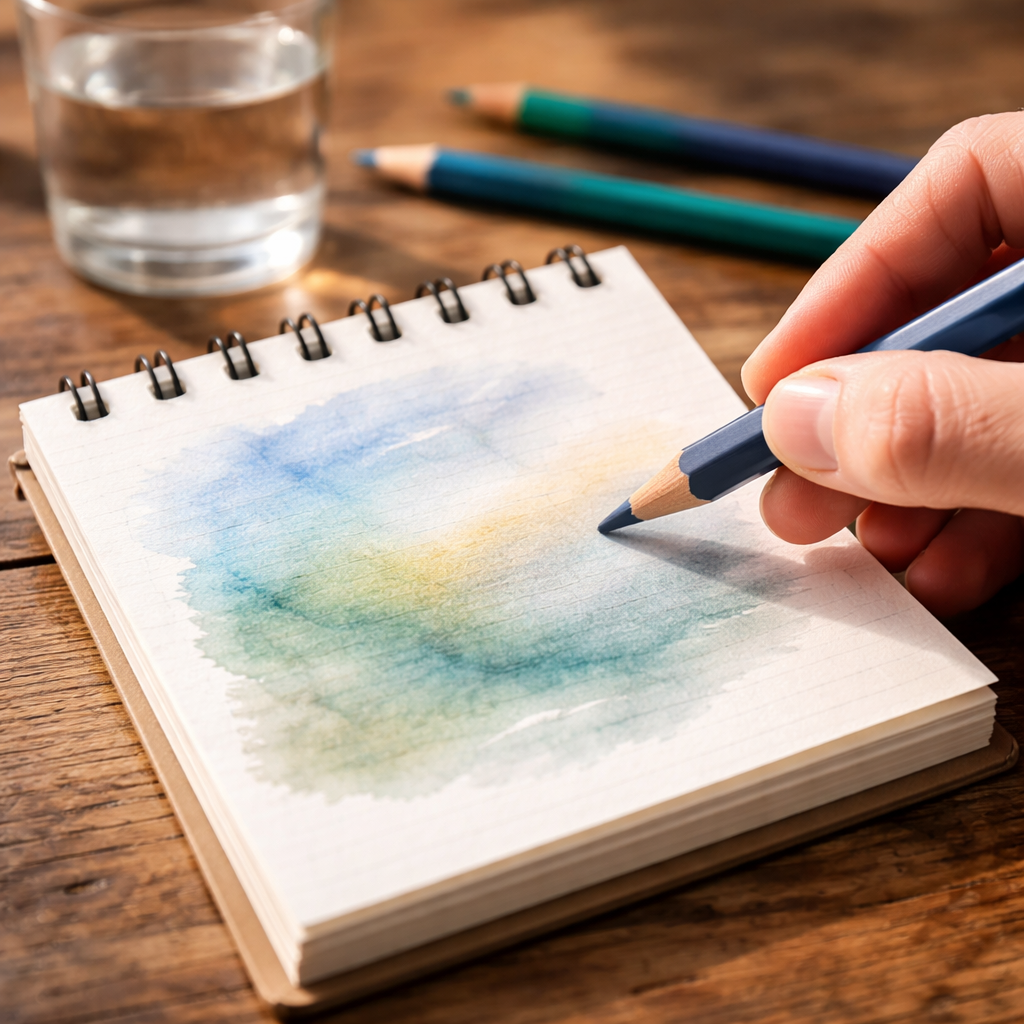
These pencils have a pigment core that dissolves with a little water. You can draw a line, then wet the tip to blend smooth shades. On a 5 × 7 cm page the effect looks like a tiny watercolor wash.
Try a brand like Derwent Inktense or Faber‑Castell Albrecht Dürer Water‑Soluble. Use a fine 0.3 mm tip so the line stays inside the margin. A quick test: draw a tiny tree, add a dab of water, and watch the color spread without tearing the page.
Charcoal Sticks
Charcoal gives you rich blacks that stay dark even on thin paper. A thin charcoal stick or a charcoal‑core pencil lets you sketch bold outlines or deep shadows.
Because charcoal can be dusty, press lightly and use a kneaded eraser to lift stray bits. A short charcoal tip works well for quick gesture sketches in a cramped notebook.
One tip from Drawing Pencils Guru: tap the stick on the side of your notebook before you draw. That removes excess dust and keeps the page clean.
Mixing media works too. Lay down a charcoal base, then add a water‑soluble highlight for contrast. The result looks crisp without smudging the thin sheet.
If you carry a pocket‑size notebook on a bus ride in Delhi or a campus library, water‑soluble and charcoal tools give you fast results without a mess.
Conclusion
Picking the right pencil for a tiny notebook can feel like a puzzle, but the basics are simple.
Stick to a thin 0.3 to 0.5 mm barrel, choose a lead between HB and 2B for graphite, and match the core type to the effect you want: wax for soft color, oil for sharp detail, charcoal for deep black, water‑soluble for a wash. These combos work well whether you draw on a bus in Delhi or in a quiet study room.
Test each tool on a scrap of the same paper. If the line lifts cleanly and the page stays smooth, you’ve found a fit. If it smudges or tears, try a softer lead or a finer tip.
Now you can fill every pocket‑size sketchbook with clear, confident lines. Need more step‑by‑step help? Drawing Pencils Guru offers guides that walk you through the whole process. Keep experimenting and your notebook will become a trusted creative companion.
FAQ
Here are some common questions about picking the best pencils for drawing in small format notebooks.
What lead hardness works best for tiny notebook pages?
On a 5 × 7 cm notebook you want a lead that’s dark enough to show but soft enough to lift. Most artists pick HB to 2B. HB gives a light line that stays crisp, while 2B adds depth without grinding the paper. Anything harder than 4H looks faint and makes you press hard, which can rip the thin sheet. Test a short stroke; if it lifts cleanly you’ve got the right hardness.
Do mechanical pencils help keep lines consistent on small paper?
Mechanical pencils are a solid choice when space is tight. A 0.3 mm or 0.5 mm lead keeps the line width steady, so you don’t end up with a fat mark that blurs on a tiny page. The click mechanism also means you never have to shave a wood barrel, which saves pocket space. Look for a model with a lead-cushion to stop breaks during quick sketches.
Can I use colored pencils without tearing thin paper?
Colored pencils can work fine on thin paper if you choose a softer core and use a light hand. Wax-based pencils such as Prismacolor Premier lay down color without digging into the fibers, while oil-based sticks stay bright but may need a sharper tip. Start with a gentle stroke; if the paper shows a faint line that lifts cleanly, the pencil is a good match for your notebook.
How often should I sharpen my pencil for a 0.3 mm tip?
With a 0.3 mm tip you’ll sharpen more often than with a thicker barrel. A quick rule is to sharpen after every 5-10 cm of line work, or whenever the tip feels blunt. Using a rotary cutter gives you a long, even point that won’t tear the page. Keep a small sandpaper block handy to smooth any rough edges between sessions.
What is the best way to erase mistakes without damaging the page?
Erasing on a pocket-size sketchbook needs a gentle touch. A kneaded eraser works best because it lifts graphite without scraping the surface. Press lightly, roll the eraser over the mistake, and lift. If you need a firmer clean-up, use a vinyl eraser on the edge of the paper to avoid a full-page smear. Always test on a scrap first.
Are water-soluble pencils safe for pocket-size sketchbooks?
water-soluble pencils are safe for small notebooks as long as you control the moisture. A light dab of water on the tip blends the color without soaking the paper. Work on a dry area first, then add water to the same spot. This lets you create a soft wash while keeping the thin page intact.
