
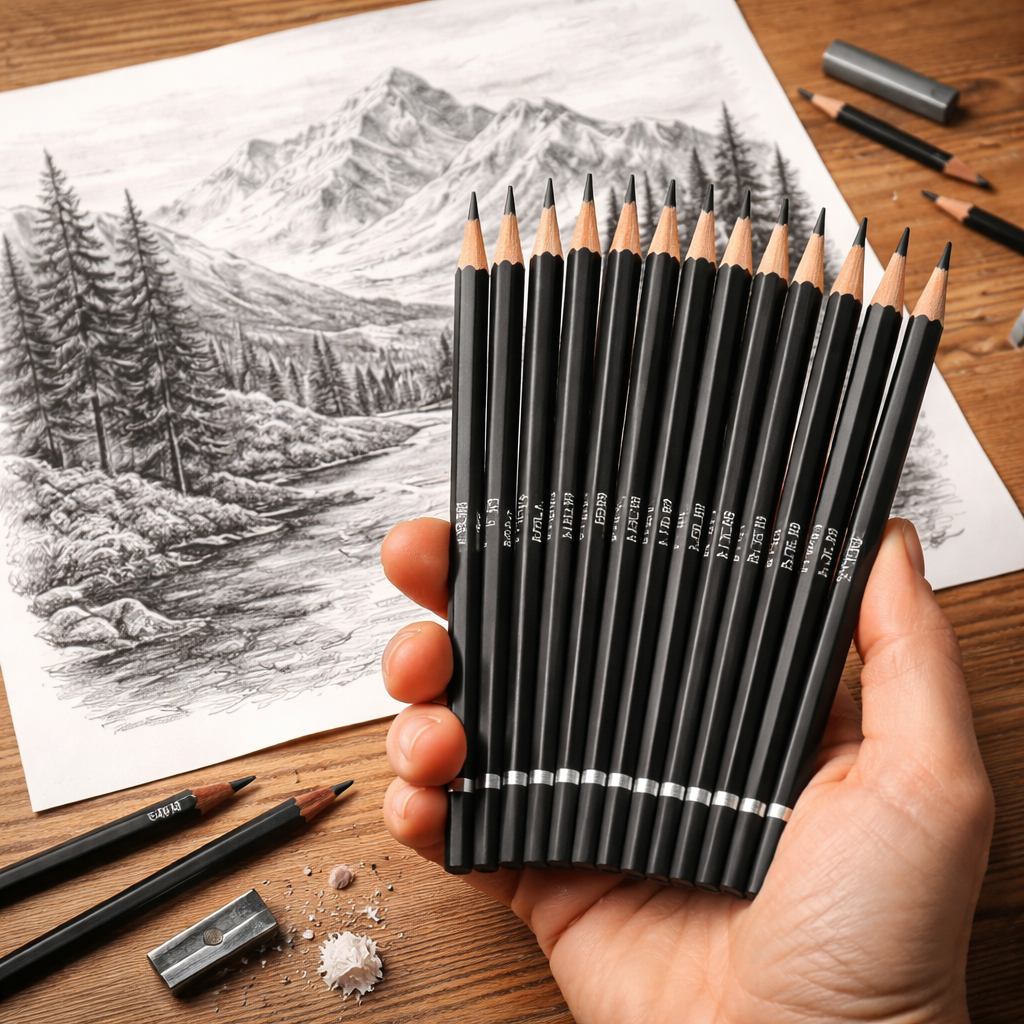
Finding the right pencil can make or break a landscape sketch. Too soft and the line spreads; too hard and you lose tone. In this guide you’ll learn how to choose pencils for landscape drawing, how to match grades to terrain, how to test and build a kit, and how to keep your tools in top shape.
Understanding Pencil Grades for Landscape Drawing
Knowing the scale of pencil grades is the first step in how to choose pencils for landscape drawing. The most common scale runs from 9H (very hard) to 9B (very soft). Hard grades (H, HB) leave light, fine marks that are great for sky and distant hills. Soft grades (B, 2B‑9B) make dark, rich lines perfect for foreground rocks or tree bark.
Hard pencils have more clay in the lead. That means they break less and stay sharp longer. Soft pencils have more graphite, so they lay down more pigment. That also means they smudge easier, which can be useful for blending clouds.
When you start a new scene, ask yourself which parts need fine detail and which need broad tone. Use a 2H or 3H for the far‑off horizon. Switch to an HB or B for middle ground. Finish with a 4B or 6B for the nearest objects that need depth.
Here’s a quick cheat sheet you can keep by your easel:
- 9H‑4H: Ultra‑light, crisp lines; good for architectural sketches.
- 3H‑HB: Light to medium lines; ideal for sky, water, distant trees.
- B‑4B: Darker, richer strokes; perfect for foliage and rocks.
- 5B‑9B: Very dark, soft; best for deep shadows and heavy texture.
Why does this matter? A hard line on a distant mountain will keep the sketch airy. A soft line on a close bark will give you that gritty feel you want.
Many artists start with a simple set of five grades. You can add more later as your style grows. For a budget‑friendly start, look for student‑grade pencils that still follow the standard scale.
For more details on grade differences, check out Julia Henze’s guide on pencil characteristics and Bonny Snowdon’s landscape tips. They explain how hardness affects line quality in real sketches.
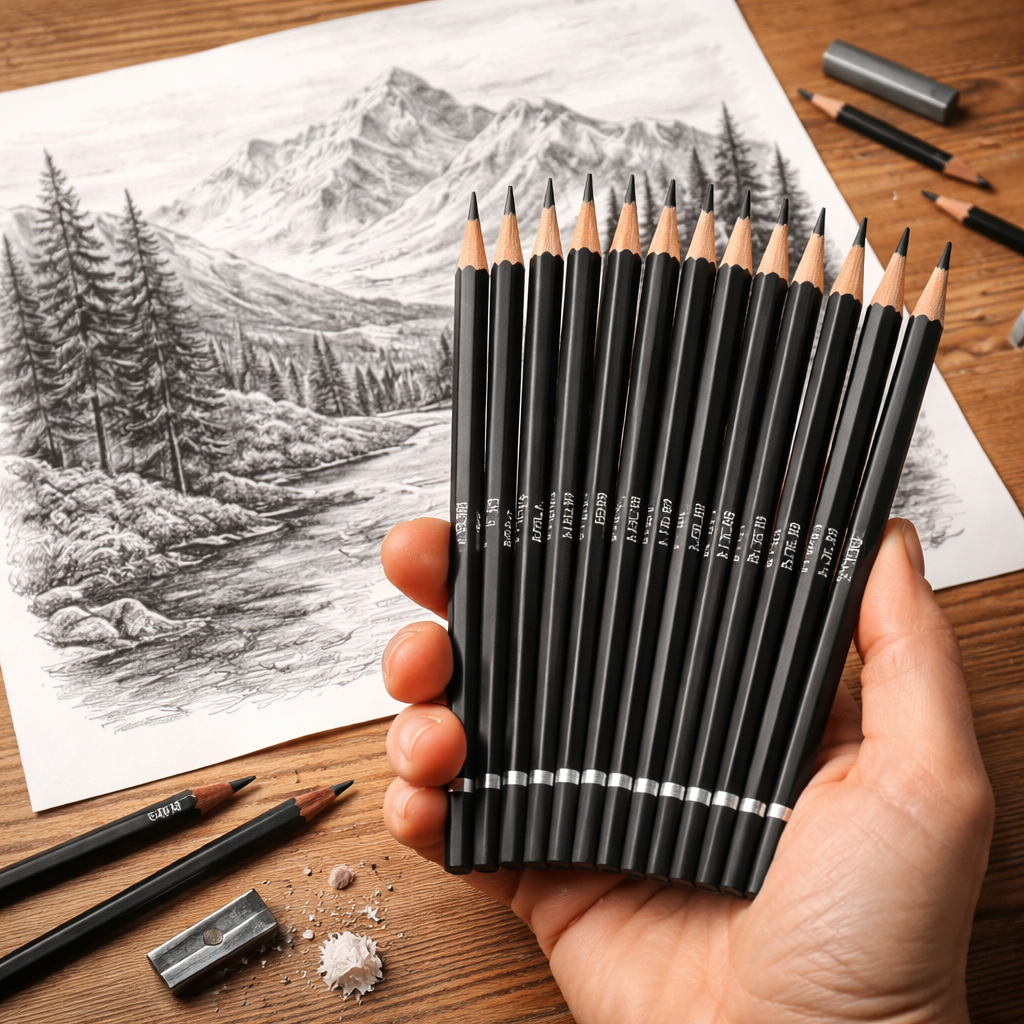
Selecting the Right Hardness for Different Terrain Elements
Now that you know the grade scale, let’s apply it to real terrain. How to choose pencils for landscape drawing means matching each element to the right hardness.
Sky and Water
Use hard grades like 2H or 3H for clouds and distant water. Light pressure keeps the marks airy. A short, flicking motion can suggest wind‑swept clouds without darkening the sky.
Grass and Foliage
Grass needs texture, not solid black. A medium grade such as HB or B works well. Layer a light green tone, then add a softer B over the tips to give each blade a tiny highlight.
Imagine you’re drawing a meadow. First, draw a light 2H outline of the hill shape. Then, with a B, add quick, short strokes for each blade. The B will leave a darker line that looks like a shadow on the grass.
Rocks and Soil
Rocks are heavy and need strong contrast. Grab a 4B or 6B. Press harder for deep cracks, then lift the pencil to reveal highlights. The softness lets you blend quickly, so you can smooth a stone surface in just a few passes.
Trees and Bark
Tree trunks often have fine bark lines. Start with a 2H for the outer shape. Then switch to a 2B for the rough texture. Use a circular motion to mimic the grain. A final dark 5B can add deep shadow in crevices.
Here are some pros and cons to keep in mind:
- Hard (H‑HB): Pros – stays sharp, less smudging; Cons – lighter marks, may need many layers.
- Soft (B‑9B): Pros – rich darks, easy blending; Cons – quick wear, may break if pressed too hard.
Choosing the right hardness for each element helps you keep the sketch balanced. Too many soft strokes will make the whole page look heavy; too many hard strokes will look flat.
For extra tips on layering greens and using light pressure, see Julia Henze’s article and Bonny Snowdon’s advice. Both sites give clear examples of how grade choice changes tone.
Testing Pencils and Building Your Personal Kit
Testing is the real game‑changer in how to choose pencils for landscape drawing. You can’t rely on the label alone; you need to feel how each pencil works on your paper.
Step‑by‑Step Test
- Grab a sheet of smooth drawing paper.
- Take a 2H, an HB, a 2B, and a 6B.
- Draw a short line with each, using light, medium, and heavy pressure.
- Look at the line’s darkness, texture, and how it lifts off the paper.
- Shade a tiny box with each to see how it blends.
If a pencil feels too scratchy, skip it. If it smudges too fast, you may want a harder grade for fine work.
Building a Kit
A starter kit should cover the whole range without breaking the bank. Here’s a practical list:
- 2H – for sky and distant hills.
- HB – all‑round work, good for mid‑ground.
- 2B – foliage and medium shadows.
- 4B – deep shadows and bark texture.
- 6B – darkest areas and heavy blending.
From there you can add specialty pencils like a charcoal stick for dramatic night skies, or a colored pastel for a pop of sunset.
Below is a simple table that shows which grade works best for common landscape parts.
| Terrain Part | Recommended Grade | Why It Works |
|---|---|---|
| Sky (far) | 2H‑3H | Light, crisp lines keep the sky airy. |
| Water (calm) | HB‑2B | Medium darkness adds depth without heavy smudge. |
| Grass (mid) | HB‑2B | Allows layering of light and dark strokes. |
| Rocks (near) | 4B‑6B | Dark, soft lead gives strong contrast. |
| Tree bark | 2H‑2B | Hard for outline, soft for grain. |
Watch this quick video for a live demo of testing pencils and setting up a kit:
When you buy new pencils, think of them like tools in a toolbox. You don’t need a hammer for every job, just the right one for the task.
For more ideas on testing at home, read Julia Henze’s step‑by‑step guide and Bonny Snowdon’s beginner tips.
And if you want to see how video tools can help you share your process, check out How to Master AI Video Editing for Social Media. It shows easy ways to turn a sketch session into a short clip.
Need a simple video tutorial for business owners? See AI Video Editing Tutorial: A Simple Guide for Business Owners. It’s a quick walk‑through that even artists can follow.
Looking for event ideas? A Complete Guide to Photo Booth Rental San Diego can give you fun ways to showcase your art at a local fair.
Want 360‑degree views? Read Everything You Need to Know About 360 Video Booth Rental for a fresh take on showing your work.
Planning a small town showcase? The Guide to Photo Booth Rental Temecula for Unforgettable Events offers tips on setting up a photo spot at art shows.
Caring for and Maintaining Your Landscape Drawing Pencils
Even the best pencils need love. How to choose pencils for landscape drawing means you also need to know how to keep them sharp and safe.
Sharpening Basics
Use a metal handheld sharpener for hard grades. It gives a clean point without breaking the lead. For soft grades, a knife sharpener works better. Hold the pencil at a shallow angle and shave away a thin sliver. This prevents the lead from splintering.
Never twist the pencil in a rotary sharpener. The motion can crush the soft lead and leave a stub.
Storage Tips
Store pencils upright in a wooden case or a simple cup. Keep the case in a dry room. Moisture can make the wood swell, causing breakage.
Separate hard and soft grades. Hard pencils stay sharp longer, so you can keep them together. Soft pencils benefit from a small eraser nearby to fix smudges.
Cleaning and Erasing
Use a kneaded eraser for soft grades. It lifts graphite without rubbing away the paper texture. A vinyl eraser works fine for hard grades.
After a long session, wipe the pencil tips with a soft cloth. This removes graphite dust that can dull the point.
Here are three quick care habits:
- Check the tip before each sketch. A quick tip with a knife keeps lines crisp.
- Rotate the pencil in your hand. This spreads wear evenly.
- Log your favorites. Write down which grades you used for each terrain. It helps you repeat successful combos.
For more on paper texture and pencil interaction, see Julia Henze’s article and Bonny Snowdon’s tips. They explain how different papers affect the look of hard and soft leads.
Planning an event? You might like the Photo Booth Rental for Graduation Party: A Step‑by‑Step Guide. It gives ideas on how to let guests try drawing on a backdrop.
Birthday parties can get creative too. Check out the Birthday Party Photo Booth Rental Guide for 2026 for fun art stations.
Corporate events need the right vibe. See How to Choose the Best Corporate Event Photo Booth Rental for Your Business for sleek set‑ups.
Mirrored booths are trendy. Read Mirror Photo Booth Rental: 7 Must‑Know Tips for an Unforgettable Event for a glossy finish.
Prom night? The How to Choose the Perfect Prom Photo Booth Rental for an Unforgettable Night shows how to blend music and art.
Wedding planners love the How to Choose the Perfect Wedding Photo Booth Rental: A Step‑by‑Step Guide for romantic backdrops.
Murrieta events? The Photo Booth Rental Murrieta: A Complete Guide for 2026 Events lists local vendors.
And if you ever need a boat for a lake sketching trip, the Buying a Pontoon Boat OK: 7 Essential Tips for Choosing the Right Vessel article gives practical advice.
Conclusion
Choosing the right pencils is the backbone of any good landscape sketch. By learning the grade scale, matching hardness to terrain, testing each lead, and caring for your tools, you set yourself up for consistent results. A small kit of five grades can cover most scenes, and you can add specialty pencils as you grow. Keep your pencils sharp, store them dry, and revisit your kit every few months to replace worn leads. With these habits, every hill, tree, and cloud will come alive on your page. Ready to start? Grab a 2H and a 6B, head outside, and let the land guide your hand.
FAQ
What grade should I start with for beginners?
Most beginners do well with a simple set that includes a 2H, HB, 2B, and 4B. The 2H lets you draw light sky lines, HB works for most middle ground, 2B adds depth to foliage, and 4B gives strong shadows. This range covers the basics of how to choose pencils for landscape drawing without overwhelming you.
How often should I sharpen my pencils?
Sharpen a pencil whenever the tip becomes dull or breaks. For hard grades, a quick dip in a metal sharpener keeps the point crisp. Soft grades need a knife sharpener; a thin slice restores the tip without crushing the lead. Frequent sharpening helps you maintain clean lines, which is key for detailed landscape work.
Can I use colored pencils for landscapes?
Yes. Colored pencils can add rich tones to a landscape, especially when you layer greens, earth tones, and blues. The same rules of hardness apply: harder colored leads give fine lines, softer leads give bold color. Look for artist‑grade colored pencils if you want strong pigment and less breakage.
What paper works best with soft pencils?
Smooth, heavyweight drawing paper is ideal for soft grades like 4B or 6B. The paper should have a fine tooth that holds the soft graphite without tearing. A 200‑300 gsm sketch paper gives you enough grip for dark shadows while still allowing you to lift lines when needed.
How do I avoid smudging when using soft pencils?
Use a light hand when you first lay down soft strokes, then blend with a blending stump or a clean fingertip. Keep a piece of scrap paper under your hand to catch excess graphite. A kneaded eraser can lift stray smudges without damaging the paper.
Should I buy a mechanical pencil for landscapes?
Mechanical pencils are great for precise, consistent lines, especially in hard grades like 2H. They never need sharpening, which saves time. However, they can’t handle soft grades well because the lead is too thin to produce the dark, textured strokes you need for foreground elements. Use them for sky and distant details.
How can I test a new pencil before buying a whole set?
Buy a single lead from a brand’s sampler pack or ask the store for a tester. Draw a short line, a light shading box, and a dark shading box. Compare how each reacts to pressure and how well it lifts. This simple test helps you see if the pencil fits your style and informs how to choose pencils for landscape drawing.
