
Drawing on toned paper feels different. The mid‑tone pushes you to think about light and dark at the same time. If you pick the wrong pencil, the marks can look flat or messy. This guide walks you through the exact steps to choose the best pencils for sketching on toned paper, test them, and build a kit that works for any style.
By the end you’ll know why some leads work better, how to match hardness to paper, and which tools to keep in your bag.
Step 1: Understand the Unique Demands of Toned Paper
Toned paper sits between white and black. It gives you a built‑in middle value. That means you can add dark shadows with graphite or charcoal and lift highlights with a white pencil or gel pen. The paper’s surface also affects how the lead slides. A smoother surface lets a soft lead glide, while a textured surface can catch a harder lead.
When you start a sketch on a tan sheet, you’ll notice you need less pressure to get dark marks. The tone already holds some value, so a light hand can create strong contrast. That also means you can work faster , you don’t have to build a full range from scratch.
One tip from artists is to begin with the lightest values first. If you lay down a white pencil highlight before you add charcoal, you avoid a dirty gray edge that can happen when dark media is applied first.
Another demand is durability. Sketches on the go get bumped, so you want a lead that won’t break easily. Some artists favor a slightly harder lead for travel work, while studio work can handle softer leads.
Because the paper already gives you a middle value, you can also experiment with mixed media. Adding a wash of light watercolor or a thin ink line can change the mood without overwhelming the surface.
Artists who study life drawing often use toned paper to force themselves to think in values. It trains the eye to see the full range of light and shadow.
Chosen By Art explains how charcoal and white colored pencil interact on toned paper, noting that starting with highlights can keep the darks clean.
Bottom line: Toned paper gives you a built‑in middle tone, so you need pencils that can deliver both deep darks and bright highlights without making the surface look muddy.
Step 2: Choose Between Graphite, Charcoal, and Colored Pencils
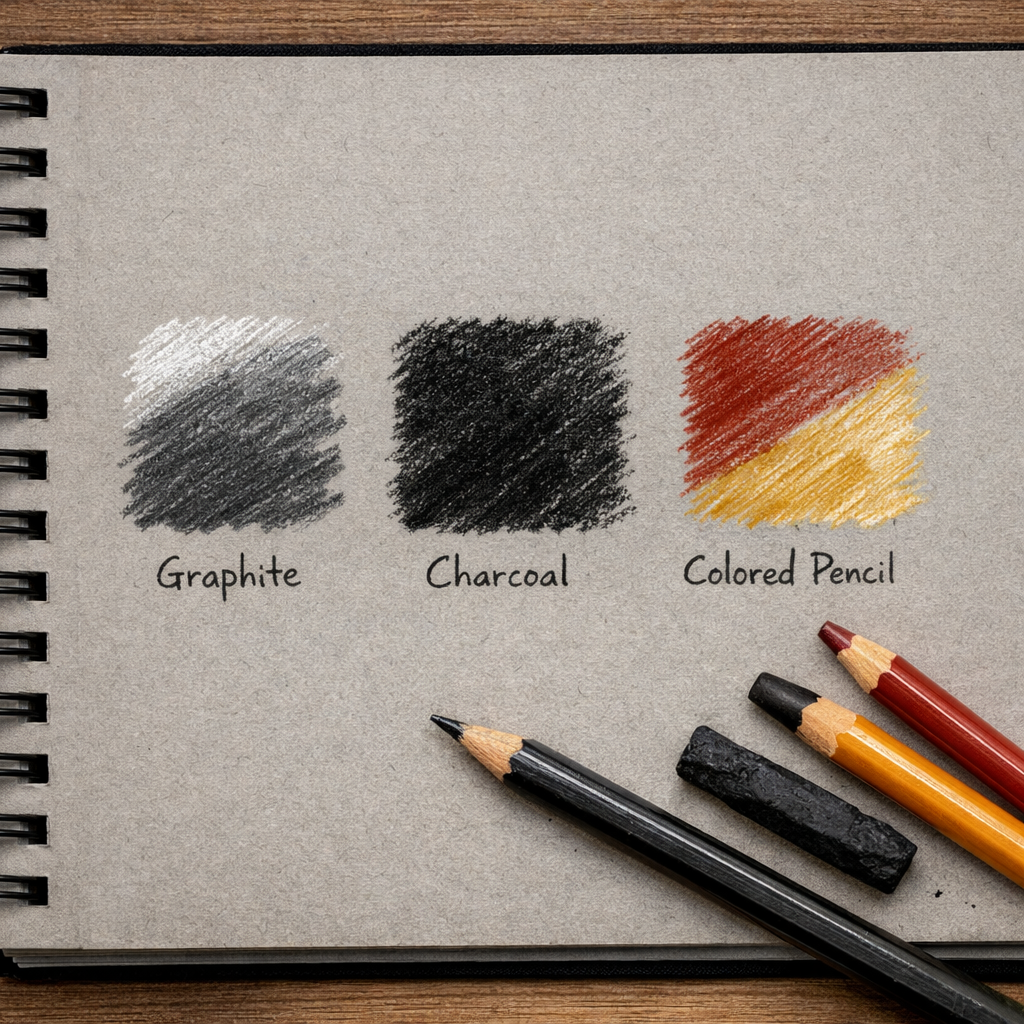
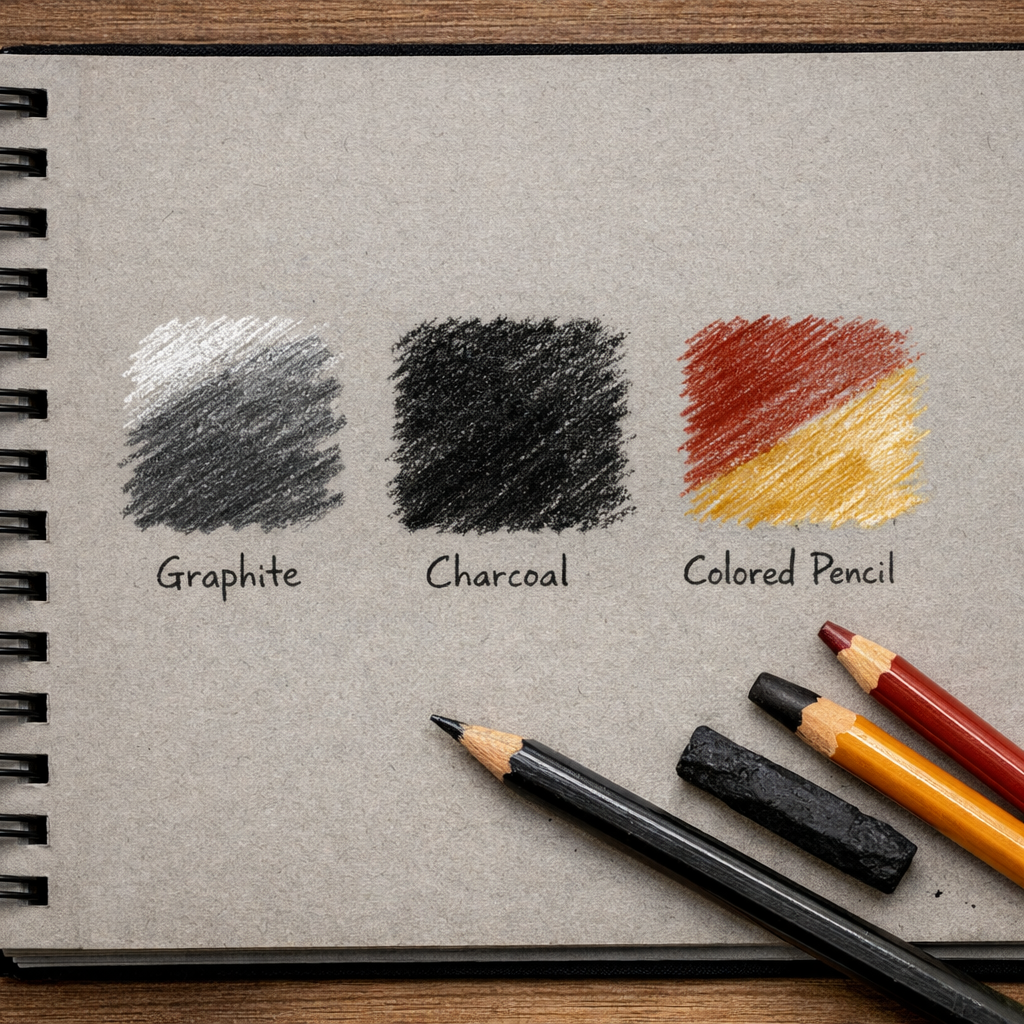
Each type of lead behaves differently on a mid‑tone sheet. Graphite is classic. It leaves a metallic gray that can be smudged for soft shading. Charcoal is darker and more matte, perfect for deep shadows. Colored pencils add hue and can turn a neutral background into a vibrant scene.
Graphite leads come in many grades. A 2B or 4B is soft enough to make rich darks on gray paper, while an HB works well for fine lines on tan paper. Because the paper is already mid‑tone, you may not need the hardest grades.
Charcoal sticks are either compressed or vine. Compressed charcoal is dense and gives strong blacks quickly. Vine charcoal is lighter and easier to lift, good for sketchy lines that you might erase later.
Colored pencils can be wax‑based or oil‑based. Wax‑based soft pencils like Derwent Coloursoft blend easily, but oil‑based pencils such as Derwent Lightfast or Caran D’Ache Luminance hold their pigment better on dark paper. The research shows oil‑based leads often outperform wax‑based on toned surfaces.
Imagine you’re drawing a portrait on a gray pad. You start with a soft graphite for the hair, then add charcoal for the deepest shadows, and finish with a light orange colored pencil for a hint of skin tone. The contrast pops because each medium sits on a different part of the value scale.
Here’s a quick way to decide:
- Need strong, matte blacks? Choose charcoal.
- Want smooth, blendable shading? Pick graphite.
- Looking for color without losing contrast? Go oil‑based colored pencils.
When you test a new pencil, draw a swatch on the same toned sheet you’ll use for the final piece. Look for how the pigment sits, whether it smudges too much, and if the line stays crisp.
Graphite has a natural shine that can reflect light on a mid‑tone surface, making highlights easier to see.
Bottom line: Each lead type offers unique strengths; match the one that fits your sketch’s value and color needs.
Step 3: Select the Right Pencil Hardness and Softness
Hardness is the next factor after lead type. The classic grading system runs from 9H (hardest) to 9B (softest). On toned paper you often want a middle‑soft lead , soft enough to lay down dark tones quickly, but not so soft that it flakes.
Research on 13 pencils found that both soft wax‑based and harder oil‑based leads scored high on toned paper. That means you can’t rely on hardness alone. Look at the brand’s description of how the lead behaves.
For example, Derwent Lightfast is marketed as “harder, chalkier” but reviewers praised its intense color on black paper. Caran D’Ache Luminance, though harder, also gave bold pigment on dark surfaces.
When you sharpen a soft lead, you may need a larger point to keep it from breaking. A mechanical pencil with a 0.7 mm lead works well for HB or H grades, while a traditional wooden pencil gives you more control over a soft B grade.
Test the hardness by drawing a line, then pressing harder. If the line darkens dramatically, the lead is soft enough for deep shadows. If it stays light, you may need a softer grade.
Here’s a simple three‑step test:
- Draw a thin line with light pressure.
- Increase pressure to see how quickly the tone deepens.
- Erase the line; note how much graphite dust remains.
If the eraser lifts most of the mark, the lead is likely too hard for tonal work.
Keep a small range of grades in your kit , a soft 4B for deep shadows, a medium 2B for mid‑tones, and an HB for fine lines.
Colored pencils often list their core type (wax or oil) alongside hardness, so read the spec sheet before buying.
Bottom line: Choose a handful of grades that let you move from light to dark smoothly; don’t rely on “hard” or “soft” alone.
Step 4: Test Your Pencil Selection on Toned Paper
Testing is where theory meets practice. Grab a small sheet of the exact toned paper you’ll use , Strathmore’s tan or gray pads are popular choices. The goal is to see how each pencil’s pigment interacts with the paper’s surface and tone.
Start with a simple value chart. Draw five squares, each filled with a different pencil from your kit. Label the squares with the pencil name and grade. Then step back and compare the darkness, blendability, and how the paper’s tone affects the final look.
Watch for these signs:
- Does the lead sit on top of the paper or sink in?
- Is the color vivid or muted by the paper’s hue?
- Does it smudge too much when you shade?
Record your observations in a notebook. A quick table helps keep track.
This table mirrors the research findings that oil‑based pencils earned top marks for tonal paper, while some wax‑based pencils also performed well.
“Oil‑based leads often outperform wax‑based on dark or toned paper , a surprising twist for sketch artists.”
After the chart, try a quick sketch of a simple object , a cup or a leaf. Notice how the pencil handles edges, how easy it is to lift the lead for highlights, and whether the paper’s tone interferes with the color.
Once you’ve gathered data, rank the pencils from best to worst for your specific paper. This ranking will guide the final kit.
Strathmore’s official toned paper guide explains how the paper’s weight and surface affect lead performance.
Bottom line: Test each pencil on the actual toned paper you’ll use, note darkness, blendability, and how the paper’s hue changes the look, then pick the top performers.
Step 5: Assemble Your Ideal Toned Paper Sketching Kit
Now you know which leads work best. Time to pull them together into a kit you can carry anywhere.
Start with a core set of pencils:
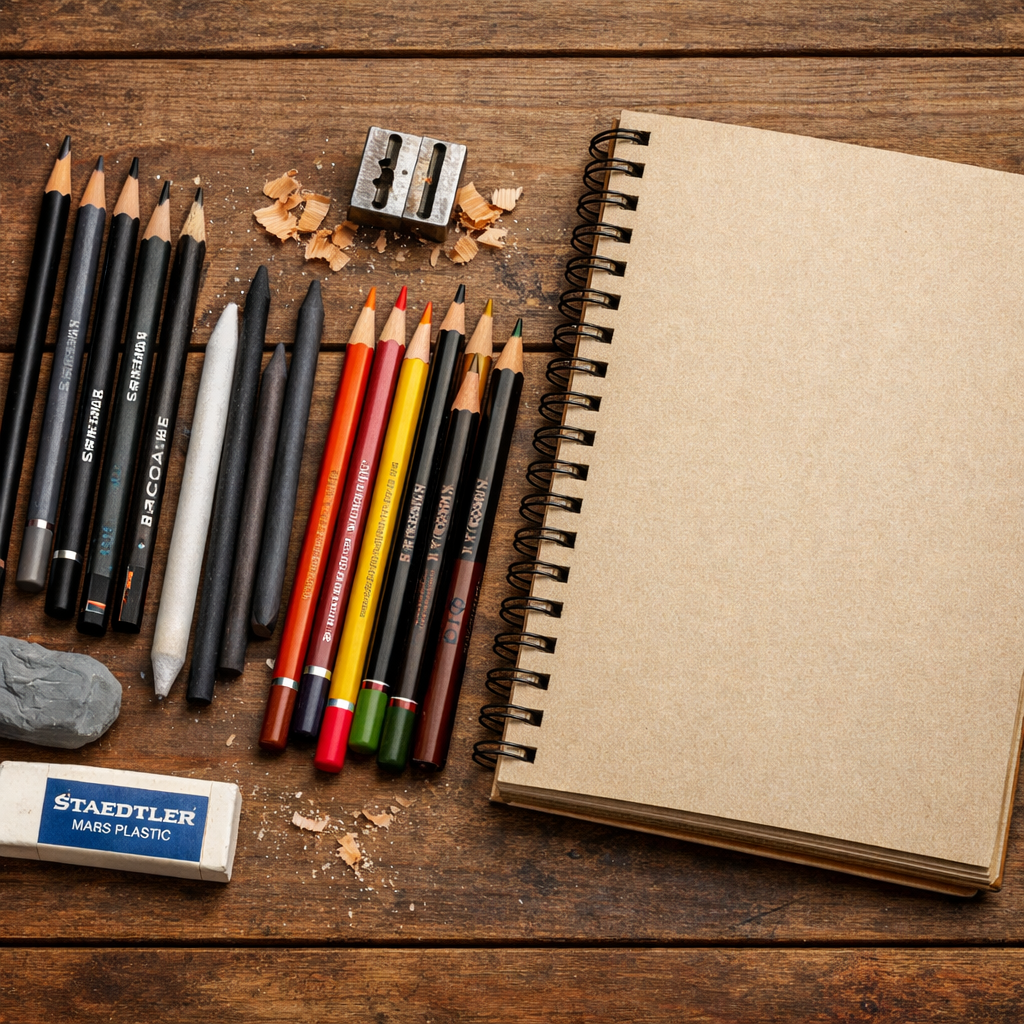
- One soft oil‑based colored pencil (Derwent Lightfast or Caran D’Ache Luminance) for vivid accents.
- One soft wax‑based colored pencil (Derwent Coloursoft) for easy blending.
- Two graphite grades , a 2B for dark values and an HB for fine lines.
- A compressed charcoal stick for deep blacks.
Add a few accessories:
- A good quality sharpener with a sandpaper wheel to keep soft leads intact.
- A kneaded eraser , it lifts charcoal and graphite without tearing the paper.
- A white gel pen for crisp highlights on tan or gray paper.
- A small sketchbook of the same toned paper you tested, so the surface stays consistent.
Organize the tools in a compact pouch. Keep the pencils separated by type so you can grab the right one fast. Many artists use a zip‑top case with individual slots.
Here’s a quick checklist you can print:
- Soft oil‑based color pencil
- Soft wax‑based color pencil
- 2B graphite
- HB graphite
- Compressed charcoal
- Sharpener
- Kneaded eraser
- White gel pen
- Toned sketchbook
For more ideas on the top pencils for portrait work on toned paper, see Best Pencils for Sketching Portraits on Toned Paper. That page breaks down why each brand shines in real‑world tests.
Bottom line: Build a lightweight kit with the proven leads, a few accessories, and a matching sketchbook , you’ll be ready for any on‑the‑go sketch.
Frequently Asked Questions
What hardness should I start with on gray toned paper?
Begin with a 2B graphite for dark areas and an HB for fine lines. The gray tone already gives you a mid‑value, so a 2B will create strong contrast without needing an extremely soft lead. Test a few strokes; if the line feels too light, move to a 3B.
Can I use watercolor on toned paper?
Yes, but only on heavier pads that are designed for wet media. Test a small wash first , if the paper buckles or the color bleeds through, switch to a mixed‑media toned pad. Keep the watercolor light so the paper’s tone still shows through for depth.
Do wax‑based colored pencils ever work on dark paper?
They can, but oil‑based pencils usually hold pigment better on dark surfaces. Wax‑based leads may lift off the paper or look dull. If you prefer wax, choose a soft core and layer with a white gel pen for highlights.
How do I prevent my sketches from smudging in a sketchbook?
Use a kneaded eraser to lift excess graphite and a fixative spray after you finish a page. Store the sketchbook flat or with the pages face‑down to avoid rubbing. A thin sheet of backing paper between pages also helps.
Is a mechanical pencil a good choice for tonal paper?
Mechanical pencils work well for hard grades like HB or H because the lead stays thin and consistent. For very soft leads (2B‑6B), a wooden pencil gives you more control and less breakage on textured tones.
Should I buy artist‑grade pencils or student‑grade?
Artist‑grade pencils have higher pigment concentration and smoother cores, which matter on toned surfaces. They also break less and blend better. While they cost more, the performance boost is worth it for serious sketching.
Conclusion
Choosing the right pencils for sketching on toned paper is a mix of lead type, hardness, and testing on the exact sheet you’ll use. Start by understanding how the paper’s mid‑tone changes the way dark and light marks appear. Pick graphite, charcoal, or colored pencils that suit your style, and don’t overlook oil‑based colors , they often shine on dark backgrounds. Test each lead, record what works, then build a compact kit with a few essential grades and tools. With this process you’ll create sketches that pop, save time, and enjoy the unique feel of toned paper.
Ready to upgrade your sketching game? Grab the pencils that earned top marks in our tests, pack the accessories, and start drawing on toned paper today.
