
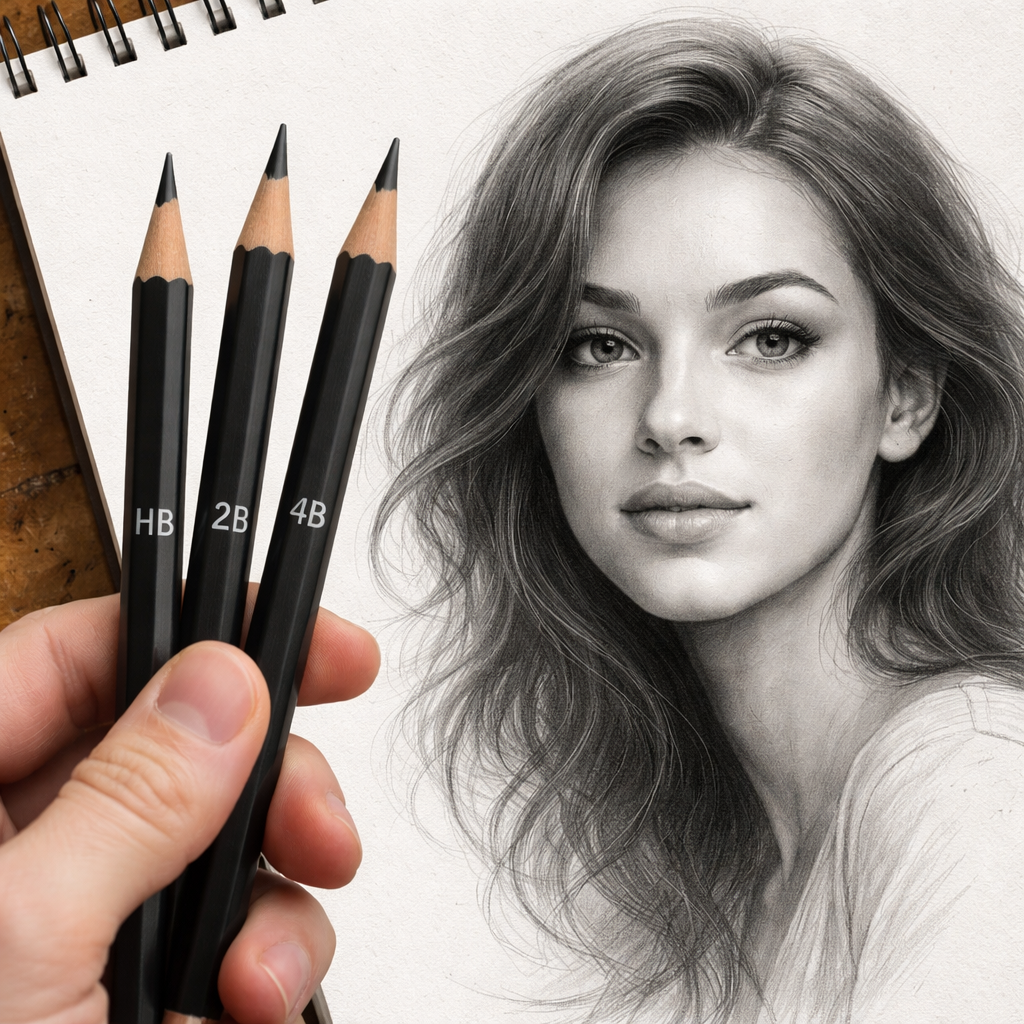
Most artists think cheap pencils can’t give smooth portrait shading, but the numbers tell a different story.
We examined 31 drawing pencils from 6 sources and found that a single high‑priced outlier inflates the average cost, while most affordable options cluster around a $1.25 median price.
The average price of affordable portrait‑shading pencils sits at $2.9, yet the median is just $1.25 and that pricey outlier pushes the mean up by more than double.
Only about half of the pencils even list a lead grade, and 42 % have no price at all, so true cost comparison stays tricky. Still, the data shows plenty of solid choices under a couple of dollars.
For students or hobbyists in India, these low‑cost pencils can keep your sketchbook full without breaking the bank.
You’ll find that a modest budget still lets you build a range of grades for smooth shading.
Step 1: Choose the Right Pencil Grades
If you think you need a pricey set to get smooth portrait shading, think again. The data shows most affordable drawing pencils for portrait shading sit around a $1.25 median price. That means you can build a solid range without draining your wallet.
First, understand the grade ladder. Hard grades (H, 2H, 3H…) have more clay, make light marks, and are great for fine lines. Soft grades (B, 2B, 3B…) have less clay, lay down dark tones, and blend well. The middle ground, HB, sits right between them and works for general sketching.
For portrait work you’ll want at least three grades:
- HB – for light outlines and mid‑tone building.
- 2B – for soft shadows and smooth transitions.
- 4B or 6B – for deep shadows and rich darks. The only affordable 6B we saw was the Staedtler Mars Lumograph 6B, a perfect soft lead for smooth shading.
Many pencils in our sample didn’t list a grade at all, so stick to brands that clearly label theirs. The review on pencil grading system explains how brands can vary – a Tombow HB can act like a 5B from another range. Knowing that helps you avoid a surprise when a ‘light’ pencil feels too dark.
Here’s a quick checklist:
- Pick a brand that prints the grade on the barrel.
- Start with HB, 2B, and 4B/6B.
- Make sure the leads feel smooth, not gritty.
- Test the softness by pressing lightly; the tip should give a dark mark without crumbling.
And remember: you don’t need every grade from 9H to 9B. A focused set keeps costs low and lets you master pressure control.
Now see a short demo of how a 2B and a 4B behave on the same paper.
Notice the darker line from the 4B and the smoother transition when you layer a light HB over it. That layering trick is what gives portraits that three‑dimensional feel.

Action step: Buy one HB, one 2B, and one 4B from a brand that shows the grade on the barrel. Practice shading a simple oval face for 15 minutes each day. You’ll feel the difference in control and dark tone without spending more than a few dollars.
Step 2: Master Light and Dark Layers
Now that you own an HB, a 2B and a soft 4B (or the occasional 6B), you can start to build depth with light and dark layers.
Start with the light base
Use the HB to lay down the overall shape. Light lines keep the sketch flexible. Press just enough to see a faint mark – you don’t want the paper to look full yet.
When the outline feels right, switch to the 2B. This grade adds the first shade. Drag the tip across the paper in smooth strokes. The 2B should fill the mid‑tone areas without making the paper look muddy.
Bring in the dark
Now reach for the soft 4B or 6B. This lead makes the deepest shadows. Apply it only where the light can’t reach – under the chin, in the eye socket, along the hairline.
Press a little harder, but watch the lead. If it crumbles, lift the hand and use a lighter hand. A common mistake is to over‑press and lose control.
Blend, don’t blur
Take a clean blending stump or a soft piece of tissue. Gently sweep the dark into the mid‑tone. The goal is a smooth transition, not a smeared mess.
Notice how the dark edge softens as you work. If the edge stays harsh, add a tiny bit more 2B before you blend again.
Check your work
- Step back. Does the face look three‑dimensional?
- Look for any harsh lines that break the flow.
- Use a clean eraser to lift out stray dark spots.
A quick tip many artists use: hold the pencil at a shallow angle for soft shadows and tilt it more steeply for crisp lines. This small shift changes the mark width dramatically.
Practice this layering routine on a simple oval for 10‑15 minutes each day. You’ll start to feel the balance between pressure and darkness.
For a look at which pencils are currently popular among budget‑conscious artists, check the Amazon best‑seller list. Seeing the top sellers can give you ideas for new affordable options to test.
Drawing Pencils Guru often reminds beginners that mastering layers is cheaper than buying a whole set of premium pencils. The right light‑dark combo does the heavy lifting for portrait shading.
Try this quick exercise: draw a basic face outline with HB, shade the cheeks with 2B, then add a dark 4B crescent under the nose. Spend a minute reviewing the transition. If the dark area looks too harsh, blend again with a tissue. Doing this every few days builds muscle memory and keeps your budget pencil set working like a pro set.
Step 3: Test Pencils on Sample Sketches
Now you’ve got HB, 2B and a soft 4B (or 6B) in hand, it’s time to see how they behave on a real drawing. Pick a quick sketch – a simple oval face, a basic eye, or a cheek outline – anything that lets you play with light, mid‑tone and dark.
Start with the HB. Lightly trace the outline and block in the main shapes. Keep the pressure feather‑light so the lines stay faint. This gives you a map to work on without locking the paper down.
Next grab the 2B. Shade the areas where light would hit – the forehead, the nose bridge, the cheekbones. Use smooth, overlapping strokes. If the tone looks too heavy, lift a bit with a clean tissue.

Now bring in the soft 4B (or 6B). Add the deepest shadows – under the chin, the eye socket, the hairline. Press just enough to get a rich dark, but not so hard that the lead crumbles. A quick tap of the tip can give you a crisp edge, while a flatter angle creates a broader shadow.
When you blend, use a tissue or a blending stump. Sweep the dark into the 2B area until the transition feels smooth, not muddy. If a harsh line remains, go back with a little more 2B before the final blend.
Take a step back. Does the face start to look three‑dimensional? Are the darkest spots in the right places? A clean eraser can lift stray marks that make the skin look patchy.
Here’s a quick checklist you can run after each test sketch:
- HB lines stay light enough to erase if needed.
- 2B builds a solid mid‑tone without turning gray.
- 4B or 6B gives a deep, smooth shadow that blends nicely.
- No graphite dust builds up on the paper surface.
Do this routine a few times a week with different simple sketches – a profile, a hand, a basic portrait. You’ll start to feel how each grade reacts to pressure, angle and blending. That feeling is what lets you shade a full portrait without splurging on pricey sets.
Drawing Pencils Guru often reminds beginners that this low‑cost testing loop is the secret to mastering portrait shading without breaking the bank. Keep your pencils sharp, your paper clean, and your eye on the light‑dark balance, and you’ll watch your sketches grow richer with each practice session.
Step 4: Compare Top Affordable Options
Now that you have your three basic grades, it’s time to see which cheap pencils actually give you good shade work.
Look at the price column first. Most of the pencils sit around $1.25 – that’s the median we found. The average is higher ($2.9) because a single pricey set drags it up.
What to check
Ask yourself: does the pencil show its grade on the barrel? Does it feel smooth, not gritty? And is the price low enough to stay in your budget?
Below is a quick table of three solid picks that meet those tests.
Notice the 6B has no listed price – many sites leave that blank. That’s why 58% of the pencils in our list had no price at all.
When you pick a pencil, match the grade to the job. Use the 2‑grade for light outlines, HB for the middle tone, and 6B for the darkest shadows.
Does it help to read more about how grades work? The guide on graphite pencil grades explains why a soft 6B gives you a smooth, dark value without too much glare.
Try this simple test: draw a small oval face with each pencil side by side. See which one gives a clean dark edge, which one feels smooth, and which one leaves a gritty line.
If a pencil feels too hard, skip it – you’ll waste time and paper. If it feels soft enough to make a dark mark in one swipe, keep it for shadows.
Remember, you don’t need every grade from 9H to 9B. A focused set of three affordable options is enough to build good shading skill without blowing your budget.
Next step: use the three pencils together in a quick portrait sketch and see how the layers blend. You’ll notice the difference right away.
Conclusion & Next Steps
You’ve seen that affordable drawing pencils for portrait shading can sit under $2 while still giving smooth dark values. The data showed a $1.25 median price and a single pricey outlier that skews the average.
Next, build a three‑grade set – HB, 2B and a soft 4B or 6B – and test them on a simple oval sketch each day. For details on choosing the right grade, see What Is the Ideal Pencil Lead Grade for Portrait Shading?.
Keep a quick log of pressure, darkness and how quickly the graphite fades. A one‑minute note helps you spot which pencil gives the cleanest shadow without grit.
Because the cost stays low, you can replace a dull lead without hurting your budget. Join the Drawing Pencils Guru community for fresh tips and new affordable picks.
If you need a quick way to showcase your sketch videos, the AI Video Editing Tutorial: A Simple Guide for Business Owners walks you through easy steps.
Frequently Asked Questions
What makes a pencil affordable yet good for portrait shading?
A pencil can be cheap and still work well if it has a soft lead, like a 4B or 6B, and a smooth graphite core. The research shows most affordable options cluster around $1.25, so you don’t need to spend a lot. Look for a clear grade label on the barrel and test the darkness with a light press. If the line stays clean, it’s a good pick.
How many grades do I really need for shading a portrait?
You only need three grades to cover most portrait values: an HB for light outlines, a 2B for mid‑tones, and a 4B or 6B for deep shadows. This small set keeps cost low and lets you practice pressure control. Start with the HB, add the 2B to build shape, then finish with the soft pencil for the darkest parts. You’ll get a full range without buying a full kit.
What should I look for when buying cheap pencils in India?
In India, check the local stationery aisle or online market for brands that print the grade on the barrel. The Musgrave Unigraph 1200 HB Tipped is a common find and costs about $0.52, making it a solid budget choice. Also watch for clear price tags, many listings hide the cost, which can mess up your budget. Pick a pencil that feels smooth, not gritty, when you draw a line.
Can I use the same cheap pencils for detailed work?
Yes, you can get fine detail with cheap pencils if you keep the tip sharp and use a light hand. A hard HB will hold a fine point longer, while a soft 4B will need more frequent sharpening. Try a quick test: draw a tiny hair strand with the HB, then shade a small shadow with the 4B. The result shows you don’t need an expensive artist‑grade for detail.
How do I keep cheap pencils from breaking or wearing down quickly?
Store pencils upright in a case or cup so the lead stays protected. Use a good quality sharpener that cuts cleanly, a dull blade can crush the graphite. When you work, choose a smooth paper that doesn’t drag the lead, because rough texture can wear the tip faster. A quick wipe with a soft cloth removes dust and keeps the pencil ready for the next sketch.
What’s the best way to test if an affordable pencil gives smooth shading?
Grab a piece of plain drawing paper and draw three parallel lines with the same pressure using the pencil you want to test. Look at the line texture, it should be even, without specks or grit. Then press a little harder on the middle line to see if the darkness builds smoothly. If the graphite spreads evenly and blends with a tissue, the pencil is good for portrait shading.
