
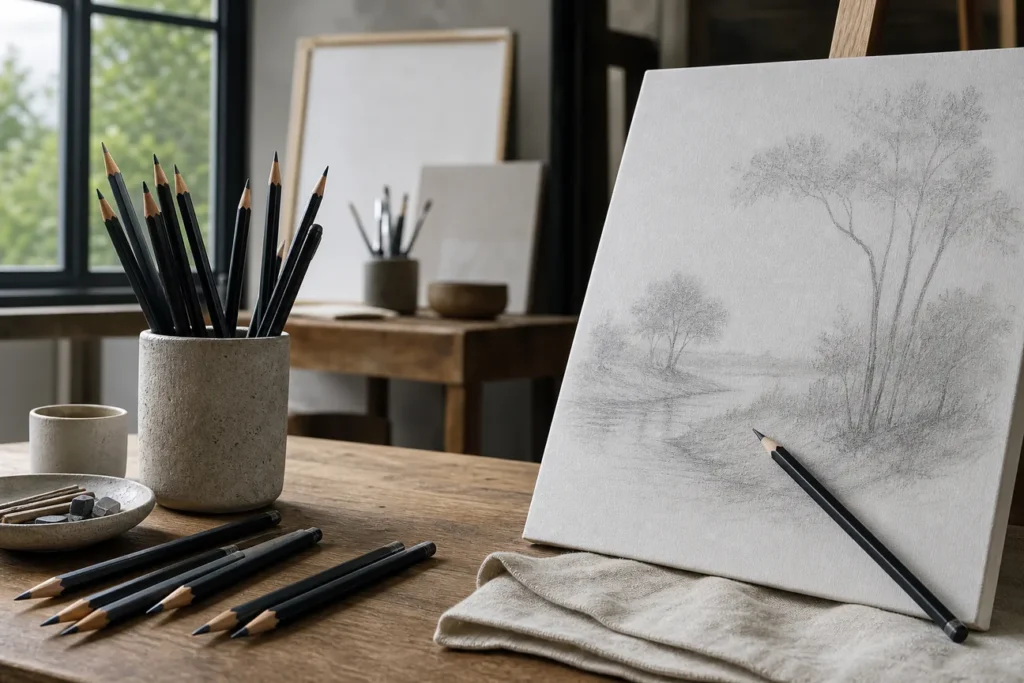
The softest graphite here, 6B, can blend as smoothly as high-end wax-based color pencils. That makes graphite a stronger canvas sketching choice than many artists expect. Here are the best drawing pencils for sketching on canvas, with a clear use case and caveat for each.
1. Drawing Pencils Guru (Our Top Pick)
Drawing Pencils Guru is the best starting point for artists who want help picking a pencil before they buy a full set. It is built around pencil testing, grade comparisons, shading advice, and the small tool choices that affect a finished sketch.
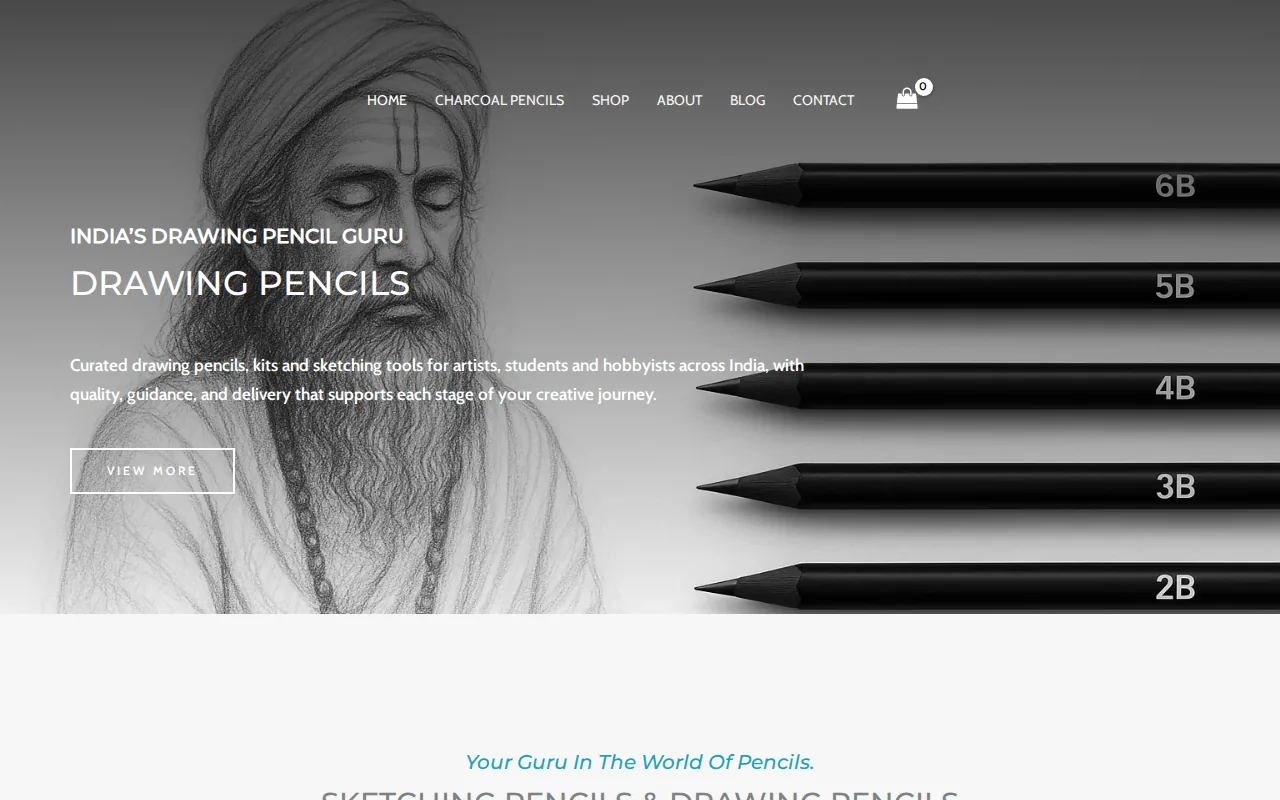
This is especially useful when canvas texture makes a pencil feel different from paper. A hard graphite point can catch on the weave. A soft point may spread dark marks across the surface. Drawing Pencils Guru explains how lead type, pressure, sharpening, and blending work together, so you can choose a tool for the task instead of guessing from the label.
The guidance also covers graphite, charcoal, and colored cores. That matters when your sketch will later receive paint or another layer. An HB pencil may suit a light layout. A softer grade can then build form without forcing you to press hard.
The limitation is simple: Drawing Pencils Guru is a guide and expert resource, not one single pencil formula. You still need to test the chosen grade on your own canvas. That is a fair trade for advice that helps you avoid buying tools you won’t use.
2. 3B Pencil, A Versatile Middle Ground for Shading
A 3B pencil is a strong middle choice for drawing pencils for sketching on canvas. It gives you more depth than HB without moving as quickly into the very dark, soft marks of 6B.
Use 3B for rounded forms, folds, hair masses, and early value studies. Begin with low pressure. Add another pass only where the form turns away from the light. This keeps the first marks light enough to adjust and lets the canvas texture show through in a controlled way.
Graphite is made from carbon in a layered form, mixed with clay to change its hardness. It can leave a smooth mark while still allowing a range of pressure-based values.
There is a catch. A 3B point can smudge if you rest your hand on a finished area. Place a clean sheet between your palm and the canvas, or work from light areas toward dark ones. Choose 3B when you want one pencil to handle both line work and soft shading.
3. 6B Pencil, The Soft Option for Deep Shadows
A 6B pencil is the soft graphite pick for deep shadows, bold accents, and fast value studies on canvas. It suits artists who want dark marks without switching to charcoal.
The research sample placed 6B at the soft end of the three graphite options. Reviewers still described its blending as smooth. That finding challenges the common idea that only wax-based colored pencils can make buttery transitions.
6B works well inside cast shadows, dark hair, eye sockets, and the gaps between overlapping forms. Keep the first layer thin. A second pass can deepen the value while leaving room for a kneaded eraser or a lighter pencil to pull back small highlights.
It also works for a loose underdrawing. You can block in the main dark shapes quickly, then soften selected edges with a clean blending tool. On a rough canvas, the soft lead may skip over the raised threads. That texture can add character, but it won’t give you a clean technical line.
Don’t choose 6B as your only pencil if your sketch needs tight measurement marks. It is easy to make a line darker than planned, and erasing can leave a visible change in the surface. For most artists, 6B is best paired with HB or 3B.
4. Faber-Castell Polychromos, Precise Oil-Based Colour Detail
Faber-Castell Polychromos is the oil-based colored pencil for detailed realistic drawings. Its harder lead gives you more control when you need fine edges or small marks on a prepared canvas.
The reviewed comparison drew a clear line between this pencil and softer options. Faber-Castell Polychromos was noted for its harder lead and its fit for detailed realistic work. That makes it useful for eyelashes, thin strands, small texture marks, and crisp changes between two nearby colors.
Work in light layers rather than forcing the point into the canvas. First map the shape. Then build the color where the form needs more weight. A sharp point can place color with care, while a side stroke can cover a wider patch.
Oil-based colored pencils are still colored pencils, so they won’t behave like graphite in a monochrome study. The research data also did not provide a hardness range for this option. That missing detail means you should test the point on your own canvas before planning a long, fine-detail session.
Pick Faber-Castell Polychromos when edge control matters more than instant soft blending. It is the better fit for a patient drawing built from many small marks.
5. Prismacolor, Vibrant Color for Layering and Blending
Prismacolor is the wax-based choice for rich color layers and soft blends. It suits canvas artists who want a bold colored sketch rather than a plain graphite layout.
The reviewed material praised Prismacolor for vibrant colors and for blending together well. Those strengths point to a simple workflow. Lay down a light base color first. Add a second hue over it. Use a final pass to deepen the area where the form turns away from the light.
Wax-based color can help when you want a smooth shift across a broad shape, such as a cheek, fruit, sky patch, or fabric fold. It also makes color mixing feel more direct because each new layer changes the surface tone.
Canvas is less forgiving than smooth paper. Its weave can leave small gaps in a colored layer. Use short strokes that follow the form, then revisit the gaps with a second direction. Avoid pressing hard at the start. Heavy pressure can flatten the texture before the color plan is complete.
The caveat is that the research sample did not list a hardness range for Prismacolor. You get clear guidance on color and blending, but less help with point firmness. Choose it when color richness is your main goal, not when you need a technical line.
6. Caran d’Ache Luminance, Premium Wax-Based Realism
Caran d’Ache Luminance is the premium wax-based option for high-quality realistic drawings. It is aimed at artists who care most about smooth color movement and a refined finish.
Its blendability is insanely good. The useful part is clear: this pencil belongs in the smooth-blend, realistic-color niche.
Try it on portrait planes, polished fruit, glass, or any subject where abrupt color steps look harsh. Start with a pale layer. Build toward the darks slowly. The wax core can help merge neighboring hues when you keep your pressure steady.
This kind of pencil rewards surface control. A rough canvas may still show its tooth, even after several layers. If the weave is strong, use the texture as part of the drawing instead of trying to fill every gap at once.
Its main weakness in the research is missing specification data. No hardness range was supplied for the wax-based pencils. That makes direct firmness comparisons hard. Pick Caran d’Ache Luminance for blend quality and realism, then test a small patch before committing to a large canvas.
Quick Comparison: The Best Pencils for Canvas Sketching
The right choice depends on the mark you need. Use this quick view before you start a canvas study. For a closer look at graphite grades and canvas paper, see these pencil recommendations for sketching on canvas paper.
HB is worth adding when your first lines must stay light. The research covered HB, 3B, and 6B, and all three graphite grades received the same smooth-blending description. That gives graphite the clearest evidence for flexible canvas shading in this shortlist.
FAQ
What is the best pencil for sketching on canvas?
The best first choice is usually a graphite pencil, with 3B as a useful middle grade. It can lay down clear lines and smooth shading without the deep softness of 6B. If you want help building a set, Drawing Pencils Guru is the strongest starting point in this shortlist.
Can you use graphite pencils on canvas?
Yes, you can use graphite pencils on canvas for layouts, value studies, and finished monochrome sketches. HB suits light planning, while 3B and 6B add darker values. Work with gentle pressure because the canvas weave can catch a sharp point and make lines look uneven.
Is 6B too soft for canvas sketching?
6B is soft, but it isn’t too soft for every canvas sketch. It works well for deep shadows and broad value shapes. It is less useful for measured lines and tiny detail. Pair it with HB or 3B so you can switch between structure and dark accents.
Are colored pencils good for drawing on canvas?
Colored pencils can work well on canvas when you want layered color rather than a plain graphite study. Prismacolor suits broad blending, while Faber-Castell Polychromos suits fine detail. Caran d’Ache Luminance fits smooth realistic work. Test each pencil on a scrap area first because canvas texture changes the feel.
What is better for detail, oil-based or wax-based pencils?
Oil-based Faber-Castell Polychromos is the better detail pick in this comparison because its harder lead supports precise marks. Wax-based Prismacolor and Caran d’Ache Luminance are better when you want soft color layers. The research did not give full hardness data for the wax-based options, so a test patch is wise.
Conclusion
Start with Drawing Pencils Guru’s advice, then test an HB and 3B on your canvas. Add 6B for deep shadows or a colored pencil when your sketch needs color. Keep the first marks light, work in layers, and let the canvas texture guide your pressure.
