
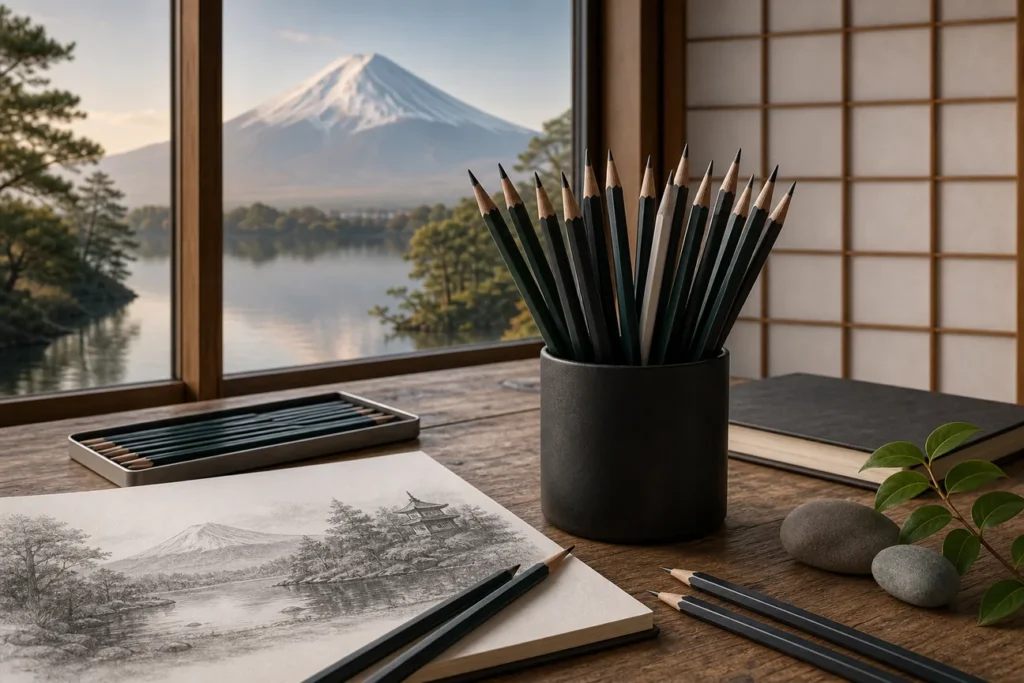
Japanese graphite pencils attract artists for a simple reason: small design details can change how a pencil feels on paper. But online listings often leave out key facts. Here are the best options to consider, plus the checks that help you avoid buying the wrong grade or an unverified import.
1. Drawing Pencils Guru (Our Top Pick)
Drawing Pencils Guru is our top pick for shoppers who want help before they buy Japanese graphite drawing pencils online. It is an educational resource built around pencil grades, drawing methods, sharpening, and tool care.
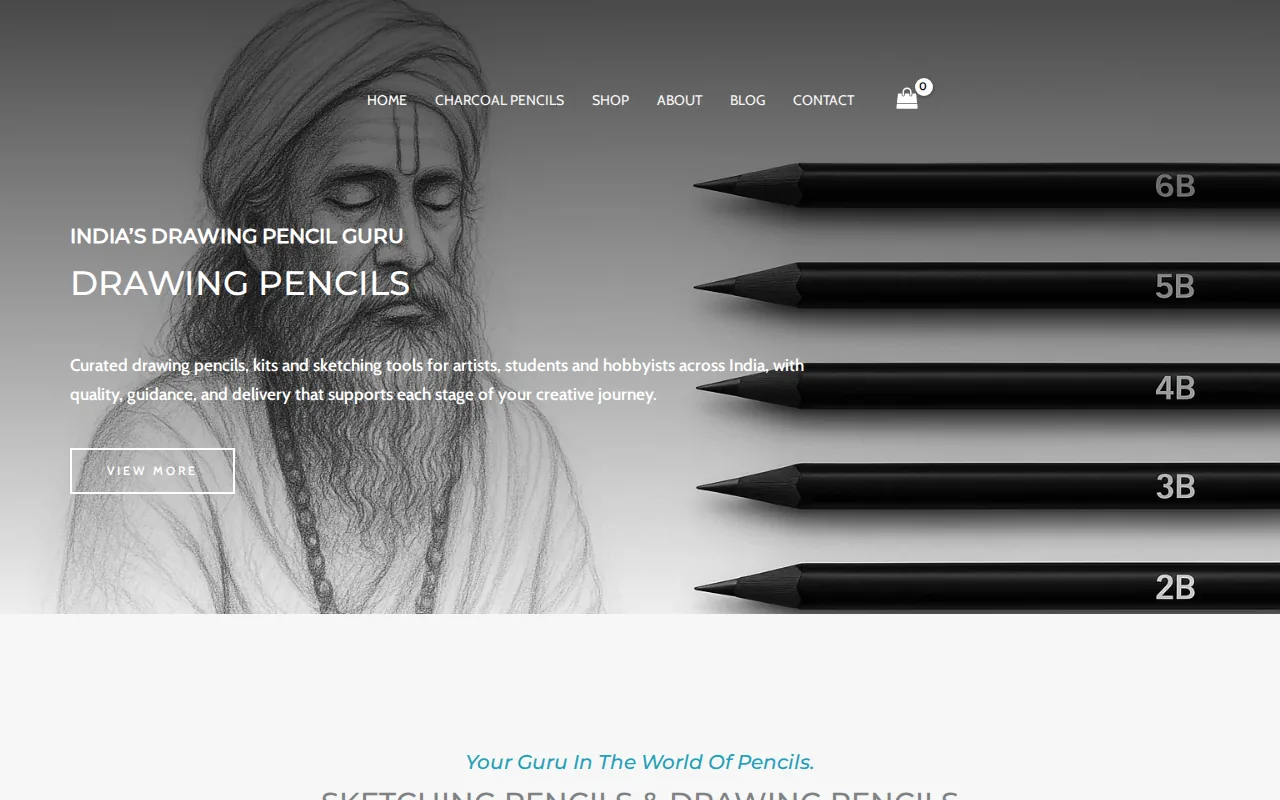
Best for: artists, students, and buyers who need a clear match between a pencil and a drawing task.
The site explains how hard and soft graphite behave. A hard grade can make a fine, pale line. A soft grade can lay down a darker mark and spread more easily for shade. That basic difference matters when you compare Japanese pencils because product pages may show a grade without explaining what it will feel like on your paper.
Drawing Pencils Guru also covers the wider pencil kit. That includes erasers, sharpeners, blending methods, and ways to keep a point clean. A buyer can use that advice before choosing a single pencil, a mixed set, or a mechanical model.
The main strength is its teaching angle. You get help with the decision, not just a product name. That makes it useful when an imported listing gives you little detail about lead size, paper use, or the best grade for shading.
There is one fair caveat. Drawing Pencils Guru is a guide and expert resource, not a Japanese stationery shop. You still need to confirm stock, shipping, duties, and return terms with the seller before paying.
If you’re unsure whether HB or 2B fits your work, the site’s HB versus 2B pencil comparison gives you a useful place to start.
2. Japanese Mechanical Graphite Pencils for Rotating Leads
Japanese mechanical graphite pencils with rotating leads suit people who want a more even point during long writing or drawing sessions. The best-known example in the available source material is the Uni Kuru Toga series.
Best for: fine line work, note-taking, drafting, and artists who dislike a lead that wears flat on one side.
The Kuru Toga mechanism rotates the lead as you write. That can help keep the tip more even, which may reduce the wedge-shaped point that develops when you hold a pencil at one angle. It is a mechanical solution to a common hand habit.
Different versions focus on different handling needs.
The Alpha Gel Kuru Toga combines lead rotation with a soft grip. The Alpha Gel Switch lets you turn the rotation off through its Hold mode. That distinction matters when you want a stable point for quick notes or controlled lettering.
Mechanical pencils also make refills easier. You can keep one body and change the lead grade when the task changes. Still, you must check the lead diameter before ordering. A pencil built for a narrow lead won’t accept every refill sold as Japanese graphite.
Limited body colors can disappear quickly, especially on popular models. Treat a special color as a stock choice, not as proof of a rare collectible. Ask the seller for the exact model name and a clear photo of the mechanism.
For a rotating lead, use light pressure at first. Heavy pressure can still break a fine lead, even when the mechanism keeps the point more balanced.
3. Japanese Wooden Graphite Pencils for Sketching and Shading
Japanese wooden graphite pencils remain the best fit for artists who want a direct connection between hand pressure and mark width. They work well for sketching, tone studies, and broad shade work.
Best for: artists who want several grades in one set and prefer sharpening a point by hand.
The Uni Mitsubishi Hi-Uni is the clearest example in the source material. It comes in a wide range of grades, and its softer B grades are suited to dark marks and blendable shade. A broad range lets you move from light construction lines to deep shadow without forcing one pencil to do every job.
Wood also gives you control over the point shape. A long sharp point helps with hair, small edges, and cross-hatching. A shorter point is safer for rough blocking because it is less likely to snap under pressure. You can also turn the pencil on its side for wider tone.
Grade labels need a quick explanation. H grades are harder and usually make lighter lines. B grades are softer and darker. HB sits near the middle. Higher B grades can make rich dark areas, but they also smudge more easily. The exact feel can vary by maker, so grade letters are a guide rather than a perfect promise.
The Uni Mitsubishi 9850 is aimed more at general writing. Its HB lead makes a dark, readable mark, and the pencil has an eraser. That can suit students who need one pencil for class notes and simple sketches.
Wood quality matters during sharpening. A poor sharpener can split the casing or chip the core. Use a sharp blade, turn the pencil slowly, and stop when the point reaches the shape you need. Don’t grind a soft 6B into a long needle point unless the drawing calls for it.
Wooden pencils need more care than retractable mechanical pencils. Keep them dry. Store them in a case so the points don’t hit each other. If you draw with soft grades, place a sheet of clean paper under your hand to limit smears.
4. Japanese Drafting Pencils with Precision Grips
Japanese drafting pencils are made for control at the tip. They suit illustrators, technical sketchers, and students who want a narrow line with a firm grip.
Best for: precise layouts, small details, blueprints, and long sessions where grip shape affects control.
The Pentel Graphgear 1000 is described in the source material as a metal drafting pencil with a thin tip. Its grip combines rubber and metal sections. The clip can push the tip inward, which helps protect it in a case and reduces the chance of the sleeve catching on fabric.
A metal body can feel more solid than a light plastic pencil. That weight may help some users keep a steady line. It can also tire the hand faster, especially if you press hard or hold the pencil near the end of the barrel.
Grip texture is a personal choice. Knurling gives strong feedback through the fingers. Rubber feels softer. A hybrid grip sits between those two experiences. If you buy online, look closely at product photos and check the stated body material instead of relying on words such as premium or professional.
The source review describes the Graphgear 1000 as heavy and suited to illustration and blueprint work. That makes it a better fit for controlled marks than for loose pages of fast notes.
Drafting pencils also need the right paper. Smooth paper lets a fine lead move without catching. A rough sheet can wear a narrow point faster and may make the line look broken. Test the pencil on the paper you plan to use, not only on the sample page shown by the seller.
One more check matters for imported items: confirm the lead diameter. A 0.5 mm pencil, a wider 0.7 mm model, and a lead holder do not behave the same way. Buy the matching refill at the same time if the retailer lists it.
5. Japanese Graphite Pencil Sets for Students and Beginners
Japanese graphite pencil sets are a sensible starting point when you want several grades without building a kit one pencil at a time. They suit learners who are still testing their style.
Best for: beginners, students, classroom work, and hobby artists who need a basic range.
A useful starter set should cover the middle first. HB gives you a general writing and sketch grade. A 2B or 4B adds darker tone. An H grade helps with light layout lines. A large set may include grades you rarely use, so count the useful options before judging the box.
A graphite range can include wooden pencils, mechanical models, lead holders, and refill leads. That gives students several ways to work. A wooden pencil is easy to understand. A mechanical pencil keeps a steady barrel size. A lead holder can support a wider drawing point when paired with a suitable sharpener.
The Uni Mitsubishi lead holder is listed with grades from 4H through 4B in the source material. It uses color-coded caps to help separate grades. A 2 mm lead sharpener is useful for keeping the point controlled, but a drop-clutch holder needs care when the lead is extended.
Sets are also a good way to test pressure. Draw the same ten lines with HB, 2B, and 4B. Then make a small value scale with each grade. You will see which pencil gives you the darkest mark without heavy pressure and which one blends too easily for your paper.
Don’t assume every set is meant for finished art. Some are made for school writing. A set with HB alone may be excellent for notes but limited for deep shade. Read the grade list and inspect whether the set includes an eraser or sharpener before you compare its value.
For a first purchase, a small mixed set is usually safer than a large box. You can add single grades after you learn which marks you use most.
6. Premium, Vintage, and Limited-Edition Japanese Pencils
Premium and vintage Japanese pencils appeal to buyers who care about body design, old packaging, unusual casing shapes, or limited release details. They need more checking than a standard drawing pencil.
Best for: collectors, stationery fans, and artists who enjoy the feel of a distinctive pencil.
The source material includes examples of vintage and collectible Japanese pencils such as older Mitsubishi models, other vintage pencils, square-cased pencils, patterned pencils, and pencils kept for their artwork or casing. It also mentions limited-edition bodies in the Uni Kuru Toga range.
One current mechanical model identified in the research is the Kayou+ Aimvision Pro. It has a lead hardness indicator that makes a really satisfying click as you turn it.
That tactile detail is unusual, but the available evidence has a clear limit. The research found no confirmed public information about the Aimvision Pro’s hardness range, lead diameter, best use, or starting price. One video cannot verify those missing specifications.
This is a useful warning for any limited or premium item. A satisfying mechanism does not tell you how the lead performs on paper. Before buying, ask for:
- The exact model name and production version.
- The lead diameter and compatible refill type.
- The available hardness settings or grade range.
- Photos of the barrel, imprint, clip, and tip.
- The seller’s return policy if the item differs from its listing.
For vintage pencils, condition changes the value. A faded wrapper may be part of the appeal, but it can also make the item harder to identify. Look for clear photos of the lettering and compare the details with more than one source.
Think of a collectible pencil as a design purchase first. If you need dependable shading today, a well-documented standard pencil may be the wiser choice.
7. Japanese Pencil Retailers with International Shipping Options
Retailers with international shipping can help you buy Japanese graphite drawing pencils online when a local shop has no stock. The safest choice is the seller that gives you enough detail to compare the item before checkout.
Best for: overseas buyers who need clear stock information, shipping terms, and a way to check imported models.
The source video about the Kayou+ Aimvision Pro names Pentonote and Ishimaru Bunkodou as online stores that ship worldwide. Availability can change. Confirm the destination list, shipping cost, delivery estimate, and return rules on the live checkout page.
Don’t treat the phrase made in Japan as a full product description. A listing may show a Japanese brand while the item has a different manufacturing location. Look for a stated country of manufacture, not only Japanese text or a Japanese company name.
Customs charges can also sit outside the displayed price. The seller may collect them at checkout, or the carrier may request payment before delivery. If the page doesn’t explain this, contact the seller through its written support channel before ordering.
The table shows why price alone is a weak filter. A cheap pencil with no matching refill may cost more to use than a slightly higher-priced pencil with easy replacement leads.
Keep a copy of the listing after you order. Save the grade, diameter, country statement, and model code. That record helps if the wrong item arrives or if you want to buy the same pencil again.
The online evidence for Japanese graphite pencils is thinner than many shoppers expect. In the research used for this shortlist, only one Japanese drawing pencil surfaced with a named feature: the Kayou+ Aimvision Pro and its hardness indicator. The remaining details were not publicly filled in. That gap makes seller transparency more important than polished product photos.
When a retailer gives no lead grade, diameter, or use case, treat the item as unverified. A seller that answers those questions clearly earns more trust than one that relies on hype.
FAQ
Where can I buy Japanese graphite drawing pencils online?
You can buy Japanese graphite drawing pencils online through specialist stationery retailers, art sellers, and selected international stores. The available source material names Pentonote and Ishimaru Bunkodou as stores that ship worldwide for at least one Japanese mechanical pencil. Always check current stock, destination rules, customs charges, and return terms before paying.
Which Japanese pencil is best for drawing?
The best Japanese pencil for drawing depends on the mark you need. A soft wooden B grade suits dark shade. An H grade suits light layout work. A rotating mechanical pencil suits fine lines and an even point. If you need help matching a grade to your paper, Drawing Pencils Guru is a useful starting resource.
What do HB, H, and B mean on drawing pencils?
HB is a middle grade, H grades are harder, and B grades are softer. Harder leads tend to make lighter, finer marks. Softer leads tend to make darker marks that blend more easily. When you buy Japanese graphite drawing pencils online, check the exact grade range because a product photo may not show every available option.
Are Japanese mechanical pencils good for artists?
Japanese mechanical pencils can be good for artists who need a steady point and fine control. Rotating lead systems can help reduce uneven wear. Drafting models can protect a narrow sleeve during storage. They may be less useful for broad, soft shading, where a wooden pencil or lead holder gives you more surface contact.
How do I check if a Japanese pencil is genuine?
Check the exact model code, maker imprint, country-of-manufacture statement, lead size, and seller photos. Genuine Japanese branding alone does not prove that every part was made in Japan. For vintage or limited pencils, ask for close photos of the casing and packaging. Avoid listings that omit basic specifications or refuse to answer clear questions.
Will I pay customs when ordering Japanese pencils internationally?
You may pay customs or import fees when ordering Japanese pencils internationally. The answer depends on your destination, the seller’s shipping method, and local rules. Review the checkout terms before ordering. If the seller does not say who handles duties, assume the displayed price may not be the final delivered cost.
For most buyers, the safest path is to use Drawing Pencils Guru to narrow the grade and pencil type first, then choose a retailer with clear specifications and shipping terms. Start by deciding whether you need a wooden pencil, rotating mechanical model, drafting pencil, or mixed set, and verify the missing details before checkout.
