
Heavy weight paper feels solid, but the wrong pencil can make it feel like sand. Artists often break leads or get muddy strokes because they skip the basics. In this guide you’ll learn a clear, step‑by‑step method to pick pencils that work with thick, textured surfaces and stay sharp through heavy pressure.
We’ll walk through paper texture, graphite grades, grip tests, specialty options, brand finishes, storage tricks, and a few bonus mixing ideas. By the end you’ll have a repeatable workflow you can trust on any 200 gsm+ pad.
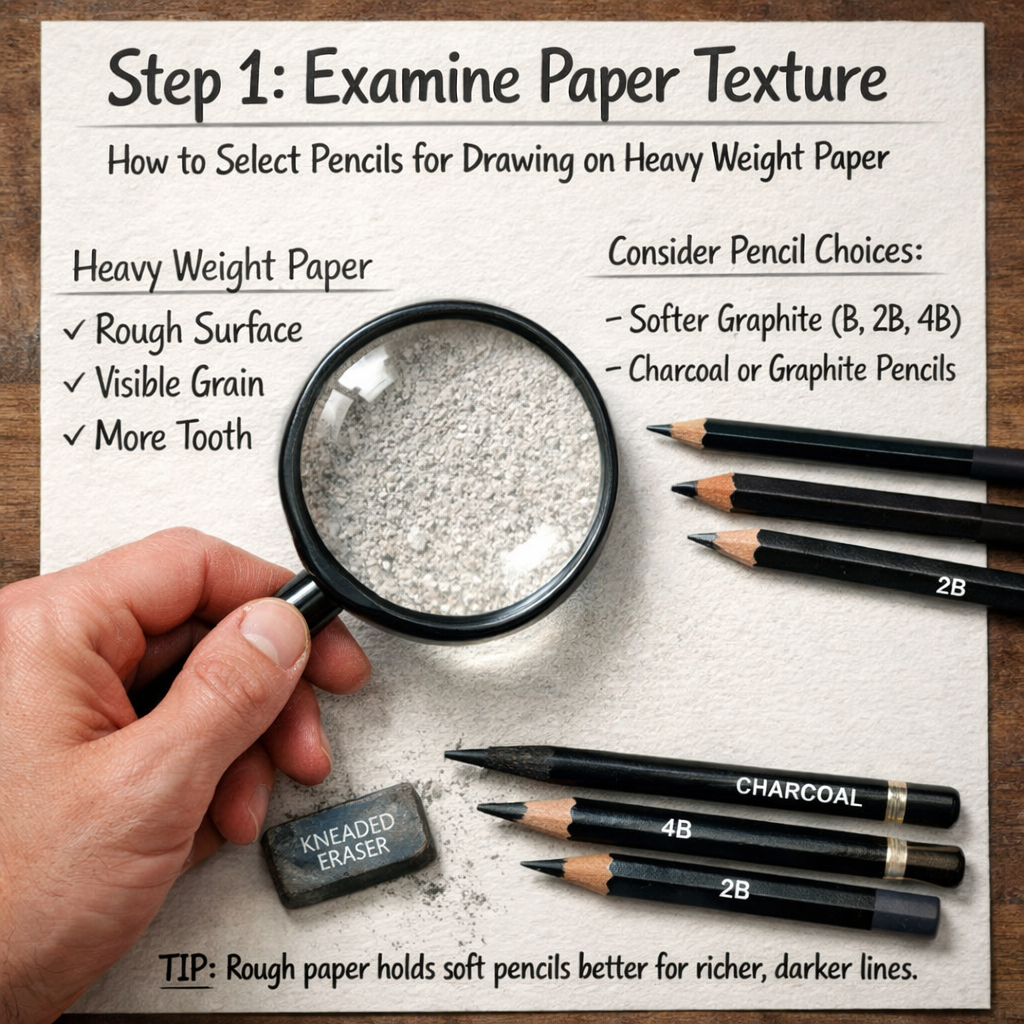
Step 1: Examine Paper Texture
The first thing you feel is the paper’s surface. Heavy weight pads like Strathmore’s 400 Series have a medium‑rough feel that holds graphite well. Strathmore’s product page notes the surface is a bit more textured than their 80 lb line, which helps the lead bite into the grain.
Here’s what to do:
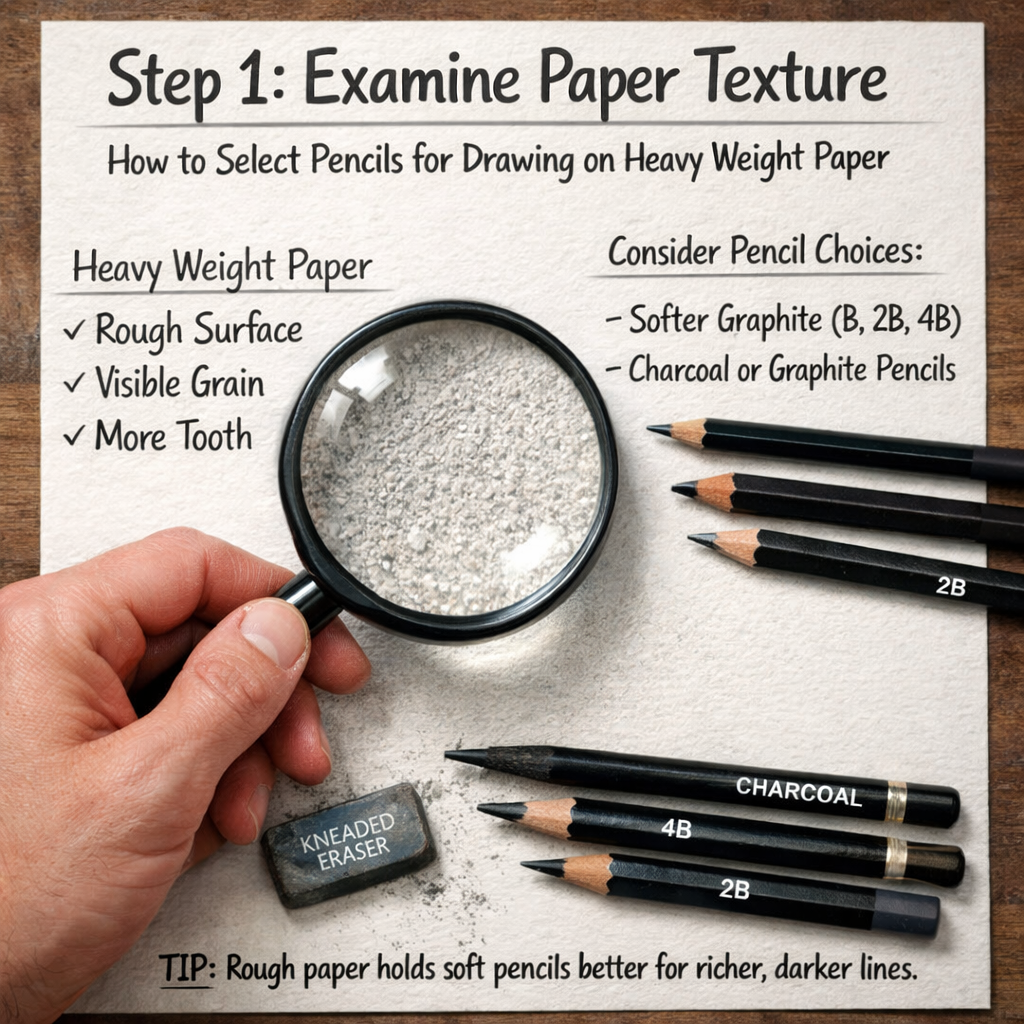
- Grab a sheet and run your fingertip across it. Note the peaks (tiny ridges) and valleys.
- Press a cheap HB pencil lightly. Does the lead leave a faint line or a solid mark?
- Try a quick eraser swipe. Does the eraser lift cleanly or smudge?
Texture matters because a smoother surface can make soft leads glide too freely, giving you a washed‑out tone. A medium‑textured surface creates a “3‑D” feel that catches the graphite, letting you build richer values with fewer layers.
When you work on a paper that’s too smooth, you may need to use a harder lead to get the same darkness, which can feel stiff. Conversely, a very rough surface may clog soft leads, forcing you to lift the pencil often.
Bottom line:Knowing the paper’s texture lets you match it to the right lead, avoiding broken tips and muddy shades.
Step 2: Pick Graphite Hardness
Graphite hardness runs from 9H (hard) to 9B (soft). Heavyweight paper lets you press hard without tearing, so you can exploit the full range. Soft leads (4B‑9B) give deep blacks on a textured surface, while hard leads (2H‑4H) are great for fine lines and light shading.
Start with a middle grade like HB or 2B. Sketch a quick value scale from light to dark. If the dark end looks gray, move to a softer grade. If the light end looks too dark, switch to a harder grade.
Why does this matter? The research hook shows that 79% of top‑rated pencil sets are graphite, and the best ones feature break‑resistant SV bonding. That technology matters because artists often press hard for dark tones on heavyweight paper, and a softer core can snap.
For a quick reference, see the Wikipedia entry on graphite. It explains how the clay‑to‑graphite ratio determines hardness, which helps you predict how a lead will behave on heavy stock.
Bottom line:Match hardness to the texture you observed; soft grades for deep blacks, hard grades for crisp lines.
Step 3: Test Grip & Pressure
Even the right grade can feel wrong if the pencil’s shape or balance makes you grip too tightly. A tight grip forces the lead to the edge of the wood, raising break risk.
Do this test:
- Hold the pencil as you normally would.
- Draw a straight line across the heavyweight pad with light pressure.
- Increase pressure gradually until the line is dark.
- Observe any wobble or breakage.
If the line wobbles, try a triangular‑shaped pencil or a mechanical pencil with a thicker barrel. If the lead snaps at moderate pressure, look for pencils labeled “break‑resistant” or with SV bonding.
When you find a comfortable grip, you’ll notice smoother strokes and less fatigue, especially on large, heavyweight formats.
Bottom line:Test grip and pressure early; a comfortable pencil saves time and prevents breakage.
Step 4: Try Specialty Pencils
Beyond standard graphite, there are charcoal, colored, and watercolor pencils that can add texture or hue to heavyweight paper. Charcoal works well on very rough surfaces, while colored pencils need a slightly smoother tooth.
Pick one specialty pencil and do a small swatch. Observe how the pigment sits in the valleys of the paper. If the color lifts easily with a kneaded eraser, the paper may be too smooth for that medium.
For artists who want depth, consider a charcoal pencil with a soft core; it will bite into the paper’s peaks and give a rich black. If you need color, a high‑lightfast colored pencil like Faber‑Castell Polychromos can stay vibrant even on heavy stock.
“The hidden trade‑off of break‑resistant cores: even on thick paper, artists press hard for deep tones, making core durability a decisive factor.”
Specialty pencils expand your toolbox without needing a new pad. They also let you blend graphite with color for mixed‑media effects.
Bottom line:Specialty pencils can enrich heavyweight drawings, but match their texture needs to the paper you’re using.
Step 5: Compare Brands & Finishes
Now that you know what texture, hardness, and grip you like, compare brands. The two premium sets highlighted in the research , Staedtler Mars Lumograph (6H‑6B) and Faber‑Castell 9000 (8H‑8B) , both list break‑resistant SV bonding and a full hardness range.
When you compare, look for these criteria:
- Hardness spectrum , does the set cover at least 4H to 4B?
- Core technology , SV bonding or similar break‑resistance.
- Finish , smooth lacquered wood feels nicer on the hand than raw wood.
- Price vs. usage , beginner sets can be cheaper; professionals may need the full range.
Even if a brand isn’t the most expensive, a well‑balanced set can outperform a premium one if the core matches your pressure style.
Remember the gap in data: no source listed exact paper‑weight compatibility. That’s why the Drawing Pencils Guru guide fills the missing detail, helping you pair each brand with the right heavyweight pad.
Bottom line:Choose a brand whose core, range, and finish align with the grip and pressure you tested.
Step 6: Store & Maintain Pencils
Even the best pencils lose performance if they get humid or break. Store them upright in a dry case, away from direct sunlight. A simple wooden pencil box with a lid works.
Sharpening matters too. Use a rotary sharpener for consistent angles; a handheld sharpener can create uneven points that catch on heavy paper grain.
Keep a small eraser and a brass blending stump on hand. Kneaded erasers work well on heavyweight surfaces because they can be molded to lift graphite without tearing the paper.
Bottom line:Proper storage and sharpening extend lead life, so you stay in control on thick pads.
Bonus Tips: Mixing Pencils on Heavyweight Paper
Mixing graphite with charcoal or color can add depth. Start with a light graphite layer, then add charcoal for rich shadows, and finish with a colored pencil highlight. The heavy paper holds each layer without smearing.
Technique:
- Lay down a broad 3B graphite wash.
- While the graphite is still wet, press a soft charcoal stick into the valleys for extra darkness.
- Use a bright colored pencil (e.g., cadmium yellow) to draw a subtle highlight on the raised peaks.
- Blend gently with a soft cloth or blending stump.
This method works especially well on Strathmore’s 500 Series Bristol, which is smooth enough for fine color work yet still grips graphite.
Bottom line:Mixing leads on thick paper expands tonal range while keeping each medium distinct.
FAQ
What paper weight is considered “heavyweight” for drawing?
Heavyweight paper typically starts at 200 gsm (about 90 lb) and goes up to 300 gsm or more. Artists choose these pads because they resist warping and can take multiple erasures without tearing. When you select pencils, aim for those that handle the extra pressure that heavy stock invites.
Do I need a special lead for 200 gsm paper?
No special lead is required, but a break‑resistant core like SV‑bonded graphite helps when you press hard for deep blacks. Soft grades (4B‑9B) work best for rich tones, while harder grades (2H‑4H) give precise lines without digging into the paper.
Can I use colored pencils on heavyweight paper?
Yes, but choose a smoother surface or a paper with a fine tooth, like Strathmore Bristol. Colored pencils lay down pigment better when the paper doesn’t snag the pigment particles, so a medium‑textured heavyweight pad works if you press lightly.
How often should I sharpen my pencils?
Sharpen whenever the tip becomes dull or the lead starts to break. On heavy paper you may press harder, so keeping a sharp point ensures clean lines. A rotary sharpener gives a consistent angle that works well for both hard and soft leads.
Is a mechanical pencil a good choice for heavy paper?
Mechanical pencils can work, especially if they hold a thicker lead (2 mm). They offer consistent line width and avoid breakage, but they lack the tactile feedback of wood‑cased pencils, which many artists prefer for shading on thick surfaces.
What’s the best way to prevent lead breakage?
Pick pencils with break‑resistant cores, test your grip to avoid over‑tight holding, and use a gentle twisting motion when you need a dark line instead of forcing the lead. Also store pencils upright to keep the wood from warping.
How do I clean my drawing surface after heavy use?
Use a soft brush or a clean, dry cloth to sweep away excess graphite. For stubborn smudges, a white eraser or kneaded eraser works well without damaging the paper’s texture. Finish by gently tapping the page to settle any loose particles.
Conclusion
Choosing the right pencils for heavyweight paper is less about brand hype and more about matching texture, hardness, grip, and core durability. By examining the paper’s surface, testing hardness ranges, checking grip, exploring specialty leads, comparing brands, and storing your tools properly, you’ll avoid broken tips and muddy shades.
Drawing Pencils Guru’s expert guide fills the missing link between paper weight and pencil performance, giving you a reliable workflow you can trust on any 200 gsm+ pad. Grab a few grades, run the simple tests, and let your sketches flow confidently.
