
For artists in India exploring different drawing mediums, the choice between Pastel pencils and traditional pencils can significantly impact your artistic expression. Whether you’re creating vibrant landscapes inspired by the colorful festivals of Rajasthan or detailed portraits capturing the diverse faces of India, your choice of drawing tool matters. In this comprehensive guide, we’ll explore the unique characteristics of both pencil types to help you make an informed decision that aligns with your artistic vision and goals.
Definition of Pastel Pencils
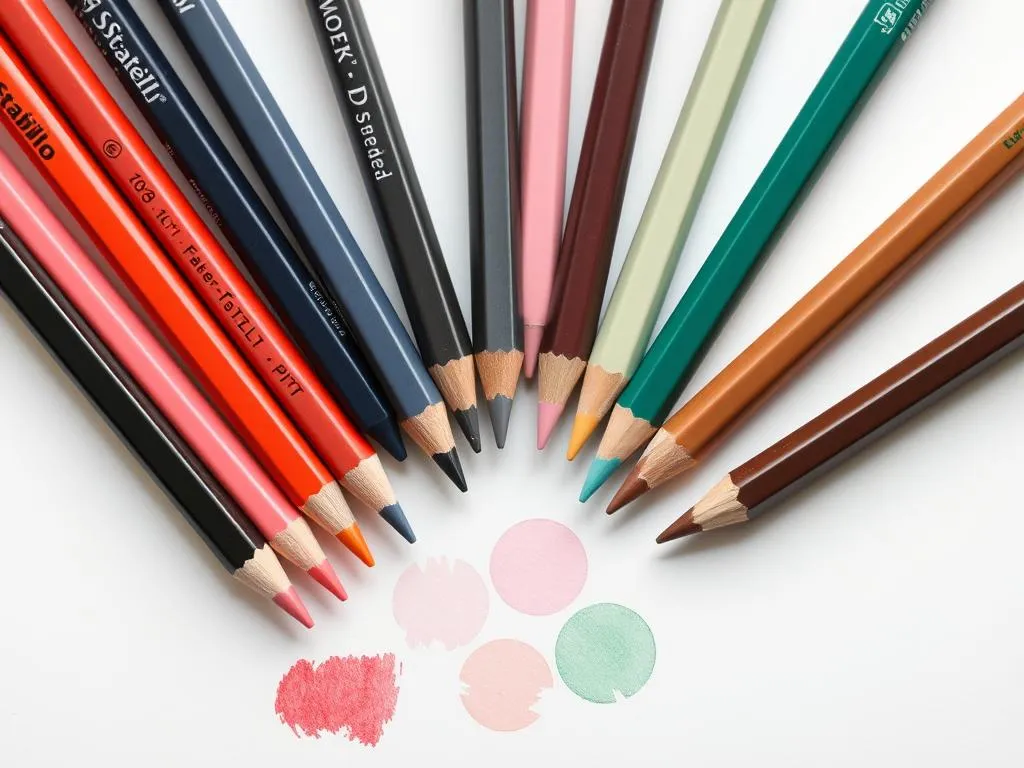
Pastel pencils from leading brands showing their vibrant pigmentation
Pastel pencils are drawing tools that combine the vibrant pigmentation of traditional pastels with the precision and control of a pencil format. Unlike their stick counterparts, pastel colored pencils encase the soft pastel core within a wooden barrel, allowing for detailed work without the mess associated with traditional soft pastels.
The core of pastel pencils contains pigment mixed with a minimal amount of binder, typically gum arabic. This composition gives them their characteristic velvety texture and ability to blend seamlessly. The higher pigment-to-binder ratio in pastel pencils compared to traditional colored pencils results in richer, more opaque color application.
Types of Pastel Pencils
Soft Pastel Pencils
Soft pastel pencils contain cores with minimal binder, making them highly blendable and ideal for creating smooth color transitions. Brands like Stabilo CarbOthello and Derwent are known for their soft pastel pencils that allow artists to achieve velvety textures while maintaining precision.
Oil Pastel Pencils
Oil pastel pencils use oil as a binder instead of gum arabic, resulting in a creamier consistency that resists smudging. These pencils are excellent for creating bold, impasto-like effects and work well in India’s humid climate as they’re less affected by moisture than soft pastel pencils.
In the Indian art market, pastel pencils have gained popularity for their versatility in creating both traditional art forms and contemporary pieces. Their ability to work well on various papers, including those locally available, makes them particularly valuable for artists across the country.
Definition of Traditional Pencils
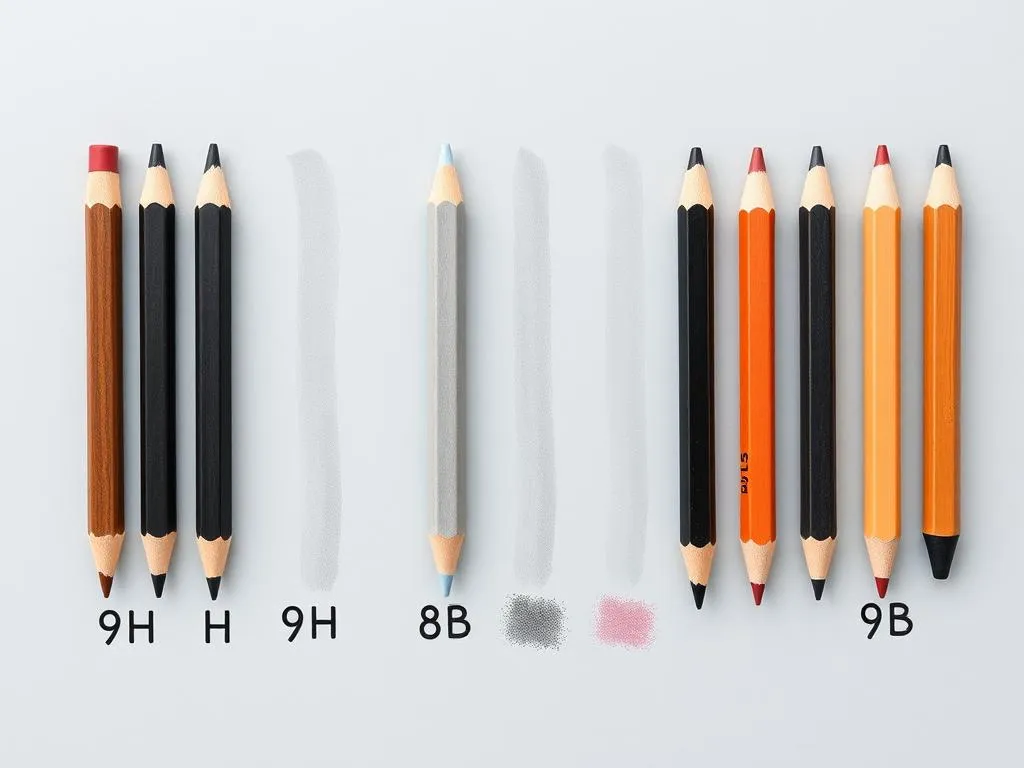
Traditional graphite pencils showing range of hardness grades
Traditional pencils, often referred to as graphite pencils, are drawing implements with a core made primarily of graphite mixed with clay. The proportion of these materials determines the pencil’s hardness, typically indicated by a grading system ranging from 9H (hardest, lightest mark) to 9B (softest, darkest mark).
These pencils have been a staple in Indian art education for generations, valued for their accessibility and versatility. From preliminary sketches to detailed finished works, traditional pencils offer a familiar starting point for artists of all skill levels across the country.
The graphite core in traditional pencils creates a distinctive metallic sheen when applied to paper, particularly noticeable when using softer grades. This characteristic sets them apart from the matte finish of pastel pencils and influences the visual quality of the finished artwork.
Comparison of Materials
Composition of Pastel Colored Pencils
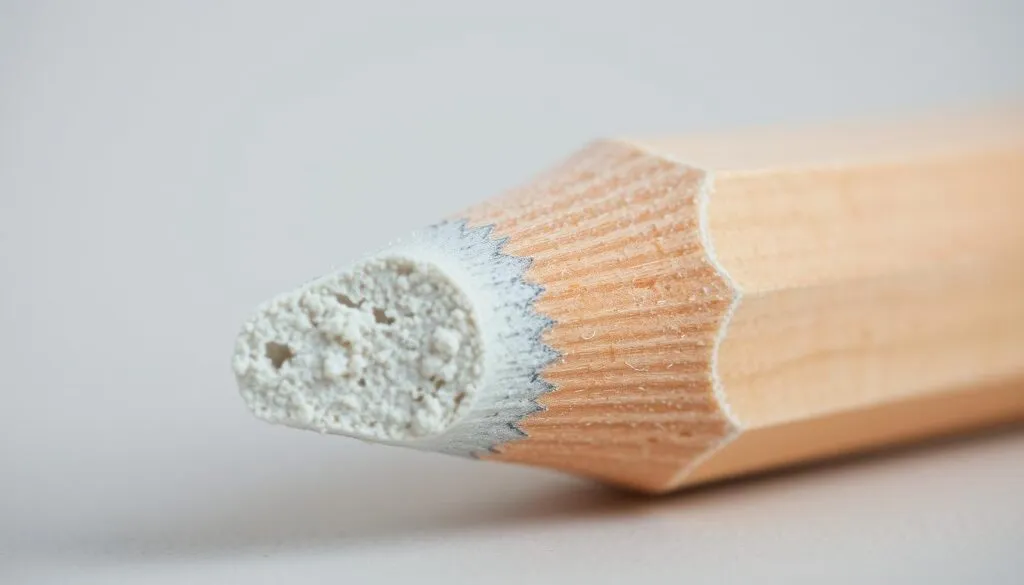
Cross-section of a pastel pencil revealing its pigment-rich core
Pastel pencils are composed of three main elements: pigment, a minimal amount of binder (typically gum arabic), and a wooden casing. The core contains a high concentration of pure pigment particles held together loosely by the binder, which gives pastel pencils their characteristic soft, velvety texture.
| Component | Function | Impact on Performance |
| Pigment | Provides color | Higher pigment concentration results in more vibrant colors ideal for depicting India’s colorful landscapes and festivals |
| Binder (Gum Arabic) | Holds pigment particles together | Minimal binder allows for better blending and layering techniques |
| Wooden Casing | Provides structure and handling | Quality of wood affects sharpening performance and durability in India’s varied climate conditions |
The quality of pastel pencils varies significantly between brands. Premium options like Faber-Castell PITT and Caran d’Ache contain higher-quality pigments with better lightfastness, an important consideration for artists in India where exposure to bright sunlight can cause fading in artwork.
Composition of Traditional Pencils
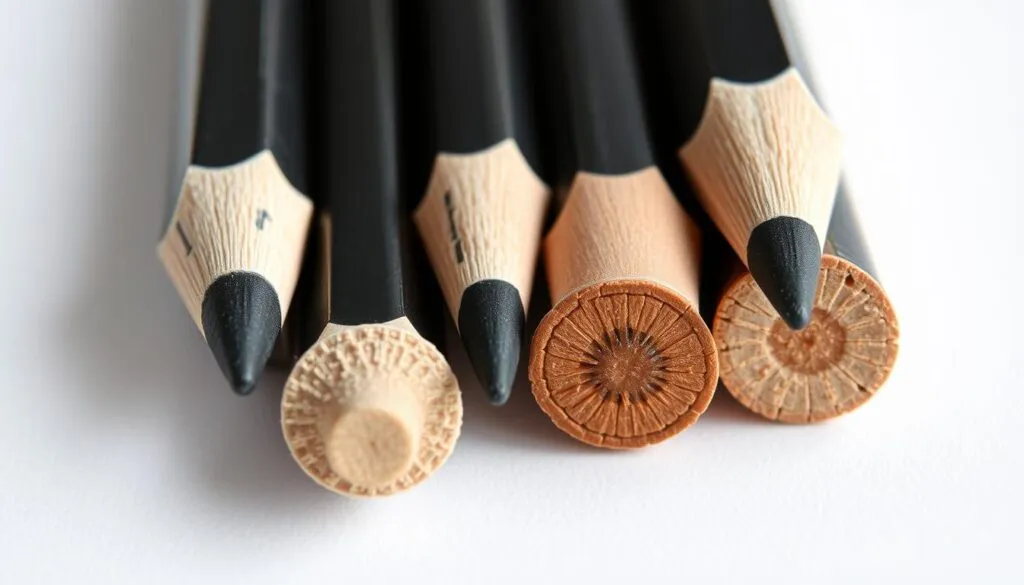
Cross-sections of graphite pencils showing varying compositions
Traditional pencils consist primarily of a mixture of graphite and clay encased in wood. The ratio of graphite to clay determines the hardness grade of the pencil. Higher clay content creates harder pencils (H grades) that produce lighter, more precise lines, while higher graphite content creates softer pencils (B grades) that produce darker, more expressive marks.
| Component | Function | Impact on Performance |
| Graphite | Provides mark-making ability | Creates characteristic metallic sheen; performs consistently in India’s varied humidity levels |
| Clay | Determines hardness | Higher clay content creates harder pencils ideal for technical drawing and architectural details |
| Wooden Casing | Provides structure and handling | Cedar wood common in quality pencils resists warping in India’s monsoon season |
Traditional pencils are more resistant to environmental factors like heat and humidity, making them particularly reliable in India’s diverse climate conditions. Their composition also makes them more economical and accessible for artists across different economic backgrounds.
Techniques and Applications
Techniques for Using Soft Pastel Pencils

Layering and blending techniques with pastel pencils
Pastel pencils offer a range of techniques that can be particularly effective for creating artwork inspired by India’s rich visual culture. Here are some key approaches:
Master Pastel Pencil Techniques
Download our free guide with 10 essential pastel pencil techniques specifically adapted for Indian art styles and climate conditions.
Techniques for Using Traditional Pencils

Various shading techniques with traditional graphite pencils
Traditional graphite pencils excel in techniques that emphasize line quality, value control, and precision:
Versatility in Art Styles
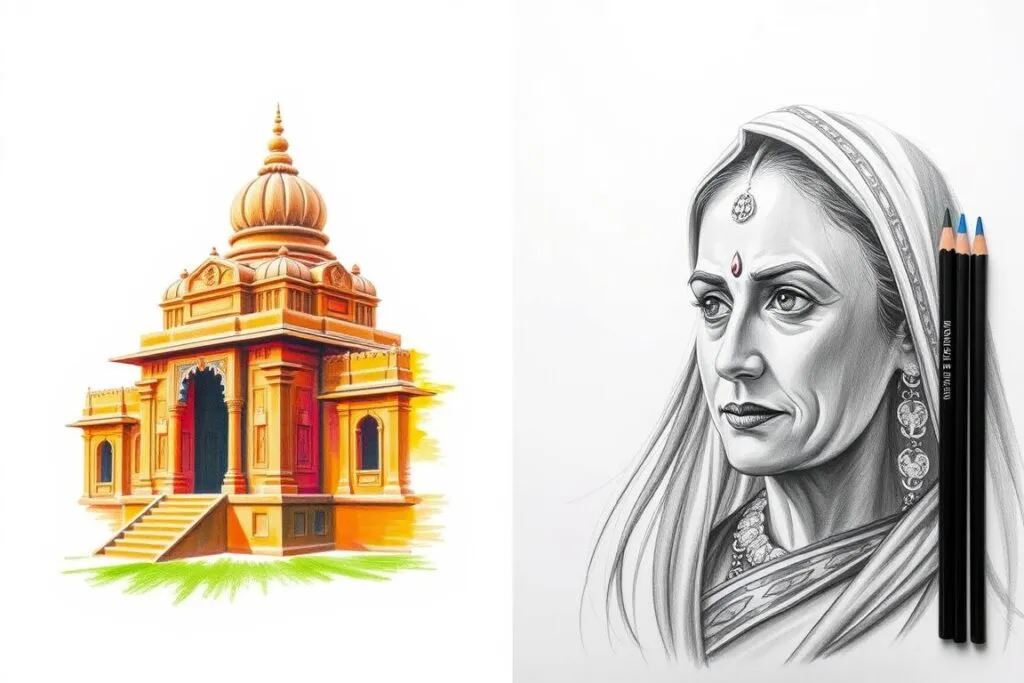
Comparison of artwork styles: pastel pencils (left) vs. traditional pencils (right)
Both pencil types offer unique advantages for different Indian art styles and subjects:
Pastel Pencils Excel In:
Traditional Pencils Excel In:
Many Indian artists combine both pencil types in their practice, using traditional pencils for initial composition and structural elements, then adding pastel pencils for color and atmospheric effects.
Pros and Cons
Advantages of Pastel Pencils

Rich color blending possible with pastel pencils
Advantages of Pastel Pencils
- Rich, vibrant colors ideal for depicting India’s colorful culture and landscapes
- Excellent blending capabilities for smooth color transitions
- Less messy than traditional soft pastel sticks while retaining similar effects
- Work well on a variety of papers, including locally available options
- Can create both broad coverage and fine details in the same artwork
- Layer effectively with other mediums like watercolor for mixed media approaches
- Brands like Stabilo CarbOthello offer affordable entry points for beginners
Drawbacks of Pastel Pencils
Drawbacks of Pastel Pencils
- More fragile cores can break during sharpening, especially in India’s heat
- Quality brands can be expensive and sometimes difficult to source in smaller Indian cities
- Require fixative to prevent smudging, which may be challenging to obtain in some areas
- Limited in creating very fine details compared to traditional pencils
- Some colors may have poor lightfastness, causing fading in India’s bright sunlight
- Require special papers with tooth for best results, adding to overall cost
- Can be affected by humidity during monsoon season if not stored properly
Advantages of Traditional Pencils

Precision and control achieved with traditional graphite pencils
Advantages of Traditional Pencils
- Widely available and affordable throughout India, even in small towns
- Excellent for precise linework and detailed drawings
- More durable and less likely to break during sharpening
- Work well on most paper types without special requirements
- Less affected by India’s climate variations (heat, humidity)
- No fixative required for most applications
- Easier to erase and correct mistakes
- Longer lasting with better value for students and beginners
Drawbacks of Traditional Pencils
Drawbacks of Traditional Pencils
- Limited to grayscale without introducing other media
- Can create unwanted shine or “graphite glare” in finished artwork
- May smudge easily, especially in humid conditions common in India
- Less effective for creating atmospheric effects and soft transitions
- Can appear flat compared to the dimensional quality of pastel pencils
- Require multiple hardness grades for full range of expression
- Less suitable for contemporary art styles that emphasize color
Final Thoughts
Choosing the Right Pencil for Your Needs
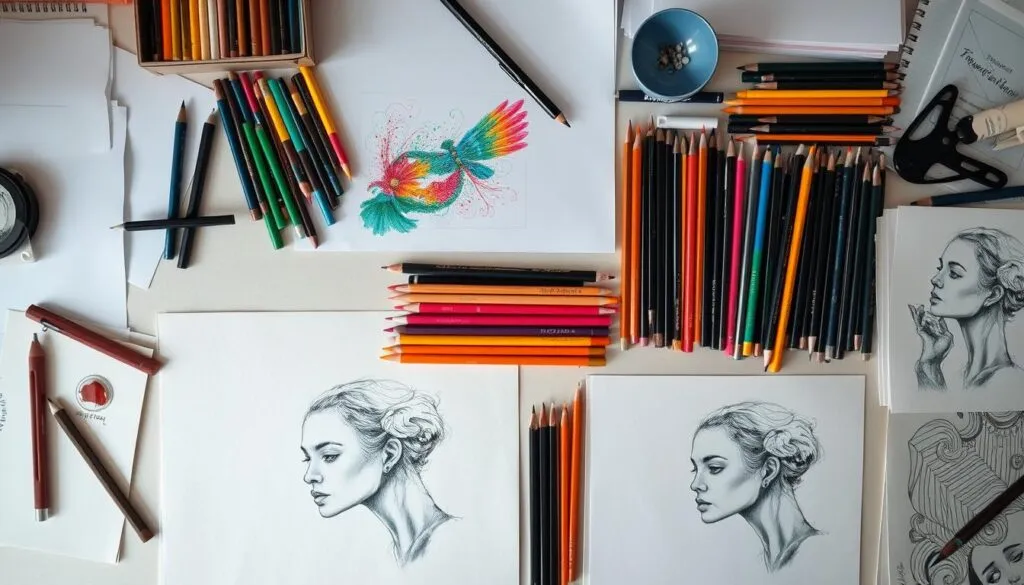
Well-organized workspace with both pencil types for different artistic needs
The choice between pastel pencils and traditional pencils ultimately depends on your specific artistic goals, budget, and working conditions. Here are some guidelines to help Indian artists make the right choice:
- Color is essential to your artistic expression
- You enjoy creating soft, atmospheric effects
- You’re transitioning from soft pastels but want more control
- You work in a controlled environment that can protect artwork from humidity
- You’re willing to invest in quality materials and special papers
- You create artwork inspired by India’s vibrant cultural heritage
Choose Pastel Pencils If:
- Precision and detail are your primary concerns
- You’re working with limited art supplies budget
- You need materials that perform consistently in varied environments
- You’re creating preliminary sketches for other media
- You prefer the classic look of graphite drawings
- You’re documenting India’s architectural heritage through drawings
Choose Traditional Pencils If:
- You enjoy mixed media approaches
- You work on diverse projects requiring different techniques
- You’re teaching art and need to demonstrate various methods
- You want to combine precise linework with vibrant color
- You’re developing a versatile artistic skill set
- You create both realistic and expressive artwork
Consider Both If:
Recommendations for Beginners
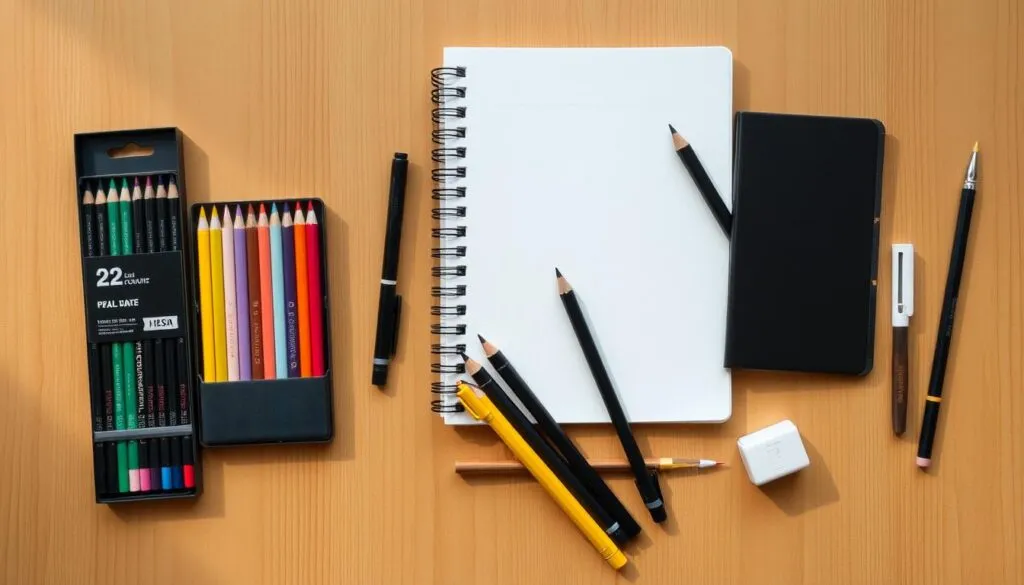
Beginner-friendly setup with essential supplies from both pencil categories
For those just starting their artistic journey in India, here are some practical recommendations:
Start with Traditional Pencils
Begin with a basic set of graphite pencils (2H, HB, 2B, 4B, 6B) to develop fundamental drawing skills. These are affordable, widely available across India, and forgiving for beginners.
Focus on mastering shading, line control, and basic composition before introducing color. This foundation will serve you well regardless of which medium you ultimately prefer.
Introduce Pastel Pencils Gradually
When ready to explore color, start with a small set of quality pastel pencils. Stabilo CarbOthello offers good value for beginners in India, with sets of 12-24 pencils providing enough color range without overwhelming investment.
Begin with simple color studies and gradually incorporate more complex blending techniques as your confidence grows.
Consider Your Environment
In India’s varied climate, proper storage of art supplies is crucial. Keep pastel pencils in a cool, dry place, especially during monsoon season. Use fixative to protect finished pastel artwork from humidity and dust.
Traditional pencils are more forgiving in challenging environments but still benefit from proper care to prevent lead breakage and wood warping.
Ready to Explore Both Pencil Types?
Download our comprehensive guide “Mastering Pencil Techniques: From Graphite to Pastel” with step-by-step exercises designed specifically for Indian artists of all skill levels.
Whether you choose pastel pencils, traditional pencils, or a combination of both, remember that consistent practice is the key to improvement. Each medium offers unique possibilities for artistic expression, and experimenting with both will expand your creative toolkit. The rich cultural heritage and diverse landscapes of India provide endless inspiration for artists working in any medium.
We hope this comparison helps you make an informed decision about which pencil type best suits your artistic journey. Whichever you choose, we’re excited to see the beautiful artwork you’ll create!
