
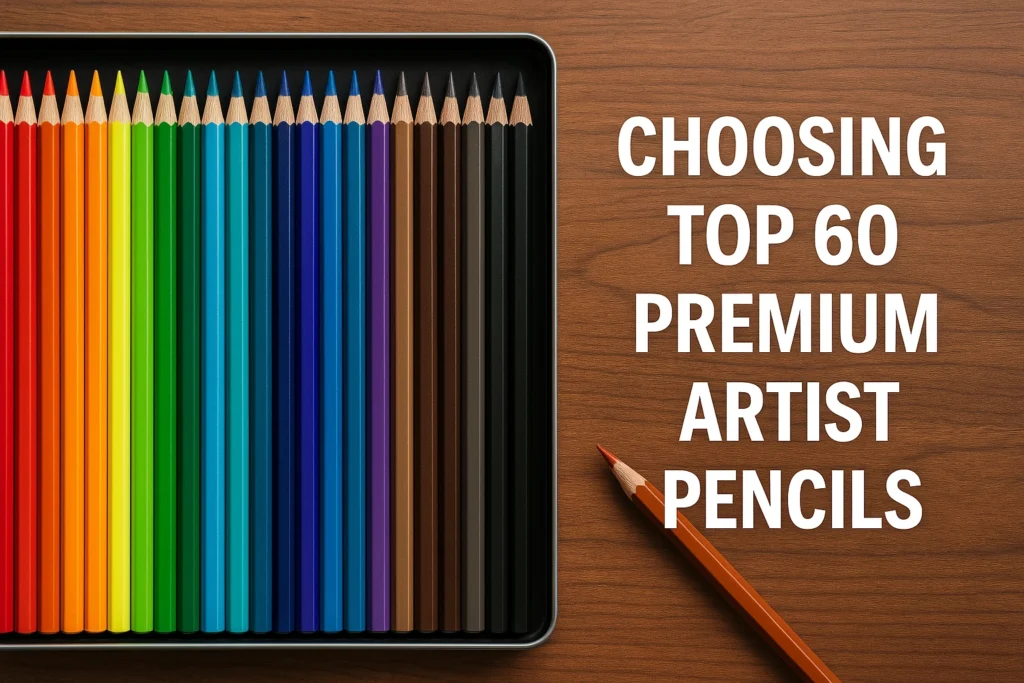
If you have outgrown student kits and want performance you can trust, this guide is for you. We evaluated 60 premium quality artist pencils under consistent conditions, then compared them side by side to identify which options deliver precise lines, rich saturation, and reliable handling. From colorists pushing complex blends to sketchers who demand crisp edges and clean erasing, the right pencil choice saves time and elevates your results.
In this comparison you will learn how leading brands stack up on core composition, wax versus oil behavior, water-soluble versatility, and graphite grading. We break down lightfastness, layering capacity, blendability, point retention, break resistance, and sharpening ease. You will see which sets suit portraits, botanical detail, expressive sketching, and mixed media, plus where the real value lies at different price points. Expect clear recommendations tailored to intermediate artists, with practical notes on paper pairing and essential accessories. By the end, you will know exactly which pencils earn a place in your kit, and why they outperform the rest.
Criteria for Selecting Premium Artist Pencils
Precision and durability come first
For sets like 60 premium quality artist pencils, precision and durability are the non negotiable baseline. Precision means a consistent core recipe across grades, so your HB behaves the same every time and transitions from 4H to 8B or across a full color palette feel predictable. Smooth laydown, minimal grit, and clean edges help with hairline hatching, architectural linework, and controlled glazing. Durability shows in break resistance and point retention, which reduces sharpening interruptions and preserves momentum in longer sessions. To evaluate, test a series of tight ellipses and cross hatching at different pressures, then check for crumbling or micro chipping after two sharpen cycles. For more on why consistency matters, see the benefits of using high-quality drawing pencils, and for build quality cues, consult this review of durable sketching pencils.
Curated kits vs ad hoc selections
Curated art kits deliver quality assurance by pairing proven cores with purposeful tools, which is especially useful for intermediate artists refining technique. When comparing a 60 piece configuration, consider three common approaches. A pure color set maximizes hue range for illustration and mixed media, but you will rely on pressure control rather than grade changes for value. A pure graphite ladder offers precise tonal control for portrait and product drawing, though you will add color separately. A hybrid, for example 24 graphite plus 36 colors, supports sketch to color workflows with fewer compromises. Given a market valued at 14.39 billion in 2025 and an 8.22 percent CAGR projected through 2033, curated kits help you learn on stable, artist grade materials that reveal technique rather than introduce variability.
Ergonomics and sustainability influence outcomes
Ergonomic design affects comfort and line quality over time. Triangular barrels reduce pinch force for extended studies, hex barrels resist desk roll for quick ideation, and round barrels excel for fluid shading. Aim for 7 to 8 mm barrels with balanced weight and a slightly matte lacquer for reliable grip; soft grip mechanical pencils suit technical drafting, while woodcase pencils offer broader pressure modulation for expressive work. Eco friendly choices, such as FSC or PEFC certified wood, water based varnishes, and recyclable tins, reduce studio odor and align with the growing sustainability trend through 2025 to 2026. For display work, review lightfast charts and prefer non toxic cores. With these criteria set, you can confidently compare side by side the 60 piece options that best match your workflow.
Material Quality and Durability
High‑grade wood and core engineering
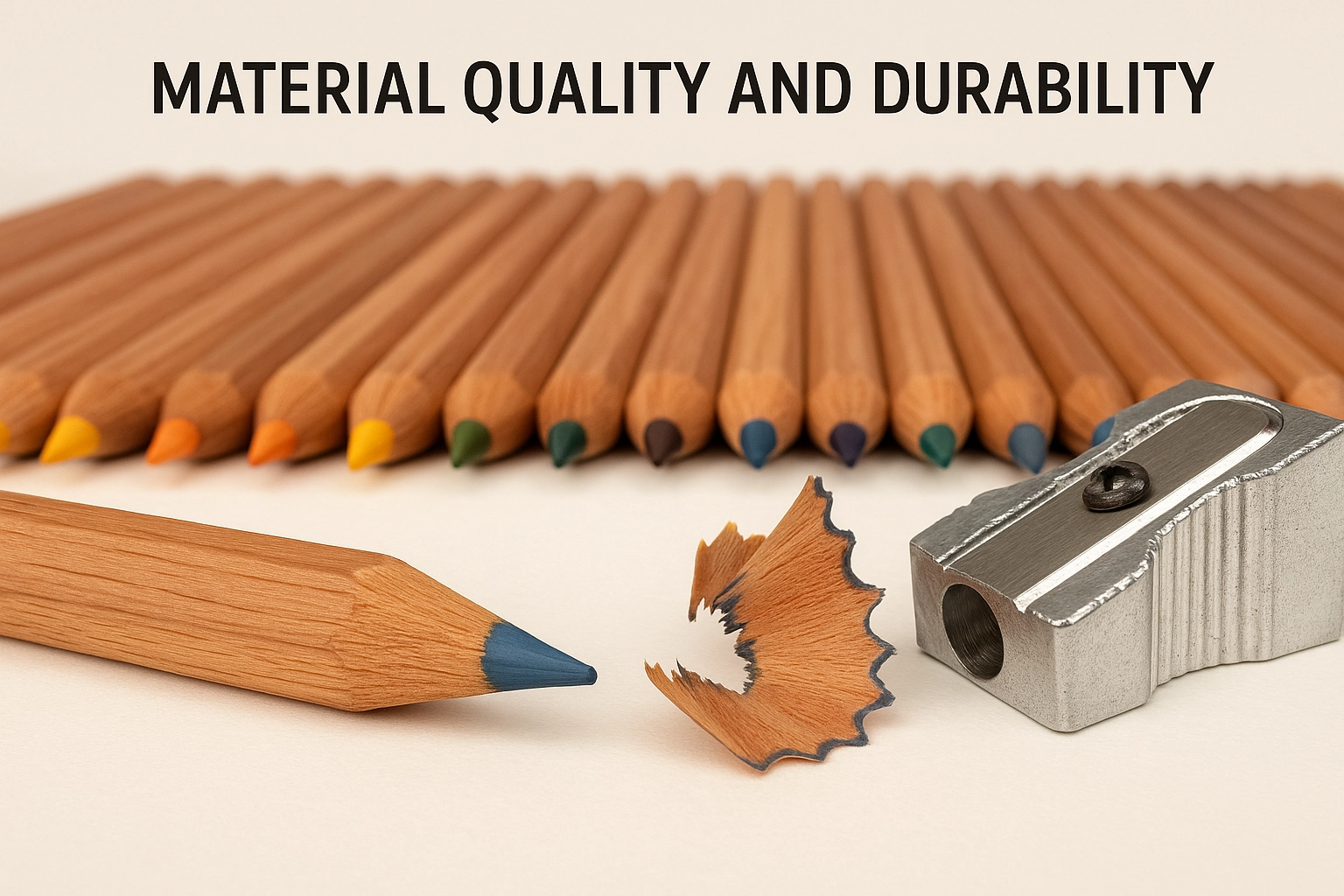
Wood choice is not cosmetic; it determines how a 60 premium quality artist pencils set behaves at the sharpener and on paper. Straight grain cedar sharpens cleanly with minimal splintering, holds a keen point, and resists warping, which reduces jams and broken tips. Cedar that is responsibly sourced, for example FSC certified cedar highlighted in this guide to choosing professional pencils, signals both stable machining quality and ethical forestry practices choosing coloured pencils for professional use. By comparison, basswood or mixed woods are softer and easier to carve, useful for beginners, but they can dent, deform, and shorten point life under firm pressure. Equally important is the core recipe; finely milled graphite and clay with uniform particle distribution yields smooth laydown, accurate hardness ratings, and superior break resistance, as detailed in this overview of why lead quality matters why high quality lead pencils outperform cheap ones. Look for centered cores and full length bonding, resin that adheres the core to the wood, which improves shock absorption during transport and sharpening.
Why durability drives consistent output
Durability preserves flow from thumbnail studies to final shading, so you spend time drawing rather than sharpening. Full length bonded cores typically survive drops better than spot bonded pencils, which means fewer internal fractures and more predictable line weights during cross hatching and burnishing. Consistency also shows up as clean edge retention, fewer micro chips at the point, and reliable value steps when you move from 2H to 6B in one sitting. Practical checks help: sharpen two samples and do ten firm hatch strokes; if one shows tip crumble or barrel splinters, its bonding or wood density is likely inferior. Independent guidance on professional sketching tools emphasizes reliability under pressure and minimal breakage, which aligns with these material cues professional sketching pencils. In India’s humid climates, tighter grain wood and sealed barrels curb swelling, so cores stay centered and grades remain predictable across seasons.
Sustainable materials and lifetime value
Sustainability is not separate from performance, it supports it. FSC or PEFC certified wood, water based lacquers, and low VOC adhesives reduce environmental impact while also correlating with higher machining standards and fewer rejects. Longevity cuts waste, fewer broken cores and longer point life mean fewer replacements and less packaging in landfills. The drawing pencil market is growing, valued around 14.39 billion in 2025 with an 8.22 percent projected CAGR through 2033, and much of that demand favors eco friendly sets that balance quality and affordability. Compare options: FSC cedar costs more upfront but sharpens cleaner and lasts longer; mixed woods may be cheaper yet produce more waste from frequent sharpening. For a 60 pencil set, verify chain of custody logos, ask for water based coatings, choose recycled packaging, and pair with a steel sharpener with replaceable blades to extend tool life.

Variety in Pencil Grades
Graphite grades control value, texture, and edge quality, so an intermediate set should cover HB through 9B with at least one hard grade for layout. HB sits at the midpoint and is ideal for proportion checks and light construction lines, while 2B to 4B handle mid-tone modeling with smoother laydown and less paper indentation. Softer cores such as 6B to 9B deliver deep, matte shadows and expressive gesture marks, useful when you want high contrast and atmospheric depth. Expect small differences across manufacturers in how a given grade feels; treat a new set like a calibration exercise before committing to a piece. For a concise reference on how hardness maps to value, see this practical guide to pencil grades. When you need velvety blacks and broad, painterly shading, a 9B can excel at shadow masses and textures, as outlined here: what a 9B can do in shadows and texture.
Layering for depth with mixed grades
Build from light to dark to preserve the paper’s tooth and avoid burnishing too soon. Start with HB or 2H to map shapes and the lightest planes, then layer 2B and 4B in cross-hatched passes to establish mid-tone geometry. Reserve 6B to 9B for occlusion shadows and focal accents, keeping pressure moderate so the graphite sits on, not in, the fibers. Compare two approaches: pressure-only shading is fast but flattens texture, while grade stacking yields cleaner transitions and better control of reflected light. Use a kneaded eraser to lift highlights between passes, and a stump for selective blend zones rather than global smudging. On 160 to 200 gsm cartridge paper, three to five light layers per zone is a reliable starting point before fixing.
Curated grade ranges at drawing-pencils.com
If you are assembling 60 premium quality artist pencils for a versatile studio kit, ensure the graphite subset spans at least 2H to 9B, with duplicates of 2B, 4B, and 6B for heavy rotation. Drawing-pencils.com lists graphite pencil sets covering broad grade ranges alongside individual sticks, so you can top up the grades you burn through most. Sets offer value and consistent core feel, while singles let you fine tune for portraits, urban sketching, or product design workflows. For intermediate artists, a 12-grade bundle plus extras of 2B, 4B, 6B balances coverage with efficiency. India-wide delivery and curated bundles that pair pencils with blenders, kneaded erasers, and dual-stage sharpeners streamline progression from layout to finish.
Customizability in Art Supplies
Why customizability is rising
Personalized tools are reshaping the studio, mirroring a broader maker movement that rewards unique workflows and results. Current art and design trend reports highlight a surge in self-directed, DIY practices and personalization, which align with how artists assemble their kits and choose surfaces and finishes, see art and design trends. E-commerce is accelerating this shift, since interactive configurators and previews can lift conversions by up to 20 percent compared to static listings, according to arts and crafts e-commerce insights. With the drawing pencil market valued near 14.39 billion in 2025 and forecast to grow at a 8.22 percent CAGR through 2033, customizable sets are positioned to capture rising demand for specialized tools. Sustainability and colorfastness remain parallel priorities, so artists increasingly want control over wood sourcing, binders, and palette curation within a single kit.
Benefits of customizable pencil kits online
Compared with a fixed box of 60 premium quality artist pencils, online customizable kits let you allocate budget to the grades and media you actually exhaust. The advantages are practical, you can double up on 2B and 4B if you shade heavily, add a single 2H for layout, or integrate charcoals and a water-soluble graphite without buying separate tins. Personalization also strengthens engagement and confidence, which can drive better practice habits and output quality, see benefits of personalized pencils. Eco options, such as responsibly sourced wood, recyclable tins, and refill modules, reduce waste while preserving performance. The trade-off is planning time, so intermediates benefit from templates and guided recommendations that speed selection without sacrificing control.
Personalized kits from drawing-pencils.com
On drawing-pencils.com, you can build a personalized 60-pencil kit that suits portrait, architecture, or mixed-media workflows. Start with a balanced core, duplicates of HB, 2B, 4B, and 6B for value building, a single 2H for clean layout, and one 8B for deepest shadow. Add specialty slots, three charcoal pencils for expressive edges, two water-soluble graphite sticks for washes, a kneaded and a vinyl eraser, and blending tools. Choose packaging that fits your practice, a flat tin for desk work or a roll for travel, with optional name engraving and grade labeling for fast retrieval. Interactive previews let you see grade distribution and expected tonal span before checkout, aligning with the digitalization trend noted in arts and crafts e-commerce insights. If you sketch daily, pick the refill plan that automatically resupplies your most-used grades monthly, a practical way to keep momentum as you progress through your creative journey across India.
Online Accessibility of Art Supplies
The rise of online sales channels
Ecommerce has become the default aisle for serious sketchers and students, and the data backs it. The global drawing pencil market is on track for robust expansion, with an 8 percent CAGR through 2034, supported by widespread institutional use of pencils in education and training, and rising hobby adoption global drawing pencil market outlook. Within drawing tools and equipment, online sales specifically have surged by 46 percent, with a 37 percent uptick attributed to hobbyists returning to analog media online sales growth in drawing tools. For an intermediate buyer assembling 60 premium quality artist pencils, online channels offer transparent specs, fast price discovery, and verified reviews that reduce trial and error. The tradeoff is information overload and the risk of non-authoritative listings. The most efficient approach is to compare specialist storefronts against general marketplaces, then filter by core criteria like graphite grade coverage, lightfastness, cedar quality, and return policies.
Global access to international brands
Online platforms have flattened borders, placing niche European, American, and Japanese pencil lines a few clicks away. This matters when you need a balanced 60-piece set that blends soft graphite for expressive blocking, hard grades for layout, and artist-grade colored cores with reliable colorfastness. Cross-border availability through ecommerce shortens the feedback loop for experimentation. Pros include year-round stock, batch consistency, and the ability to cross-check specs like core diameter or binder composition. Cons include longer lead times, import fees, and occasional discontinuations. A best practice is to shortlist two or three comparable sets, verify grade maps and swatch charts, then calculate landed cost before checkout.
How drawing-pencils.com improves access in India
Drawing-pencils.com is built to remove friction for artists across India. Curation trims the catalog to vetted sets, including 60 premium quality artist pencils that meet classroom and studio benchmarks, with clear grade charts, paper compatibility notes, and care guidance. Discovery tools let you filter by use case, from portrait tonal work to architectural layout, and bundle options align with semester needs or studio refresh cycles. Practical advantages include pan-India delivery, UPI-friendly checkout, protective packing suited to humidity, and responsive support that understands local syllabi and workshop workflows. For intermediate users, start with a curated 60-piece foundation, add specialty grades or tones as you refine your style, and set alerts for refill cores to keep continuity across projects. This focused, local-first model pairs global access with reliable fulfillment, setting up a smooth transition to the next stage of your practice.
Drawing Pencils for Intermediate Artists
What intermediate artists need
As skills expand, materials must keep up. Intermediates should look for cores with high pigment or graphite density, reliable lightfastness, and consistent binders that allow controlled layering and erasure without surface fatigue. For colored work, prefer sets that publish lightfast ratings, ideally aligned to recognized scales, so finished pieces resist fading. For graphite, a balanced spread from at least 4H to 9B, plus a clutch or mechanical option for line work, enables clean construction lines and deep values in the same session. Barrel geometry matters too, since hex barrels reduce roll on drafting tables while round barrels aid long shading strokes. Finally, opt for sustainably sourced cedar or basswood, since better grain sharpens cleanly, a critical factor when cycling through a 60 premium quality artist pencils set during long studies.
How reputable brands support skill development
Well regarded manufacturers bridge student and pro needs through consistency, durability, and open stock availability, which lets you replace workhorse colors and grades without rebuying a full set. Their colored pencil lines emphasize higher colorfastness and smoother emulsions for glazing, while graphite lines focus on break resistance and value separation across grades. The most trusted ranges also introduce specialized options, such as water soluble graphite for tonal washes and drafting leads for precision, encouraging technique expansion. Sustainability is rising, with FSC certified woods and recyclable tins now standard in many sets. Market momentum supports this innovation, with the drawing pencil category valued at 14.39 billion in 2025 and a projected 8.22 percent CAGR from 2026 to 2033. For Indian artists, this means better selection, stronger quality control, and credible performance claims.
Top picks from drawing-pencils.com for intermediates
- Colorfast 60, premium artist colored pencil set: oil based cores, wide earth and skin tones, low wax bloom, and published lightfast swatches. Pros, excellent layering and burnishing for portraits and botanicals. Cons, firmer cores may feel hard on very soft sketchbook paper.
- Graphite Studio Master, 14 grade set with 4H to 9B, FSC cedar, kneaded eraser, and blending tools. Pros, clean lifts and predictable gradation. Cons, softer woods can vary in lower cost sketchbooks.
- Hybrid Sketch Kit, 60 piece mixed media, 24 colors, 12 graphite, water soluble graphite, charcoal, stumps, metal sharpener, and a 0.5 mm mechanical. Pros, one kit for field to studio. Cons, heavier to carry. All three are refill supported, come with practical guidance, and ship quickly across India, so you can scale skills without switching systems.
Recommendation: Top Picks and Best Practices
Top picks for varied workflows
If your sketchbook splits time between tonal studies and color work, start with a balanced 60 premium quality artist pencils set that pairs a full HB to 9B graphite range with a curated colored palette. For color, oil‑based cores such as Polychromos style pencils excel at crisp edges, controlled layering, and exceptional lightfastness, ideal for display pieces and burnished blends. Wax‑rich alternatives like Luminance style pencils give plush laydown, quick coverage, and superb opacity, helpful for portrait skin tones and atmospheric backgrounds, though they may require firmer fixative discipline. In graphite, a Grafwood style spread from 9B to 4H delivers smooth tonal ramps and predictable value steps, while matte‑black graphite like Lumograph Black style pencils minimize glare on hot‑pressed papers, perfect for gallery lighting. Add a mechanical workhorse such as a GraphGear 1000 style pencil at 0.5 or 0.7 mm for construction lines and architectural detail, plus a 2 mm clutch lead for quick field studies.
Best practices for care and storage
Premium cores are engineered precisely, so climate and sharpening technique matter. Store pencils horizontally in a rigid case, target 40 to 55 percent relative humidity, and avoid heat or direct sun to prevent warping and binder shift; silica gel packets help in monsoon months. Use a two‑stage or long‑point sharpener, rotate the pencil as you turn the crank, and finish with a fine sandpaper block for needle points; avoid over‑sharpening to reduce core stress. Wipe barrels with a microfiber cloth to remove skin oils, which can transfer to paper and disrupt blending. Sort by hardness or color family so you handle fewer sticks per session, which lowers the risk of micro fractures and keeps your workflow fast.
How drawing-pencils.com tailors your kit
With the drawing pencil market valued at 14.39 billion in 2025 and projected to grow at a 8.22 percent CAGR through 2033, choice can overwhelm; drawing-pencils.com curates it for intermediate artists in India. You can configure 60 premium quality artist pencils as graphite‑only, color‑only, or mixed‑media bundles, with options for matte blacks, lightfast color cores, and eco‑minded woods. Side‑by‑side comparisons detail binder type, blendability, and lightfast ratings, and kits can include mechanical bodies, spare leads, kneadable erasers, and fixatives. Personalization aligns with current specialization trends, while digital tools like swatch matchers and restock reminders simplify studio management. Reliable delivery, expert guidance, and modular upgrades ensure your set evolves with your technique.
Conclusion: Elevate Your Art with Premium Tools
Quality beats volume when results matter. A curated 60 premium quality artist pencils set outperforms oversized assortments with inconsistent cores and unreliable binders. You get predictable grade steps for repeatable shading, cleaner sharpening, and pigments selected for control and lightfastness. With the drawing pencil market at 14.39 billion in 2025, and growing at 8.22 percent CAGR, choice is abundant, so curation reduces trial and error. Compare needs, graphite-only depth for tonal studies, or mixed graphite and color for layered workflows; choose deliberately.
Use the right tools to unlock techniques. Try a three-value graphite block-in with HB, 4B, and 8B, then add crosshatch accents with a hard grade. For color, layer light pressure passes to 70 percent coverage, burnish selectively, and test solvent blending on scrap. Build a swatch grid and label pressure steps, paper types, and blend methods, so you can reproduce effects. At drawing-pencils.com, kits are pre-vetted for Indian papers and climate, include eco-conscious options and customization, ship quickly, and arrive with grade maps and technique notes, so your 60-piece set becomes a reliable system, not just more pencils.
