

Ready to turn tentative lines into confident sketches? The right pencil can speed up your progress, control your values, and make practice feel rewarding. In this beginner friendly guide to the best art sketch pencils, we cut through confusing grades and brand hype so you can start drawing with tools that work from day one.
You will find our top 10 picks, each selected for consistent graphite quality, smooth laydown, break resistance, and real value for money. We explain who each option suits, from all in one starter sets to single pencils you can mix into a custom kit. Expect clear notes on HB to 8B ranges, blending and smudge control, ease of sharpening, and how these pencils pair with common sketch papers.
By the end, you will know how to choose your first few grades, which sets are worth it, and how to build a simple, effective kit for practice and projects. Most importantly, you will know exactly which of the best art sketch pencils fits your style and budget, so you can stop guessing and start drawing.
Understanding Sketching Pencils
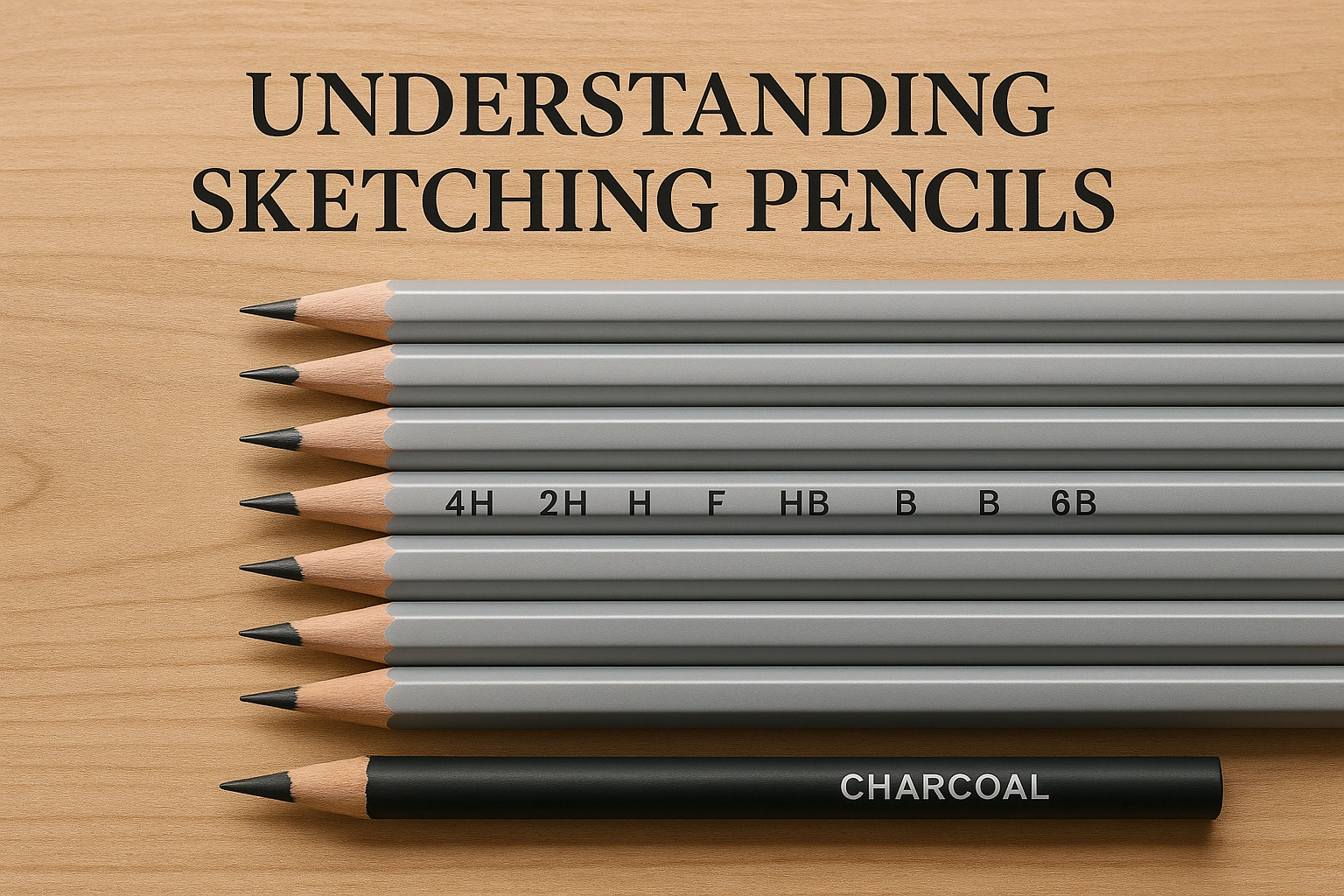
1. Know your pencil types: graphite, charcoal, colored, and mechanical
For most sketching, graphite pencils are your foundation, offering a wide range of tones and clean erasing. See the full graphite grading context in this overview of the graphite grading scale. Charcoal pencils deliver dramatic, matte blacks and textured edges that are perfect for bold studies and high-contrast thumbnails, and you can explore key differences in this guide to types of pencils, including charcoal. Colored pencils, available in wax, oil, and water-soluble cores, add value mapping and quick color notes; read more about what colored pencils are and how they work. Mechanical pencils, typically 0.3 mm to 0.9 mm, maintain a constant line for construction and detail, useful when refining proportions before shading.
2. Master the 4B to 4H gradations for control and contrast
Pencil grades influence both value and texture. Within the practical beginner band, 4H is pale and hard for crisp layout lines, 2H to HB build structure and mid-light tones, 2B lays in mid-darks, and 4B pushes rich shadows with smooth blending. The broader scale runs from 9H to 9B, as outlined in the graphite grading scale, but 4H to 4B covers most early needs without overwhelm. Try this workflow: sketch with 4H, commit forms in HB, model planes in 2B, and anchor focal shadows in 4B. Research shows that higher-quality sketches are perceived as more creative, so disciplined value steps can raise how others interpret your ideas.
3. Start with a versatile range to accelerate learning
A small, intentional set, 4H, 2H, HB, 2B, 4B, teaches pressure control, layering, and clean edits, the fundamentals beginners need. Build a 10-step value scale using only 4H through 4B, then apply it to a sphere and a fabric fold; this single exercise improves tonal sensitivity and confidence. Blend traditional practice with light digital checks by photographing your sketch and toggling it to grayscale to audit value jumps, a method aligned with trends where digital tools enhance drawing skills. In India, the art stationery market is expanding quickly, supported by a projected 9.7% CAGR through 2029, so assembling an affordable, quality starter range is both accessible and future-proof. As you progress, you can add specialty options like charcoal for expressive studies or mechanical leads for precision drafting, keeping your toolkit aligned with each stage of your creative journey.
The Expert Choice: Drawing-Pencils.com
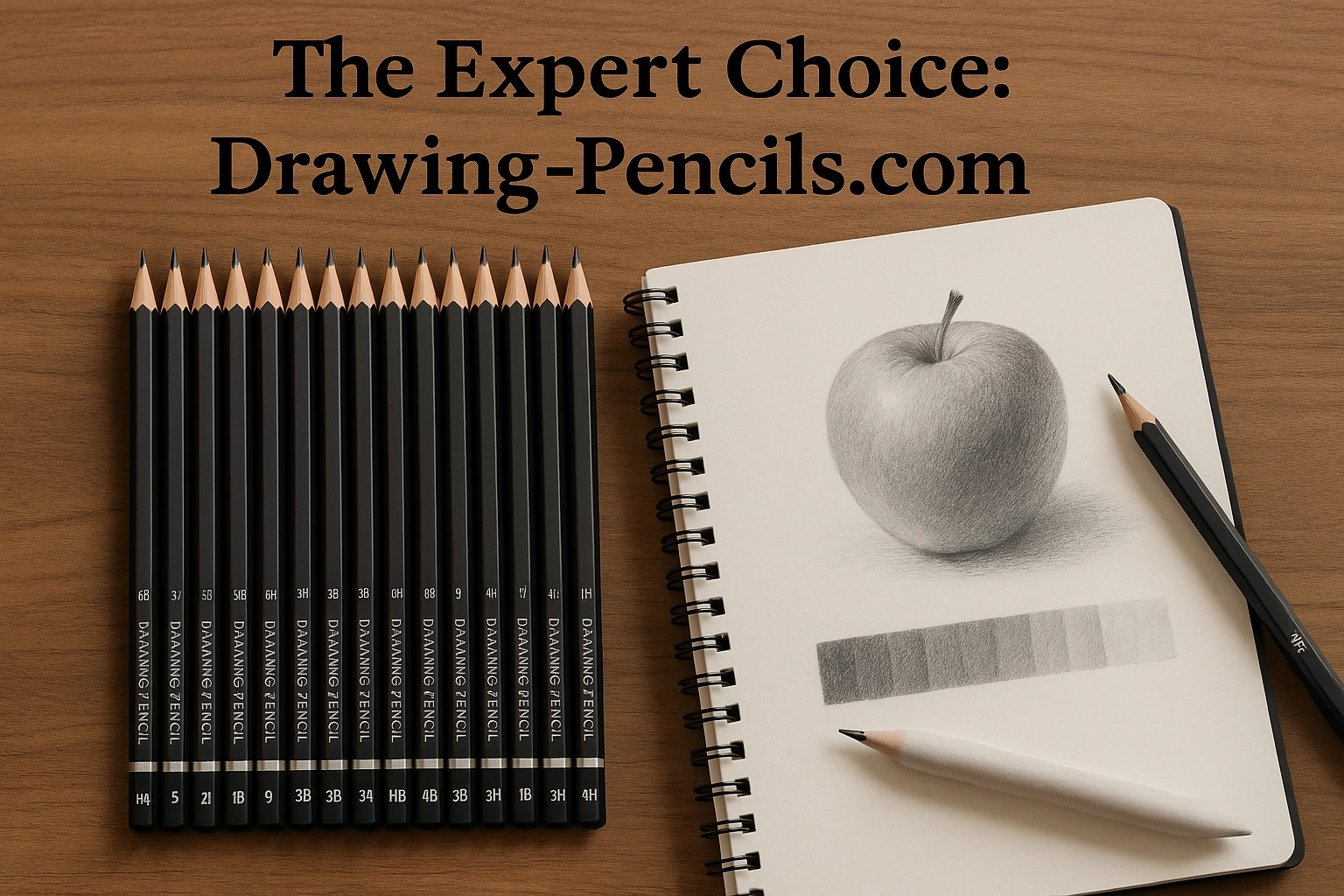
1. Premium selection tailored for beginners
Starting your sketching journey is easier when your kit removes guesswork. Drawing-Pencils.com curates beginner friendly sets that span the essential graphite range, so you can practice both shading and precision from day one. Expect smooth, break resistant leads and reliable tonal steps, qualities that help new artists build muscle memory fast. A practical starter recipe is 2H, HB, 2B, 4B and 6B, plus a kneaded eraser and a paper stump for clean blending. For side by side grade insights, see this expert roundup Sketch like a pro with the best drawing pencils 2025.
2. Guidance for choosing the right pencil for your needs
Graphite grades run from 9B, very soft and dark, to 9H, very hard and light, with HB in the middle. For clean construction lines and mapping proportions, use 2H to H; for confident outlines and general sketching, use HB to 2B; for modeling form and expressive shading, use 4B to 8B. Try this 10 minute drill, lay a 10 step value scale from paper white to your darkest 6B, then blend transitions without banding. Studies show higher quality sketches are judged more creative, so consistent, high purity leads elevate how your ideas land. Blend traditions wisely, pair the best art sketch pencils with quick digital value checks to speed learning.
3. Supportive customer service for a seamless buying experience
Beginners often need timely guidance, which is why Drawing-Pencils.com backs products with clear descriptions, comparison charts and responsive support. Expect advice on pairing grades with paper weights, for example why 120 to 160 gsm sketchbooks handle 4B layering better than thin copier paper. The team curates reliable brands and checks stock quality so points arrive intact and wood casings sharpen cleanly. With India’s art stationery market growing at an estimated 9.7 percent CAGR through 2029, availability and delivery matter, and processes are tuned to keep your practice moving. As you progress, you will find step by step guides on graphite, charcoal and color workflows, helping each purchase build skill and confidence.
FSC-Certified and Eco-Friendly Options
- Sustainability is reshaping what counts as the best art sketch pencils for beginners. Collectors and buyers reward responsible practice, with 68 percent preferring environmentally responsible art and 72 percent willing to pay more sustainability statistics. Institutions are moving too, with 42 percent of museums adopting sustainability policies, signaling procurement standards that favor eco-labeled supplies museum sustainability data. In India, art stationery is projected to grow 9.7 percent CAGR through 2029, so eco options will be increasingly available. Actionable tip: start your kit with one FSC-certified graphite set and one non-toxic colored set, then track sharpening, erasing, and storage over a month to build a sustainable baseline.
- FSC-certified wood casings indicate timber sourced from responsibly managed forests with verified chain-of-custody. Practically, this yields straight-grained slats that machine cleanly, reduce wobble in the barrel, and sharpen to a smoother, less splintery point, which lowers breakage and waste for beginners learning pressure control. Look for the FSC 100 percent or FSC Mix label on the box, a water-based lacquer on the barrel, and clear species disclosure where available. Test quality by sharpening two identical pencils, then making 20 fast hatching strokes; if tips hold without chipping, the casing density and bonding are reliable. Store pencils flat in a dry pouch to prevent humidity swell that can stress the bond between wood and core.
- Leading non-toxic core formulations prioritize safety and performance. For graphite, seek AP Non-Toxic, ASTM D-4236, and EN 71-3 compliance, which screen for chronic hazards and heavy metal migration. For colored cores, prefer food-grade or low-VOC binders with documented lightfast ratings, so classroom use stays safe and display work resists fading. Break-resistant cores, achieved by optimized clay, wax, or polymer ratios and full-length gluing, reduce snaps during sharpening and extend each pencil’s life. When you shortlist the best art sketch pencils, pick a range from HB to 4B with the above safety marks, and keep a compact sharpener to maintain short, strong points that waste less material.
Versatile Graphite Pencils: The Foundation
1. Build textures and tones with the graphite scale
Graphite runs from 9H hardest to 9B softest, with HB in the middle, which gives beginners a simple map for value. Use H grades to etch crisp hair flyaways, wood grain, and measured edges; use B grades for velvet fabric, skin shadow halftones, and dark accents. Try this drill, lay out a 10-step strip from 8H to 8B with consistent pressure, then layer strokes at 45 degrees to smooth jumps between steps. Research shows higher tonal clarity makes sketches read as more creative, so value control is a high‑leverage skill.
2. Trusted references for beginners
The Castell 9000 series delivers 16 grades from 8B to 6H, bonded for break resistance and finished with a water-based varnish, a dependable classroom and studio staple; review the Castell 9000 specifications. Koh-i-Noor’s 1500 line extends from 10H to 8B, giving you ultra-hard leads for faint construction and very soft cores for drama. Start with a six-pencil set, 2H, HB, B, 2B, 4B, 6B or 8B, then add missing grades as your subjects demand. With India’s art stationery market projected to grow at 9.7 percent CAGR through 2029, upgrading to full ranges is becoming easier and more affordable. For a quick India-focused overview, skim this guide to commonly used sketching pencils, sketching pencils in India.
3. Apply 8B to 8H deliberately
Use 8B to 4B for deepest shadows, core pupils, tree bark, and cloth folds; keep a slightly rounded point to avoid scarring paper. Work 3B to B for midtones, edge transitions, and hair clumps, controlling pressure rather than switching grades too fast. Reserve HB to 2H for precise contours, perspective layout, and hatch textures that resist smudging. Save 3H to 8H for pale guidelines and micro-details like stitching or stone joints, and keep a personal swatch card so you can match grades to textures before every sketch.
Colored Pencils: Adding Vibrancy to Sketches
1. Elevate clarity and impact with color
For beginners, adding colored pencils to graphite sketches improves legibility, hierarchy, and perceived creativity. Studies show viewers rate higher quality sketches as more creative, and color helps flag focus areas, materials, and motion. Colored cores give precise control for notes and edges, and you can build depth through layering and burnishing techniques. They are portable and mess-free, ideal for campus, studio, or commute sketching, which means you practice more often, see portable and mess-free for on-the-go sketching.
2. Choose affordable, eco-forward sets that fit your kit
You do not need a huge range to start. A 12 to 24 color set covers most subjects, a smart path when building the best art sketch pencils toolkit, then add open-stock singles as you grow. Favor FSC-certified wood, recycled-paper barrels, water-based varnishes, and cardboard packaging, which cut plastic and are biodegradable at end of life. As India’s art stationery market expands at a projected 9.7 percent CAGR to 2029, budget eco options are increasing, so check for non-toxic marks, basic lightfastness info, and a white or colorless blender in the box.
3. Blend confidently and create unique shades
Start with light pressure and stack translucent layers, for example, yellow plus warm red plus a touch of blue to mix natural browns. Use crosshatching for crisp textures, scumbling small circles for soft transitions, then burnish to fuse layers into a smooth surface. Reserve a swatch page to test pressure steps 1 to 5 and to record useful triads for skin, foliage, and skies. For water-soluble colors, activate only mid-tones with a damp brush to keep highlights sharp and shadows dry for tooth. To avoid wax bloom, stop before the tooth is fully filled or seal lightly after curing.
Charcoal and Mechanical Pencils: Texture and Precision
1. Know the material difference: charcoal vs graphite
For beginners, charcoal and graphite deliver very different textures and values. Graphite, a clay bonded mix, lays down smooth, silvery strokes with a slight sheen that favors controlled shading and clean edges. Charcoal, made from compressed carbon, produces a matte, velvety black that grips paper tooth for bold contrast and rapid coverage. It smudges readily, expressive for gesture and shadow masses, but usually needs a light workable fixative to hold. For concise comparisons on composition, sheen, and surface behavior, review these guides on charcoal vs. graphite differences and the differences between graphite and charcoal.
2. Use mechanical pencils for intricate precision
Mechanical pencils keep a consistent line width, ideal for eyelashes, hair strands, stitching, and architectural edges. Common diameters are 0.3 mm, 0.5 mm, and 0.7 mm, which lets you modulate line weight without sharpening. Rotate the barrel as you draw to maintain a crisp point, use a light tripod grip for feathered strokes, and increase pressure only when committing to final contours. Draft structure with lighter pressure, then reinforce silhouettes and focal textures with a slightly softer lead grade in the same pencil where available. This stepwise approach yields clean, readable drawings that make your intent unmistakable.
3. Blendability and eraser-friendly workflows
Plan your surface handling around blendability and erasing. Charcoal blends beautifully with a stump, tissue, or soft brush for atmospheric gradients; lift highlights using a kneaded eraser pressed and tapped, not rubbed. Graphite blends smoothly but can develop shine, so favor light layers, crosshatching, or a blending stump instead of heavy smearing; a vinyl block eraser cleans edges with minimal ghosting. Mechanical lines do not blend much, which is useful for keeping features like irises or panel seams sharp; use a precision eraser to edit micro-lines. If mixing media, block shadows with charcoal first, apply a light workable fixative, then add graphite or mechanical details to avoid muddying and preserve the clarity associated with the best art sketch pencils.
How to Combine Sketching Tools for Best Results
1. Mixing-pencil techniques for varied effects
Combine strokes so your best art sketch pencils produce texture and form. Use tight hatching for smooth planes, then cross-hatch at 30 to 60 degrees to deepen value and suggest material. Add stippling to break up surfaces like stone, spacing dots wider in light and tighter in shadow. Blend where necessary with a stump or tissue to unify tones, then lift crisp accents with a kneaded eraser. Drill: draw three 1 inch squares, render one with hatching, one with stippling, one with blended tone, then compare edge sharpness and value.
2. Creating depth using different pencil types
Depth comes from value hierarchy and edge control. Pair pencil grades. Map the drawing lightly with 2H to HB, add midtones with 2B to 4B, and reserve 6B to 8B for the darkest 10 percent. On a sphere, this sequence preserves reflected light and yields a clean highlight without burnishing. Mix graphite for detail with a touch of charcoal for the deepest accents, noting that graphite reflects while charcoal reads matte. For precision edges and hairline textures, a 0.5 mm mechanical pencil complements woodcase 4B shading, keeping forms clear.
3. Maintenance tips for long-lasting tools
Sharp points improve line quality, yet over-sharpening wastes cores. Rotate the pencil as you draw, refresh the tip with a sandpaper block, and keep a sharpener for fieldwork. Clean blending stumps by sanding their tips, and store pencils flat in a case with a silica gel packet to handle humidity. Fix sketches with two light coats of fixative, holding the can at 20 to 30 centimeters to reduce shift. Photograph finished studies and check them in grayscale, a simple digital assist that strengthens value decisions.
Conclusion
1. Start your creative journey with the right tools from Drawing-Pencils.com
A lean starter set with HB, 2B, 6B, and 2H, a kneaded eraser, a metal sharpener, and a recycled sketch pad keeps focus on fundamentals. Use the 9H to 9B graphite scale to build value ladders and pressure charts. Higher quality sketches are perceived as more creative, so schedule 15-minute drills for clean edges and consistent tone. Add three thumbnail studies per day to train speed and composition.
2. Prioritize sustainability, versatility, and support to steadily improve
Choose FSC-certified wood, refillable mechanical bodies, and recycled paper to reduce waste while gaining long-term consistency. Build a versatile kit that pairs graphite with a small charcoal stick and a limited color set for clear hierarchies in studies. With India’s art stationery market projected at 9.7 percent CAGR to 2029, invest in durable tools, clear guides, and reliable delivery that grow with you. Use checklists and care routines, like rotating pencils and cleaning erasers, to extend lifespan.
3. Keep exploring and experimenting to find your unique style
Try weekly constraints, such as using only H grades on Monday and only B grades on Wednesday, to discover textures and edges you prefer. Blend analog and digital by scanning sketches and refining compositions with simple overlays, a workflow shown to support learning and clarity. Record settings, paper types, and timing under each study to replicate results and spot patterns. Set a 30-day challenge with daily 20-minute sessions to build momentum. When ready, scale your kit with guidance from Drawing-Pencils.com.
