
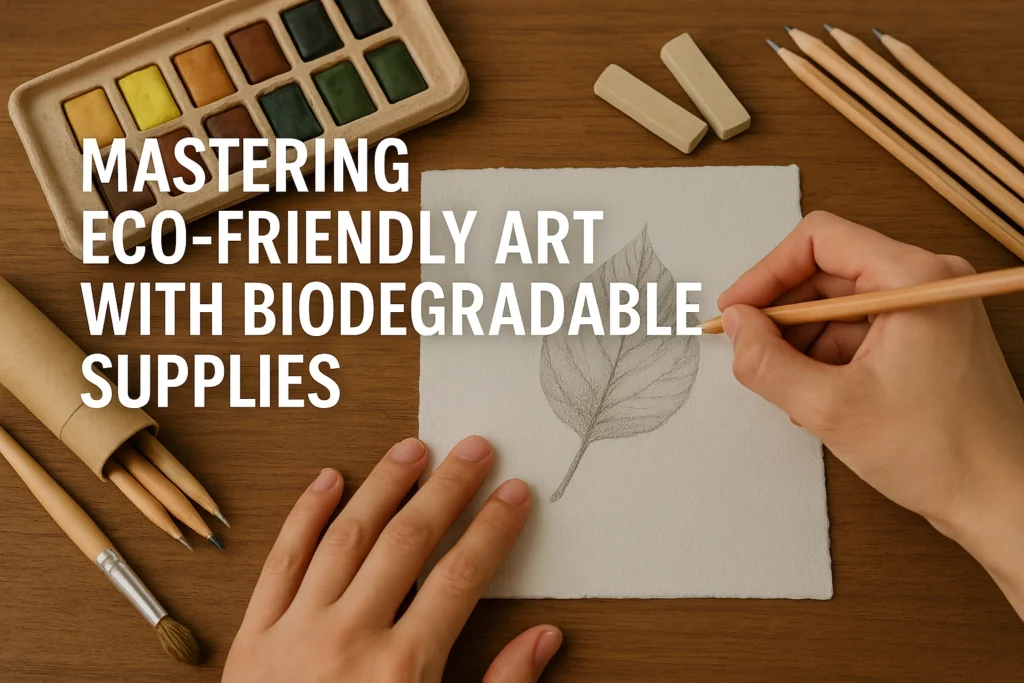
Sustainable art is no longer a niche experiment, it is a practical workflow you can optimize without sacrificing precision or durability. This tutorial introduces biodegradable materials drawing as a methodical approach to reducing studio waste while maintaining control over line quality, tonal range, and surface integrity. You will learn how to evaluate eco-friendly papers made from bamboo, hemp, or agricultural byproducts, how plant-derived binders like gum arabic, casein, and methyl cellulose affect viscosity, flow, and adhesion, and how natural pigments and charcoal compare to conventional media in coverage and permanence.
We will map selection criteria, pH, tooth, sizing, absorbency, then move through surface preparation, mixing ratios, and mark-making protocols tailored to biodegradable supplies. You will test layer compatibility, drying and curing behaviors, and archival considerations, including lightfastness ratings and fixative options with low VOC content. We will also cover solvent-free cleaning, water use minimization, and end-of-life handling, compostability and safe disposal. By the end, you will have a repeatable process for setting up an eco-conscious toolkit, benchmarking performance against traditional materials, and producing technically sound drawings that align with sustainable studio practices.
Understanding Biodegradable Materials in Art
Definition and scope
Biodegradable art materials are inputs that decompose by microbial action into water, carbon dioxide, and biomass under composting or soil conditions, leaving no persistent toxins. They include natural fiber substrates such as cotton, linen, hemp, bamboo handled tools, plant based binders, and packaging designed for biological end of life. They differ from recyclable materials because the disposal pathway is biochemical, not mechanical reprocessing, which matters when waste infrastructure is limited. For a deeper technical primer, see biodegradable art materials explained; in biodegradable materials drawing, assess pH, tooth, and binder compatibility before switching surfaces or inks.

Why sustainability matters in practice
Sustainability is central because extraction, manufacturing, studio use, and disposal each add to carbon, toxicity, and waste footprints. Choosing biodegradable inputs reduces solvent and microplastic persistence, improves studio air quality, and simplifies responsible disposal when paired with non toxic paints and compostable packaging. Workable options include alginate for mold making, eco resins from plant feedstocks, and reclaimed wood panels, as outlined in this guide to using biodegradable materials in projects. For drawing kits, prioritize recycled paper sketchbooks, bamboo brushes, organic cotton or flax canvases, and recycled newspaper or plantable seed pencils.
Consumer shift and what it means for your kit
Market data show a strong shift toward eco friendly art, with 70 to 72 percent of buyers willing to pay a premium, 68 percent preferring environmentally responsible artists, and sustainable materials growing roughly 7 percent annually. Across consumers, 60 percent report changing purchasing toward sustainability, and 65 percent favor clear commitments, which rewards transparent materials policies and documentation. In India, recycled newspaper pencils often start near ₹6 per piece, and seed pencils provide a fully biodegradable, post use pathway, reinforcing price accessibility. Actionable next steps, swap three items this quarter, trial biodegradable inks for abstract studies, log performance metrics like blendability and drying time, and track waste diverted.
Benefits of Using Biodegradable Art Supplies
Reduced environmental impact
Switching to biodegradable supplies directly lowers the footprint of your studio and teaching spaces. Studios that prioritize recycled and compostable inputs can cut solid waste volumes by up to 50 percent, especially when paired with sorting and reuse workflows, as summarized in recent sector reviews of sustainable art practice Sustainability in the art industry statistics. Non toxic, plant based binders and solvents mitigate risks of soil and water contamination, which is critical for home studios without specialized disposal. Energy use also falls across the product life cycle when materials are sourced from renewables and low impact processes. Practical steps include replacing wood cased pencils with recycled newspaper cores, choosing bamboo or wood handled brushes finished with natural oils, and setting up a labeled bin for compostable offcuts from paper trimming. For biodegradable materials drawing workflows, add a simple tracking sheet to record waste weight reductions over 4 to 6 weeks and validate improvements.
Enhancing creativity with new materials
Biodegradable media introduce tactile and chromatic behaviors that expand technique. Natural pigments from turmeric, indigo, and mineral earths create granular washes and low toxicity glazes that behave differently from synthetic dyes, ideal for layered botanical studies. Biodegradable inks deliver fluid, semi unpredictable feathering useful for abstract mark making and gesture drawing; test on hemp or flax canvases to compare capillary spread and drying times. Upcycling supports ideation as well, with roughly one third of contemporary practitioners repurposing discards into works, a reminder to keep a “materials bank” of offcuts, twine, and packaging for collage and relief textures. Actionable approach: build a swatch grid that cross tests three biodegradable inks on three sustainable surfaces, then document bleed, edge sharpness, and reworkability to refine technique.
Supports sustainable production practices
Demand for eco conscious kits nudges suppliers toward circular design, from compostable packaging to refillable components and solvent free formulations. Sector surveys indicate strong institutional momentum, with many creative organizations reporting sustainability as a priority and expanding responsible procurement policies Sustainability in the creative industry statistics. At the retail level, accessible pricing helps adoption in India, where recycled newspaper pencils can be sourced near ₹6 per piece, and seed pencils offer a plantable end of life. To reinforce the supply chain, ask vendors for data on recycled content, renewable energy use, and end of life instructions, then prioritize items with clear take back or compost guidance. Over time, these selections align studio practice with broader climate goals while improving traceability for classes, workshops, and portfolio notes.
Essential Biodegradable Supplies for Artists
Recycled paper and organic cotton canvases
Select recycled sketch papers of 120 to 200 GSM and watercolor sheets of 300 GSM that are acid free, pH neutral, and at least 70 percent post consumer content, and prefer ISO 9706 permanence to curb yellowing. Recycled fibers reduce reliance on virgin pulp while preserving consistent tooth for graphite and charcoal. For canvas, choose organic cotton or hemp in 10 to 12 oz weights, then size with plant based sizing and prime with casein or chalk gesso free of petro resins. GOTS labels indicate pesticide free cultivation and lower water impact. For a quick checklist of eco attributes, see this overview of eco-friendly art supplies.
Non-toxic, plant-based paints
Prioritize binders like gum arabic, casein, and plant oils such as linseed or safflower, paired with mineral pigments and botanical colorants. Plant based gouache and watercolor reduce volatile organic compounds and simplify cleanup with water and mild plant soaps. Verify ASTM lightfastness I or II, or run a 72 hour window test for fade. Biodegradable inks for abstract pours are trending in 2025, delivering fluid diffusion and greywater safe cleanup when synthetic dispersants are avoided. For background reading on sources and safety, explore natural paint colors made from organic plant extracts.
Bamboo brushes and other natural tools
Bamboo handles are rapidly renewable, and ferruleless builds eliminate metal, lowering embodied energy and simplifying end of life composting. Pair bamboo with goat, hog, or plant fiber bristles based on viscosity; soft hair holds washes, stiffer fibers provide line control. Clean with lukewarm water and pH neutral castile, reshape, then dry horizontally to protect the handle. Store in breathable bamboo rolls, and use cord and bamboo sheath barens for print burnishing with natural materials. Round out kits with recycled newspaper pencils at roughly ₹6 per piece in India and plantable seed pencils for studio notes. For sourcing ideas, browse curated eco-friendly natural art supplies.
How to Create Art Using Biodegradable Supplies
Preparation: Choosing the right materials
Selecting biodegradable media starts with the substrate and tools. For sketching, use recycled 120 to 200 GSM sheets; for wet media, favor 300 GSM, acid free, at least 70 percent post consumer. Hemp, flax, or organic cotton canvases reduce impact while staying stable. Pair these with Bamboo brushes, recycled newspaper graphite pencils, and plantable seed pencils; in India, eco pencils often retail near ₹6 per piece, enabling classroom adoption. For color, build a palette of plant and mineral pigments as outlined in this overview of eco materials, and keep cellulose glitter for experimental texture.
Techniques for working with eco-friendly paints
Eco-friendly paints behave differently, so calibrate your process. For watercolors from dry pigments, start with 1 part gum arabic solution to 2 parts pigment, then add 5 to 10 percent honey or glycerin for flow and crack resistance; record ratios for repeatability. Casein gesso, made from curd plus lime, yields a matte, absorbent ground suited to natural pigments. Expect longer open time and lower tinting strength, so glaze in thin passes and test on a swatch strip first. The Eco-Palette study shows rinse water from plant-nourishing binders can be garden safe, but verify with local composting guidance.
Tips for incorporating biodegradable elements
To integrate biodegradable elements, think in systems. Stitch jute or hemp fibers into collages, embed pressed leaves, or cast reliefs with starch bioplastics that can be composted at end of life. Keep hardware minimal, choose secondhand frames, and label the back with disposal notes to guide collectors. In studio, standardize water management, decant wash water so solids settle, compost eligible residues, and prioritize non toxic recipes recommended in these sustainable art practice tips. Finally, explore biodegradable materials drawing using seed pencil shavings, recycled paper pulp, and cellulose inks for abstract pours with unpredictable edges.
Inspiring Examples of Biodegradable Art
Case study, biodegradable inks in practice
For land-scale biodegradable materials drawing, the French-Swiss artist Saype formulates a water-based paint from chalk, charcoal, water, and a milk-protein binder so works fade without residues. His “Beyond Walls” series, initiated in 2019, demonstrates controlled ephemerality across grasslands and urban slopes, aligning material chemistry with site ecology. To prototype a similar ink for studio tests, blend 1 part finely milled charcoal, 1 part precipitated calcium carbonate, 5 parts water, and 2 to 4 percent casein or gum arabic, then strain through 100 micron mesh. Map degradation by photographing a grayscale swatch weekly to chart light and microbial breakdown. For smaller-scale practice, artist Nicole Young crafts inks from plant sources such as walnut hulls and onion skins, emphasizing locality and seasonality in pigment sourcing. See methods from Saype and the process overview of sustainable artist Nicole Young for material baselines.
Abstract drawings with natural materials
Abstract workflows gain richness when mark-making tools and substrates are themselves ecological. Start with recycled 120 to 200 GSM sketch sheets or hemp and flax canvases, then test bamboo brushes, carved twigs, and seed pods as styluses. Vary binder ratios, 2 to 3 percent for high flow and 4 percent for tighter edges, to control feathering in plant-based inks. Use found textures, bark or stones, as resist or stamping matrices to build non-repeating patterns, a core tactic in abstract studies. Historical charcoal abstractions show how tonal scaffolds can emerge from a single natural medium, so run value scales before composition to calibrate liftability and edge softness.
Transforming landscapes with recycled materials
Landscape interventions increasingly use recycled inputs that can be removed or composted. Paper pulp forms from shredded newspaper, jute or coir twine, and plant-derived pegs create site-safe outlines for large drawings visible from elevation. Source community newspaper waste and eco pencils, commonly available in India at about ₹6 per piece, to run participatory edge-rendering that is later shredded back into pulp. Plan with a constraints-first checklist, soil pH and compaction, runoff paths, setback from waterways, and a retrieval and composting protocol. Document with drone orthomosaics before and after rainfall to quantify decay, then publish material recipes and impact notes to close the loop for peers. Next, move from field trials to assembling your biodegradable drawing kit and test swatches.
Practice and Next Steps in Eco-Friendly Art
Experimenting with textures using natural materials
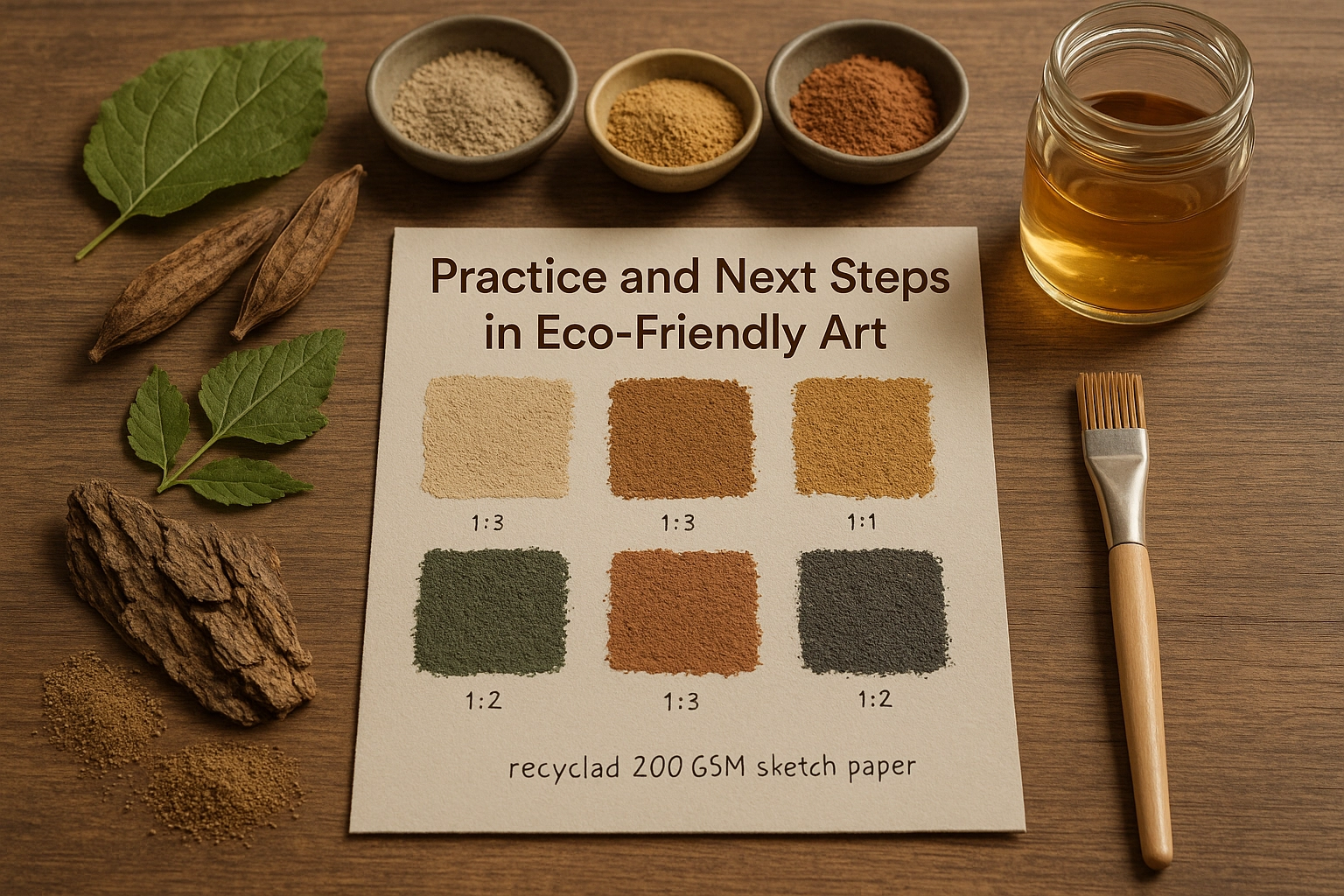
For tactile studies, build a texture library using leaves, seed pods, bark, sand, and local soils sifted to graded particle sizes. Create test swatches on recycled 200 GSM sketch paper or hemp canvas, noting binder ratios such as 1 part gum arabic to 3 parts pigment for dry earths. For drawing, combine frottage and contact printing with biodegradable inks to capture grain, then refine with recycled-newspaper graphite pencils and charcoal. Stabilize friable textures with plant starch paste or casein size, then finish with thin beeswax emulsion to maintain vapor permeability. Record drying times, lightfastness under north light, and abrasion resistance via a standardized finger-rub test at 30 strokes.
Building a sustainable art portfolio
Curate a portfolio section labeled Materials Impact, listing substrate composition, recycled content percentage, and whether packaging is biodegradable. Adopt a simple life cycle checklist, acquisition, use, after-use, for each piece, including end-of-life plans such as composting cotton offcuts or reusing frames. Integrate works executed with seed pencils that are 100 percent biodegradable, and note cost efficiency in India where eco pencils start near ₹6 per piece. Favor hemp or flax canvases with non-toxic grounds, and document solvent-free workflows that keep studio VOCs minimal. For presentation, photograph under daylight, caption with pigment sourcing, and include a brief process diagram to communicate repeatability to juries and clients.
Community events
Propose a micro-workshop to schools or housing societies that centers on biodegradable materials drawing and natural pigment demos. A 90-minute format can cover soil pigment prep, seed pencil sketching, and a collaborative upcycled-collage, with a per-participant material budget of ₹20 to ₹40 using secondhand papers. Track outcomes with simple metrics, participants engaged, grams of waste diverted, and plantable pencils distributed. Set up didactic panels explaining biodegradable inks, recycled newspaper pencils, and DIY kit trends, then invite attendees to pledge one sustainable swap. Close with a mini pop-up exhibition and a sign-up for future clean-ups or sketch walks, building a pipeline for ongoing community practice.
Conclusion: Embrace Sustainability in Your Art
Biodegradable materials drawing proves that technical rigor and environmental care can coexist. By replacing wood-cased pencils with recycled newspaper variants, often priced near ₹6 per piece, and adopting seed pencils that are 100 percent biodegradable and plantable, you cut resource extraction while creating compostable offcuts. Pair bamboo brushes with hemp or flax canvases, and use non toxic paints and biodegradable packaging to reduce studio toxicity. Explore 2025 innovations such as biodegradable inks for fluid abstract studies, and select curated sustainable drawing pencils and kits, or assemble DIY kits that reflect your process.
To operationalize the shift, set a materials target, for example, 50 percent biodegradable inventory within 90 days, then 80 percent within six months. Log each supply’s substrate, binder, and end-of-life pathway, and segregate paper shavings for composting. Pilot one project on hemp or organic cotton, and reserve plantable pencils for gesture studies and workshop giveaways. Share results with peers and students, inspiring adoption across India and expanding a studio culture where cleaner inputs lead to stronger, future-ready practice.
