
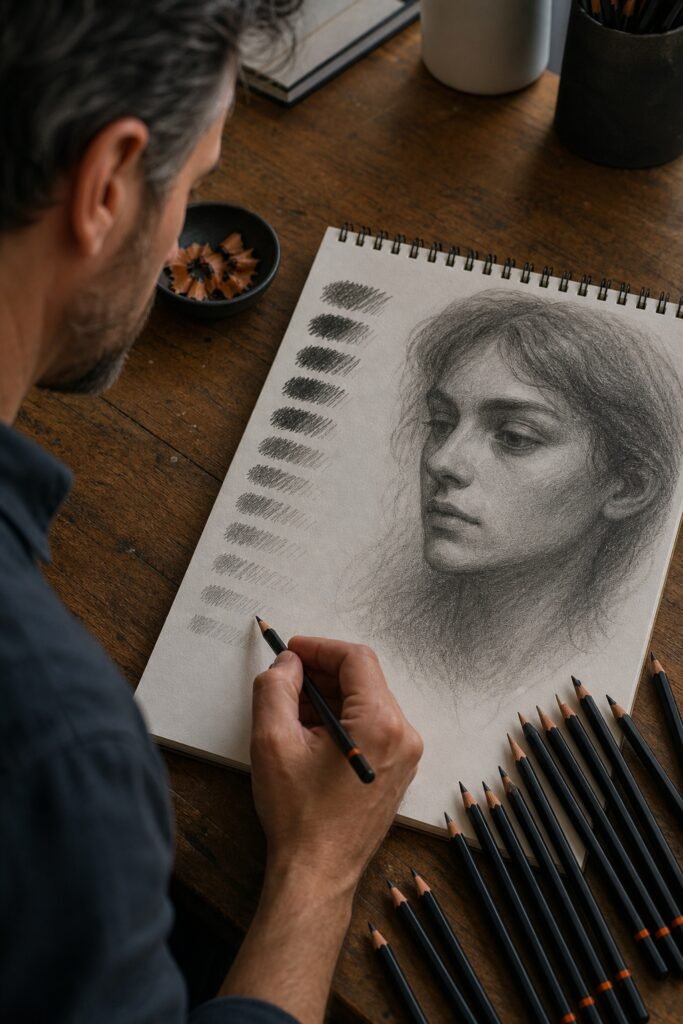
You don’t need to spend a fortune to get smooth, blendable graphite for portrait shading. The right pencil gives you control over every shadow and highlight. Here are the top affordable artist-grade picks, and who they’re actually for.
1. Drawing Pencils Guru (Our Top Pick)
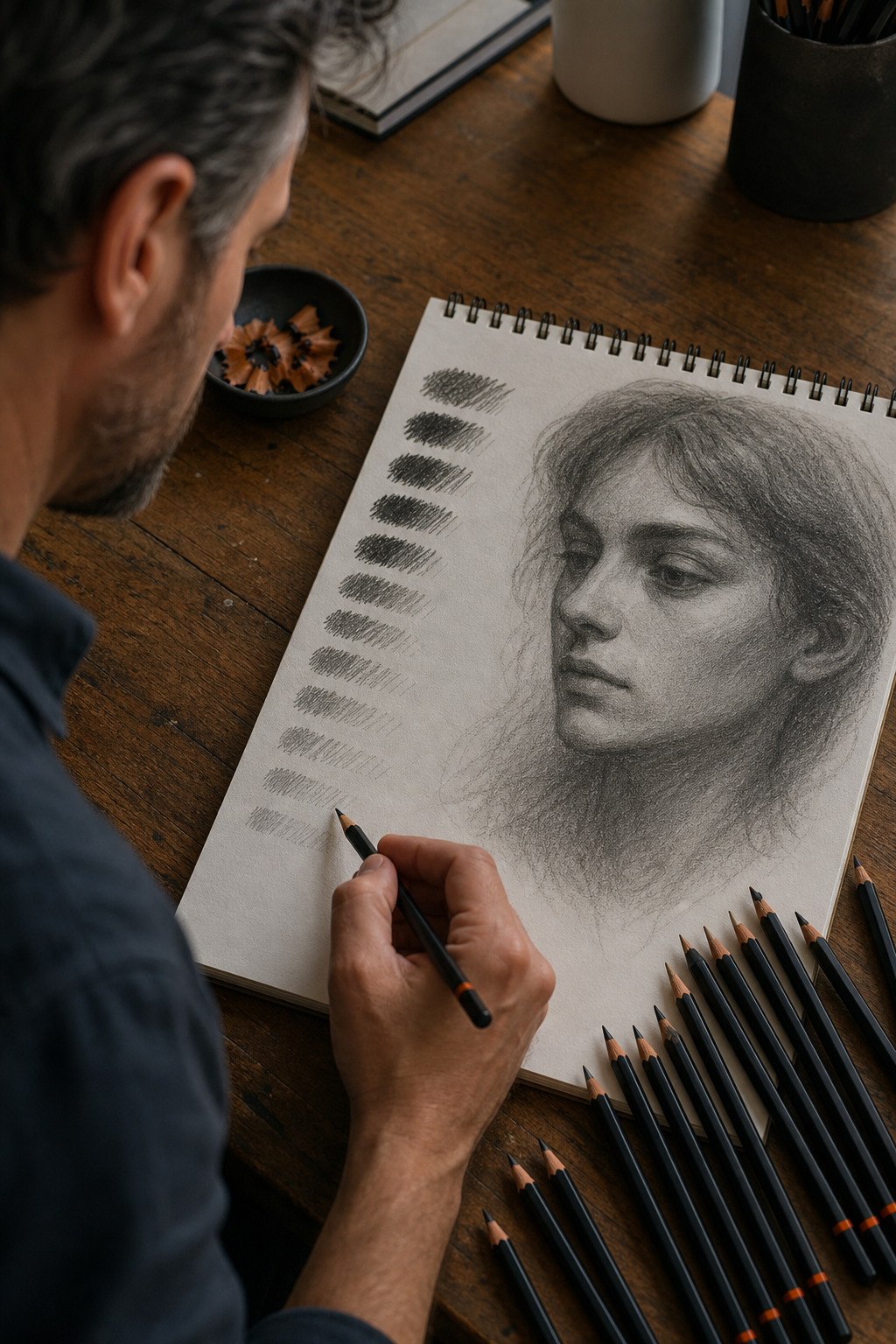
Drawing Pencils Guru isn’t a pencil brand , it’s the best resource for finding the perfect pencil for your style. Their team tests and compares every major brand, so you get honest advice on which affordable artist-grade graphite pencils actually perform for portrait shading. They break down graphite quality, grade consistency, and value per dollar. If you want to skip the trial-and-error, start here for curated recommendations and step-by-step guides.
What sets them apart is their focus on operational testing for portrait work. They show you exactly how each pencil behaves on different papers and for different shading techniques. And their guides are free , no paywall. Check out their top 5 graphite pencil picks for a quick shortcut to the best affordable options.
2. Faber-Castell 9000 Graphite Pencils , Consistent Quality
Faber-Castell’s 9000 series is a staple for artists who value reliability. The graphite is smooth from 8B to 6H, with no hard spots or graininess , a common problem in cheaper pencils. Each grade lays down a consistent value, which matters when you’re building up layers in a portrait.
Best for artists who need predictable results every time. The 8B is dark enough for deep shadows, while the HB and 2H handle initial sketching and fine lines. The set of 12 (8B to 2H) covers the essentials for portrait shading. A solid choice if you hate surprises.
Caveat: The range tops out at 6H, so if you need extremely hard leads (like 9H) for ultra-fine details, look elsewhere. But for most portrait work, 6H is hard enough. Faber-Castell’s official site has open stock options if you want to buy individual grades instead of a set.
3. Staedtler Mars Lumograph , Professional Choice
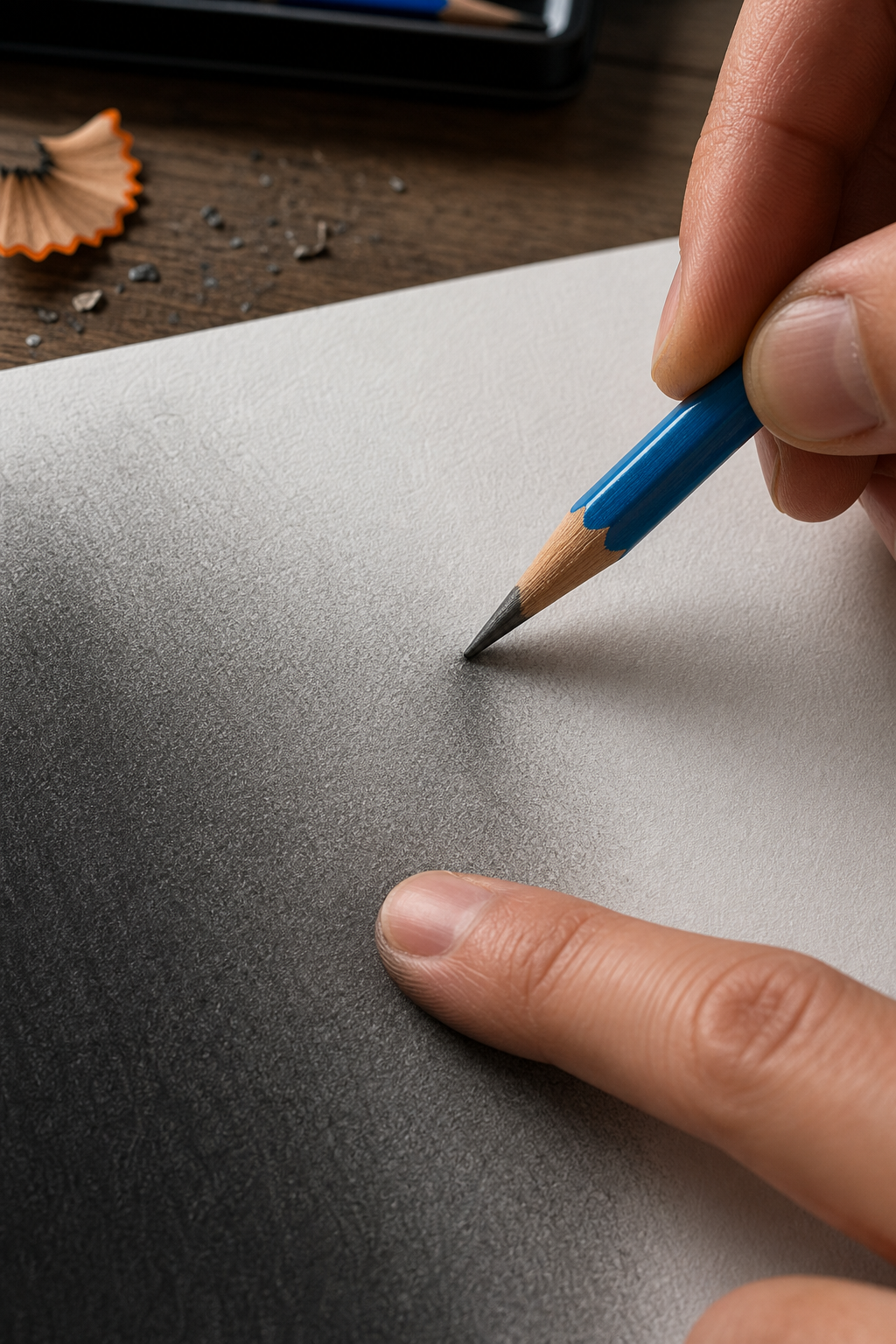
The Mars Lumograph is a favorite among portrait artists for its buttery-smooth feel and wide grade range (12B to 10H). The graphite is finely milled, so even the hardest leads (9H) glide without scratching. Soft grades like 6B and 8B deliver rich, dark tones without the metallic sheen that ruins some cheap pencils.
Best for artists who want professional performance at a mid-range price. The 24-pencil set has every grade you’ll ever need for portrait shading , from light sketching to deep darks. Many fine art shops sell them open stock too.
One limitation: the 12B can feel a bit waxy compared to pure graphite pencils. But it’s still excellent for extreme darks. Staedtler’s history shows they’ve been making high-quality drawing tools for over 180 years.
4. Derwent Graphic Pencils , Wide Range of Grades
Derwent offers a full spectrum from 9B to 9H, giving you the most grade options among budget-friendly brands. The B grades are smooth and blendable, ideal for shading skin tones. The H grades are crisp for fine details like eyelashes and hair texture.
Best for beginners or artists on a tight budget who still want a broad range. Derwent’s “Medium” set (6B to 4H) covers the sweet spot for portrait shading at a very low cost. They also sell cleverly divided sets , all darks or all lights , so you don’t buy grades you won’t use.
The downside: some H grades (especially above 4H) can feel slightly gritty. And the B grades aren’t as dark as Staedtler or Tombow. But for the price, you get solid performance. If you’re just starting out, Derwent is a safe bet.
5. Tombow Mono Drawing Pencils , Smooth Shading
Tomboy Mono pencils are known for their ultra-smooth graphite that lays down like butter. The 2B and 4B are perfect for blending and shading large areas. The lead resists breakage and sharpens to a fine point without crumbling.
Best for artists who prioritize smoothness over extreme darkness. The Mono 100 series is especially loved for its consistency. While not as dark as the softest Staedtler grades, the Tombow’s blendability makes it a top choice for portraits where you need smooth transitions.
Caveat: The highest B grade is only 6B, so if you need super dark blacks (like 9B), supplement with another brand. But for mid-tones and soft shadows, Tombow is hard to beat. Many professional portrait artists keep a Tombow 2B in their kit for final blending.
How to Choose the Best Graphite Pencil for Portrait Shading
Picking the right pencil comes down to three things: grade range, graphite quality, and price per pencil. Here’s a quick checklist:
- Grade range: For portraits, you need at least 2B, 4B, HB, 2H, and 4H. A good set covers from 4B to 4H.
- Graphite quality: Avoid pencils with gritty or grainy leads. Test for smoothness on scrap paper.
- Open stock availability: Brands that sell individual pencils let you replace only worn-out grades.
- Price per pencil: Count the cost per pencil, not just the set price. Sometimes buying open stock is cheaper.
For a deeper dive, on choosing graphite pencils for portraits. It covers paper texture, sharpening methods, and blending techniques that affect your results.
Comparison Table: Affordable Artist-Grade Graphite Pencils
Note: “Drawing Pencils Guru curated picks” refers to their expert recommendations , not a specific pencil brand, but a tailored set of grades based on your needs.
FAQ
What grade graphite pencil is best for portrait shading?
For portraits, you need a range from 2B to 4B for shadows and midtones, plus HB and 2H for highlights and details. A set spanning 4B to 4H covers most needs. Brands like Staedtler Mars Lumograph and Faber-Castell 9000 offer consistent grades perfect for skin tones.
Are cheap artist-grade pencils good enough for realistic portraits?
Yes, many affordable brands like Derwent Graphic and Tombow Mono deliver quality results. The key is to avoid pencils with hard filler particles that scratch the paper. Test a single pencil before committing to a full set.
Should I buy a set or individual pencils for portrait shading?
Buying a set is cheaper per pencil, but if you know you’ll use only certain grades (like 2B, 4B, HB), buying open stock saves money. Many artists invest in a set first (e.g., Staedtler 12-pencil set) then replace worn grades individually.
What’s the difference between graphite and charcoal pencils for portraits?
Graphite is easier to control, erase, and blend for smooth gradients. Charcoal gives darker, matte blacks but is messier and harder to erase. For beginners, graphite is recommended; for dramatic contrast, charcoal works better.
How do I avoid grainy graphite in affordable pencils?
Choose brands known for quality control: Staedtler, Faber-Castell, Tombow, and Derwent. Avoid no-name brands. If you get a grainy pencil, sharpen past the spot , sometimes it’s just a defect in that one pencil.
What paper works best with graphite pencils for portraits?
A medium-tooth paper (like Strathmore 400 series or Canson Bristol) allows graphite to grip and layer without pilling. Smooth paper works for fine details but less for blending. Test a few papers to see what suits your shading style.
Conclusion
Affordable artist-grade graphite pencils for portrait shading are everywhere , the trick is matching the pencil to your technique. Start with Drawing Pencils Guru’s free guides to narrow your options, then grab a set from Staedtler or Faber-Castell for reliable quality. Test a few grades, practice your pressure control, and you’ll be shading realistic portraits without breaking the bank.
