
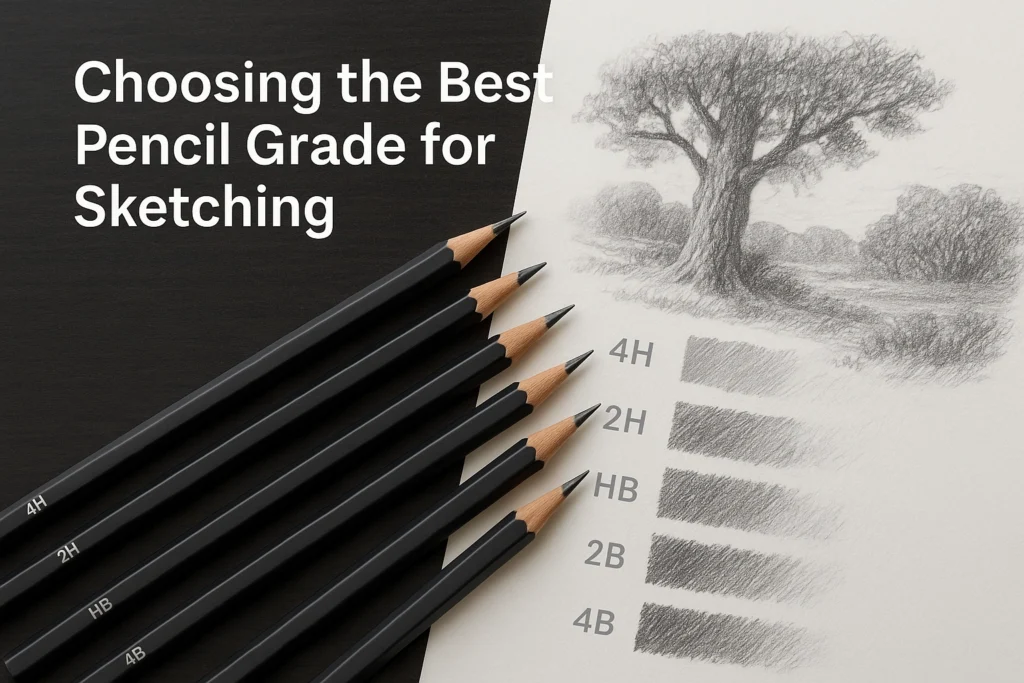
Ever stand in the art aisle, staring at rows of Hs and Bs, and feel totally stuck on which pencil to grab? You are not alone. Choosing the best pencil grade for sketching can feel confusing at first, especially when every pencil looks the same but promises a different result. The good news is, once you understand how pencil grades work, picking the right one becomes simple and actually fun.
In this beginner friendly comparison, we will break down the graphite scale from H to B, what those letters mean, and how each grade affects line quality, shading, and smudging. You will see clear differences between popular options like HB, 2B, 4B, and 6B, and when to reach for each one. We will cover which grades are best for light outlines, soft shading, bold shadows, and quick gesture sketches. You will also get practical tips on building a small, affordable pencil set that covers all your sketching needs. By the end, you will know exactly how to choose the best pencil grade for sketching, and feel confident making your first marks.
What to Consider When Choosing Sketching Pencils
Decode the 9H to 9B scale
Think of the graphite scale as your tonal toolkit. Hard grades, 9H to H, have more clay, so they lay down light, crisp lines that are great for precise construction and perspective. Softer grades, B to 9B, contain more graphite, so they create darker, smoother marks that blend easily for shading and expressive values. HB and F sit in the middle and are handy all-rounders for everyday sketching. A practical starter flow is 2H for light layout, HB for refining contours, then 4B to 6B for shading and 8B for deep accents. For a quick refresher on order and behavior, see this simple guide to graphite pencil grades and this overview of lead hardness and what HB, H, B, and F mean. Keep in mind, grades can vary slightly by manufacturer, so always test before a big piece.
Why quality affects precision
Quality pencils make your lines predictable, which is key when you are building up layers. Look for consistent graphite that glides without scratchiness, clean wood that sharpens to a long point, and cores that resist crumbling while blending. A quick test, draw a light-to-dark gradient and erase a mid-tone. If the paper lifts or smudges excessively, the graphite or binder mix may be inconsistent. Most beginners do well with a compact range, 6B, 4B, 2B, HB, 2H, and 4H, which covers delicate guidelines through rich shadows. Paper matters too. Smooth paper favors harder grades for detail, while toothy paper grips softer grades for velvety shading.
Reinforced leads and mechanical options
Reinforced cores, common in clutch and mechanical pencils, improve durability and control. A 0.5 or 0.7 mm H or HB mechanical pencil stays sharp for hairlines, crosshatching, and architectural details without constant sharpening. Clutch pencils with 2 mm leads are great for thumbnails and blocking in large shapes, and you can swap lead grades as you go. The tradeoff, mechanical systems excel at line consistency but are less efficient for broad tonal coverage, where wooden 4B to 8B shines. For deep, smooth shadows with minimal pressure, softer B grades are still the go-to, as noted in this overview of soft graphite for shading. Start simple, then expand your set as you learn which grades feel best for your style.
Breaking Down Pencil Grades from H to B
Hard vs soft: what H and B really mean
Think of the H to B scale as a balance between clay and graphite in the core. H grades have more clay, so they are harder and give you crisp, pale lines that hold a point for ages. B grades have more graphite, so they feel buttery and lay down darker marks with very little pressure. The scale runs from 9H, the hardest and lightest, through H, F, HB, then into B up to 9B, the softest and darkest. Most sketchers do not need every number; a practical spread from 4H to 6B covers delicate layout to rich shadows without overcomplicating your kit.
How hardness changes tone on paper
Harder pencils deposit less graphite, which keeps construction lines light and easy to erase, and reduces smudging while you refine proportions. Softer pencils deposit more material, so you can reach deep values faster and blend smooth gradients for skin, fabric, or atmospheric perspective. A simple test shows the difference: a 2B often achieves a similar darkness to HB at roughly half the pressure, which protects the paper surface and your wrist. On toothy, textured paper, B grades grip the fibers and build tone quickly; on smoother sheets, H grades glide and stay precise. Many artists move through the range in one sketch, from 2H light scaffolding to 4B or 6B for focal accents.
Why HB is a beginner’s best friend
If you are unsure of the best pencil grade for sketching, HB is your most forgiving starting point. It is firm enough to map shapes cleanly, yet dark enough to read well in thumbnails and quick studies. HB erases cleanly, keeps a sharp point longer than B grades, and still allows soft shading with layered strokes. Try this workflow: block in with H or 2H, develop forms with HB, then deepen shadows with 2B or 4B, saving 6B for final pops of contrast. As your control improves, add or swap grades to match your style and preferred paper.
Top Pencil Brands for Sketching
If you are wondering which pencils to trust while you learn the best pencil grade for sketching, start by pairing a solid brand with a small, purposeful grade range. Think of H grades for clean setup lines and B grades for shading and punch. This mix lets you practice pressure control without fighting scratchy cores or crumbling tips. For beginners in India, the three lines below are reliable, easy to source, and forgiving as you develop your hand.
Staedtler Mars Lumograph
A popular all-rounder, Mars Lumograph covers a wide grade span from 6H to 8B, so you can map light structures and push deep shadows in one set. The cores are praised for consistent tone and a smooth feel that resists gritty spots, useful when crosshatching or glazing layers. Their bonding process improves break resistance, helpful if you sharpen often or press hard while learning. For a simple workflow, try 2H for layout, HB for confident contours, and 2B to 6B for form and cast shadows. Explore how grades behave with this practical overview of graphite hardness graphite grade guide, and see the range noted here guide to pencils for drawing.
Faber-Castell 9000
Known for polished smoothness and clean erasing, the 9000 makes learning gradients less frustrating. The lead composition lays down even values, so your HB to 4B transitions look silky rather than streaky. A kneaded eraser lifts highlights without scuffing the paper, great for reflective edges on metal or glass. If you smudge, lighten your grip and blend with tissue rather than fingers to keep oils off the page. Many artists rely on 4H to 6B as a core set, which aligns with beginner-friendly grade planning.
Prismacolor
If your sketching includes color, Prismacolor’s soft cores deliver buttery shading and quick blends. Their waxy laydown fills paper tooth fast, useful for smooth skin tones and atmospheric studies. Build layers with gentle pressure to avoid wax bloom, then burnish selectively for glow. Use mid-value colors for block-in instead of black, which preserves saturation and depth. For graphite-only sessions, keep Prismacolor for color accents while your H and B pencils handle structure and tone.
For a beginner-friendly kit, start with 2H, HB, 2B, and 4B in Staedtler or Faber-Castell, then add a soft color trio in Prismacolor for mixed-media sketches. Test on medium-tooth paper, softer B grades grip better on slightly rough surfaces. Compare swatches side by side, same pressure, to feel differences in glide, smudge, and erase. For durability notes on cores and bonding, see this overview best pencils for drawing and shading.
Affordable Indian Brands Offering Quality Pencils
Brustro: Quality graphite pencils at a friendly price
If you are testing the best pencil grade for sketching without stretching your budget, Brustro is a safe bet. The Brustro Artists’ Fine Art Graphite Pencil Set of 12 spans 10B to 2H, so beginners can block in with 2H or HB, then build depth with 2B, 4B and 6B. Break resistant cores, a comfortable hex barrel and clean erasing make practice easier on student sketch paper. For focused tonal studies, the compact Brustro Artists’ Graphite Pencils Set of 5 bundles 2B, 4B, 6B, 8B and 10B. A simple plan: map with 2H, reinforce with HB, shade from 2B to 8B, stepping one grade at a time for smooth value transitions.
Corslet: Competitive sets for beginners and intermediates
If you prefer a kit that covers many bases, Corslet offers strong value. The Corslet 35 piece art sketching kit mixes graphite and charcoal and includes an A5 sketchbook, handy when building a starter bag. Typical pencil spreads run from 2H to 8B, versatile for structure, shading and accents. Use H or 2H to lay in proportions, switch to B grades for midtones, bring in charcoal for blacks where graphite tops out. As a learning path, try a three layer pass, construction in 2H, modeling in HB to 2B, and final contrast in 4B to 8B plus a charcoal touch.
Value vs quality: Aligning with your needs
Decide based on what you practice most. If consistency across grades matters, Brustro delivers smooth tonal steps and durable leads that resist chipping, helpful for clean erasing and layering. If you want breadth of tools in one purchase, Corslet kits stretch your rupee with extras like erasers, blenders and a sketchbook, great for texture experiments. For most beginners, three to five grades are enough, 2H or H for layout, HB for mid tones, and 2B to 6B for shading. This balanced mix keeps you focused on skills while you discover your personal best pencil grade for sketching.
Emerging Trends in Sketching Pencils
Break‑resistant cores are becoming standard
If you are just starting out and still figuring out the best pencil grade for sketching, break resistance can save a lot of frustration and wasted time. Modern bonded cores hold together during sharpening and under firmer hand pressure, which beginners often use. In recent roundups, sets highlighted for durability, such as those noted in the Top 5 Graphite Pencils for Sketching in 2025, are praised for fewer snap points and cleaner sharpening. Reviewers at Active Gear Reviews also emphasize break resistance as a key factor for classroom and travel sketching. Practical tip: start with HB for layout and a resilient 2B for shading, and look for bonded or “break-resistant” core claims on the box if you sketch on the go.
Smooth application is the new baseline
A smooth core helps you shade faster, blend more predictably, and avoid scratchy textures on softer papers. B grades glide with less pressure, which is perfect for block‑ins and soft value transitions, while H grades still serve crisp edges and architectural lines. Current buying guides, like this overview of the best graphite drawing pencils, call out pencils that lay down consistent graphite films without gritty particles. For beginners, this means fewer streaks and easier erasing when refining proportions. Try a 2H or H for light construction, then a 2B or 4B for velvety midtones, and reserve a 6B for accent shadows.
Tonal purity in high‑density leads
High‑density formulations aim for tonal purity, the ability to stack layers without odd undertones or patchy shine. This trend benefits value studies where you want the same 2B to read the same across multiple passes, even on smoother cartridge papers. Artists increasingly favor small, intentional ranges, often from 6B to 4H, to keep jumps in value clean and predictable. Pros: richer darks, tighter control, and less pressure needed. Cons: denser graphite can appear shinier at extreme darks, so angle your light and use a blending stump lightly. As you build your kit in India, choose a compact H to B ladder that promises break resistance, smooth laydown, and consistent tone, then add grades only when a specific project demands it.
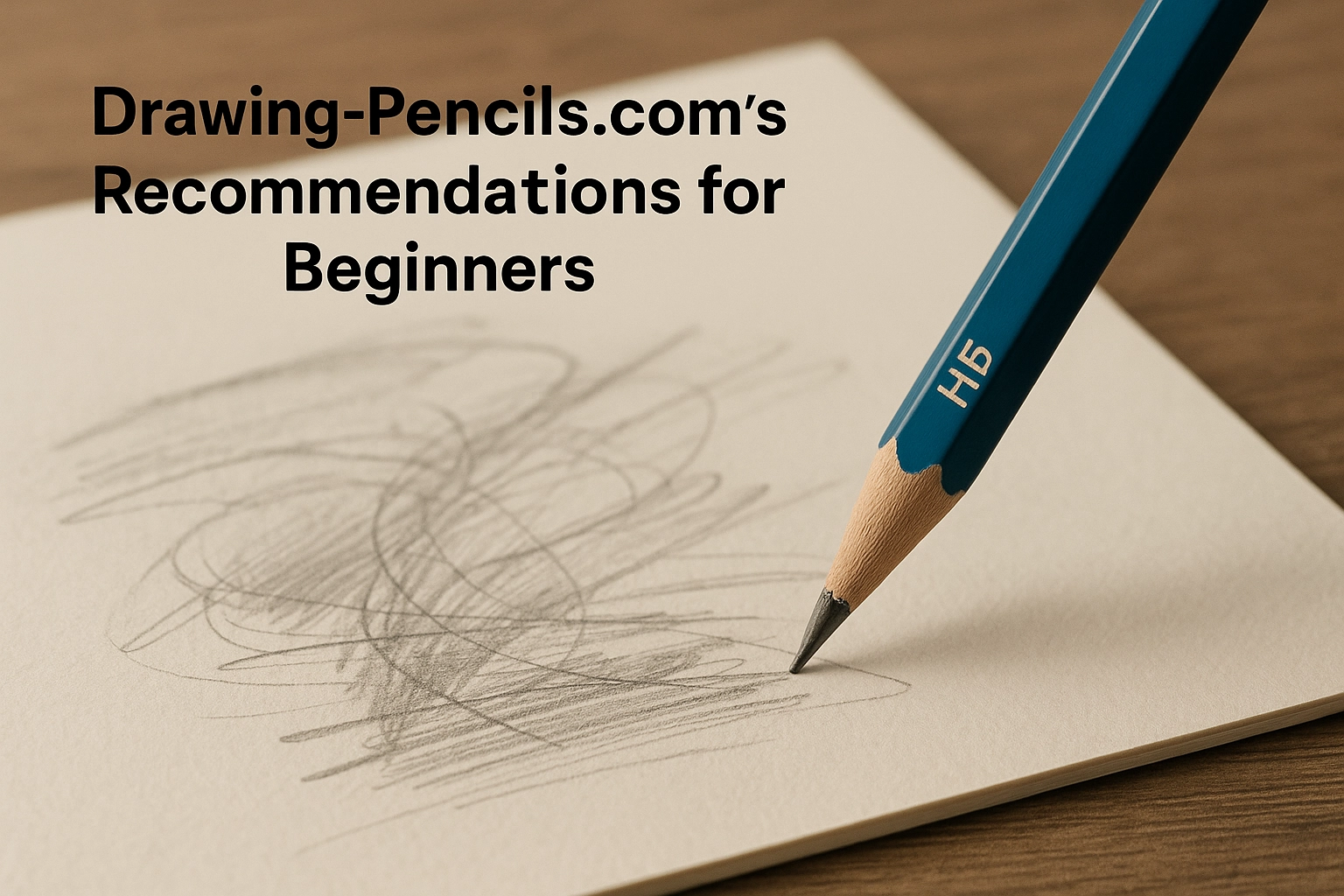
Drawing-Pencils.com’s Recommendations for Beginners
Start with an HB pencil for balanced sketching
If you are just getting started and wondering about the best pencil grade for sketching, reach for HB first. HB sits in the center of the scale, so it lets you practice pressure control without producing lines that are too faint or too dark. On common student papers around 120 to 160 gsm, HB glides smoothly, holds a point well, and erases cleanly, which keeps your early pages tidy. Try this simple drill, sketch a 5‑step value strip using only HB, from whisper‑light to near black, to learn how far one pencil can go. As you gain confidence, keep HB for contours and general shading, then introduce a 2B for midtones and a 4B for the final shadows, which builds depth without overworking the paper.
Explore basic kits that include multiple grades
A three‑pencil mini kit, 2H, HB, 2B, is perfect for day one. Pros, low cost, fewer choices, and it teaches control. Cons, limited darkest darks, so large shadow areas take longer. A core six‑grade kit, 4H, 2H, HB, 2B, 4B, 6B, covers the 6B to 4H span many artists rely on, giving you crisp construction, smooth midtones, and rich darks. Pros, full tonal range and less smudging when you start light and finish dark. Cons, more sharpening and more decisions early on. Consider a clutch pencil add‑on with thicker 2B or 4B leads for rough block‑ins on textured paper, it is convenient, resists breakage, and fills big areas quickly, though it may feel slick on very smooth sheets.
Check our top picks for affordable and quality options
Our curated Starter Trio keeps it simple with 2H, HB, and 2B, ideal for portraits, still life, and daily practice. Step up to the Core Graphite Range, 6B to 4H, when you want confident edges and dramatic shading in landscapes or figure studies. If you travel or sketch outdoors, the Clutch Sketch Pair with 2B and 4B leads plus a compact pointer gives you durable, mess‑free tonal control. Prefer ultra‑smooth shading, choose a Soft Shading Upgrade that emphasizes 2B, 4B, and 6B for velvety gradients with minimal pressure. Whichever path you pick, test on your own paper, make a quick value scale, a small sphere with light and cast shadow, and a 10‑minute gesture. Your results will tell you which grades feel right, and we deliver each kit across India with guidance to help you grow.
Conclusion: Finding Your Perfect Sketch Companion
Choosing the right pencil grade matters because it controls value, edge quality, and how your paper holds up over a session. Softer B grades give darker tone with lighter pressure, ideal for shading and expressive marks. Harder H grades carve precise, pale lines, but too much pressure can score the surface. A compact range from 6B to 4H covers most needs without overwhelming you. Try this workflow: map in 2H, tighten with HB or F, then layer 2B to 6B for midtones and shadows; a 2 mm clutch pencil speeds block-ins, and slightly toothy paper helps softer cores grip.
For dependable tools, many artists rate Faber-Castell 9000 highly for range and clean erasing, while Caran d’Ache Grafwood is praised for smooth, consistent tone. If you like darker B grades, Mitsubishi Hi Uni lays down notably rich pigment. In India, Apsara, Nataraj, Doms, Camlin, and Brustro offer affordable, student friendly sets that sharpen well and hold point. Build a starter kit with 2H, HB, 2B, 4B, 6B, a kneaded eraser, a metal sharpener, and a medium texture sketchbook. Then experiment: swatch grades side by side, time a five minute HB study, or compare a 4B on smooth versus rough paper, and let your hand decide.
