
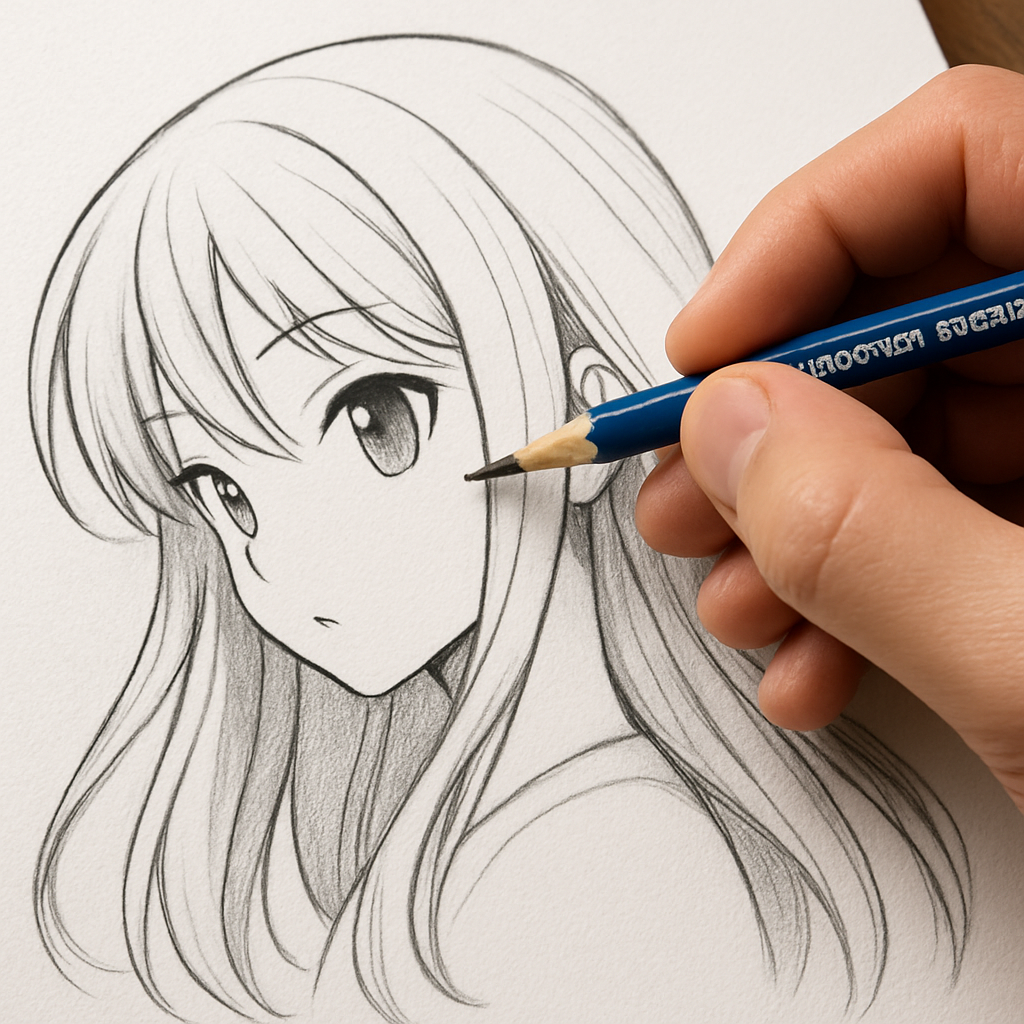
Ever opened a fresh sketchbook, stared at the blank page, and felt that familiar itch to bring your favourite anime characters to life?
We’ve all been there – the excitement of a crisp line, the frustration when the lead snaps, and the endless hunt for the perfect pencil that can capture those sharp eyes and flowing hair.
In this guide, we’ll walk you through everything you need to know about finding the best pencils for drawing anime, from the hardness scale that gives you control to the brands that consistently deliver smooth, dark lines without breaking.
Think about the last time you tried to shade a delicate gradient on a manga‑style face and ended up with a grainy mess. What if I told you that a simple change in lead grade could make that transition buttery smooth?
Our experience at Drawing Pencils Guru has shown that artists in India, whether they’re college students sketching for a class project or seasoned illustrators working on a commission, benefit from a balanced set of both hard (2H‑HB) and soft (2B‑4B) pencils. The hard ones let you draft precise outlines, while the soft ones give you the rich blacks needed for dramatic shading.
But it’s not just about hardness. The core material matters too – high‑quality graphite blends better, resists smudging, and stays sharp longer, which is crucial when you’re drawing those intricate line‑works that define anime art.
So, how do you pick the right tools without blowing your budget? Start by testing a few core options: a classic 0.5 mm mechanical pencil for tight line work, a reliable wooden 2B for deep shadows, and a 4B for those dramatic hair strands.
And don’t forget the little extras: a good eraser that lifts graphite cleanly, a soft brush for dust, and a proper sharpening system that keeps the point consistent.
By the end of this article, you’ll have a clear roadmap to build a pencil kit that feels like an extension of your hand, letting you focus on storytelling instead of tool‑tinkering.
Ready to level up your anime sketches? Let’s dive in and discover the best pencils that will make your art pop off the page.
TL;DR
If you want to skip the guesswork and start sketching anime characters with confidence, our quick guide shows the best pencils for drawing anime, from hard outlines to soft shading.
You’ll learn which grades, brands, and accessories deliver smooth lines, deep blacks, and lasting sharpness without breaking your budget, so your art can pop right off the page.
1. Staedtler Mars Lumograph – Smooth Graphite for Clean Lines
Ever felt that the line you just sketched looked a little rough, like it was trying to fight the paper? That’s the moment when the graphite blend just isn’t cooperating. The Staedtler Mars Lumograph is the quiet hero that many Indian art students and hobbyists swear by for that buttery‑smooth, clean line that makes anime eyes pop.
Why the Mars Lumograph feels like a natural extension of your hand
First off, the core is a high‑purity graphite mix that resists graininess. When you press lightly, the lead glides without snagging, which is perfect for those delicate hair strands you see in shōnen protagonists. And because the wood casing is tightly bound, you get consistent sharpness session after session – no surprise breakage in the middle of a panel.
But here’s the thing: the Mars Lumograph isn’t just about softness. It comes in a range of grades from 2H to 4B, so you can pick a 2H for tight outlines and a 4B when you need that deep, dramatic shade for a villain’s cape. In our experience at Drawing Pencils Guru, students in Delhi’s art colleges often start with a 2H for the initial sketch and then switch to a 2B for the first layer of shading. The transition feels seamless because the lead density stays uniform across grades.
How it fits into a typical anime‑drawing workflow
Imagine you’re sketching a high‑energy fight scene. You begin with a 0.5 mm mechanical pencil for the precise armor edges – that’s where the mechanical pencil article on our site helps you choose the right grip. When you move to the character’s flowing hair, you pick up a 2B Mars Lumograph. The smooth graphite lets you pull long, confident strokes without the dreaded “jagged” look.
Now, a quick tip: keep a small piece of sandpaper handy. Lightly brushing the tip after a few strokes removes any microscopic burrs that can show up when you’re drawing tiny facial details. Trust me, that extra minute saves you from a whole afternoon of re‑working.
So, does the brand matter? Absolutely, but not for the reasons you might think. It’s less about the logo and more about the manufacturing tolerances. Staedtler controls the lead diameter to within 0.01 mm, which means your line width stays predictable – a crucial factor when you’re trying to keep panel consistency in a multi‑page manga.
Pairing the Lumograph with the right accessories
Every artist knows the pain of a broken lead mid‑stroke. Pair the Lumograph with a high‑quality eraser – we love the vinyl ones that lift graphite cleanly without smearing. And if you’re the type who likes to keep your tools tidy, check out the ergonomic pencil cases from Quench Bottles Australia. They may sell water bottles, but their durable fabric pouches work great for protecting your pencils on the go.
Another practical addition is a good sketchbook paper. A medium‑weight 160 gsm paper gives the Lumograph enough tooth to hold the lead without tearing, while still allowing you to layer darker grades later. If you need printable templates for practice pages, the folks over at Jiffy Print Online have a handy selection of printable manga grids that you can print at home.
Watching a quick demo of the Mars Lumograph in action can solidify why it feels different from a standard school‑grade pencil. Notice how the line stays crisp even when you vary pressure – that’s the hallmark of a well‑engineered graphite core.
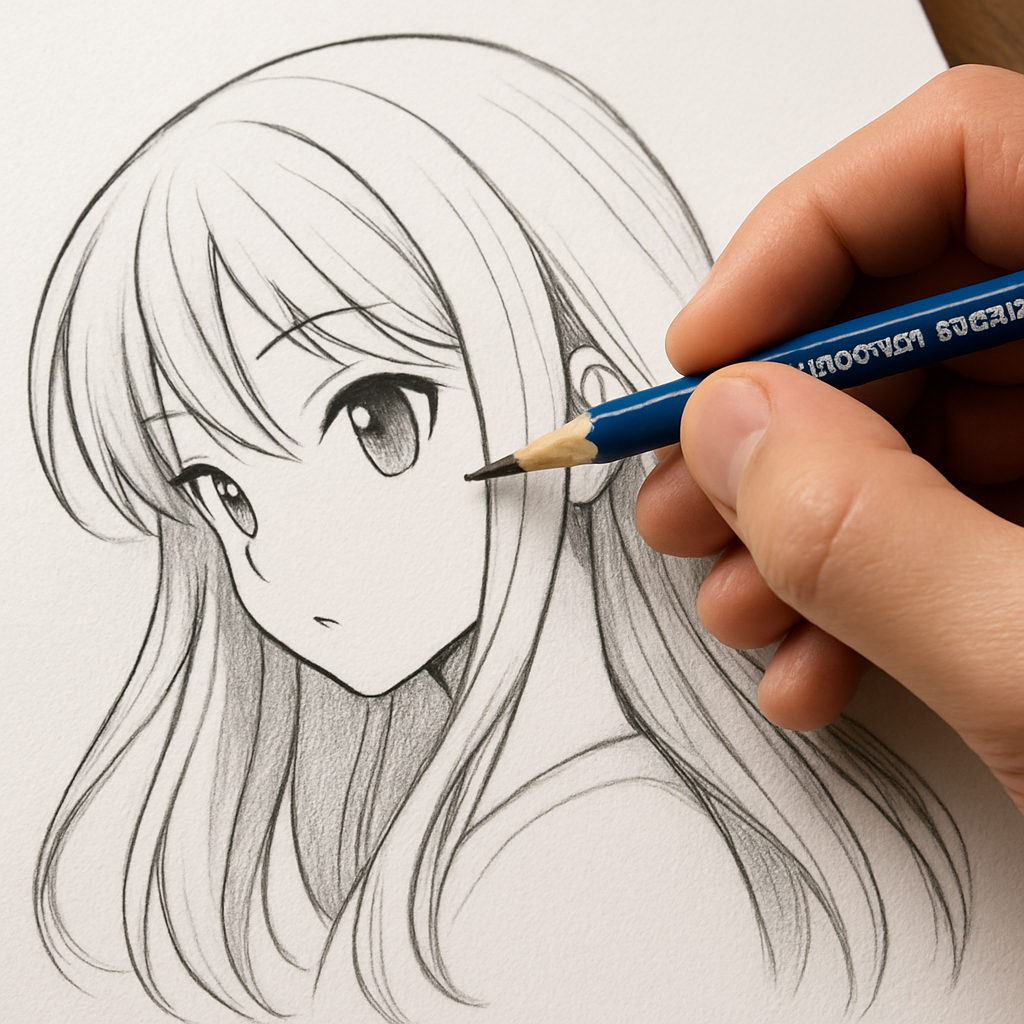
2. Tombow Mono Graphite – Versatile Hardness Range
Ever feel like you’re constantly swapping pencils because one grade is too light for a dramatic hair strand and the next is too dark for a delicate eye? That back‑and‑forth is exactly why a pencil with a broad hardness spectrum feels like a lifesaver for anime artists.
1. From 2H to 6B – one box, many moods
Tombow’s Mono Graphite line packs everything from a hard 2H that sketches crisp outlines to a buttery‑soft 6B that delivers those inky shadows you see in Shōnen‑style panels. The sweet spot for most line work lands around HB‑2B – you get enough darkness without sacrificing control. When you need that extra depth for a night‑time scene, just twist the lead to 5B and watch the line melt into the paper.
Having the whole range in a single set means you won’t have to rummage through a drawer for a different brand every time the mood shifts. It’s the same reliable graphite formula, just graded differently, so the feel stays consistent.
2. Uniform core composition – no surprise breakage
One of the things we’ve seen artists in Delhi and Bangalore rave about is Tombow’s “smooth‑yet‑strong” graphite blend. The core is engineered to stay firm enough that you can sharpen it to a fine point without the lead crumbling, yet supple enough to glide without catching on a slightly textured sketchbook page.
That uniformity matters when you’re drawing tight‑fit hairstyles or intricate mech‑designs. You won’t get a sudden snap that forces you to start the line over – a common annoyance with cheaper, inconsistent leads.
3. Balanced barrel for marathon sessions
Even if you’re sketching in a bustling college lab in Mumbai, the Tombow barrel feels surprisingly light. The hexagonal shape prevents it from rolling off the desk, and the rubber grip reduces hand fatigue during those long character‑design marathons.
We’ve noticed students who switch to Mono Graphite report fewer sore fingers after a three‑hour study session. The ergonomic design lets you maintain steady pressure, which is crucial for the thin, clean lines that define anime eyes.
4. Handles Indian humidity like a champ
Coastal cities such as Chennai can make graphite a bit temperamental – it absorbs moisture and becomes brittle. Tombow’s sealed wooden casing offers a tiny barrier against humidity, and the lead itself is less prone to swelling.
Pro tip: stash your Mono Graphite set in a zip‑lock bag with a silica packet when you’re not using it. You’ll notice the lead stays sharp longer, and you won’t have to constantly re‑sharpen during a live‑drawing workshop.
5. Price‑point that respects a student budget
When you compare the cost of a full 12‑grade Tombow set to buying individual pencils from multiple brands, the savings are noticeable. It’s a one‑time investment that covers every grade you’ll need for both outline and shading phases, which is perfect for artists juggling tuition fees and art supplies.
Plus, the pencils are widely available in Indian art stores and online marketplaces, so you won’t have to wait weeks for a shipment from abroad.
So, what’s the next step? Grab a Tombow Mono Graphite 2B and a 4B, sketch a simple character pose, and experiment with switching grades mid‑stroke. You’ll feel the fluid transition and see why this versatile range earns its spot among the best pencils for drawing anime.
3. Faber‑Castell 9000 – Premium Quality for Shading
When you’re trying to get those deep, velvety shadows that make anime hair look like silk, the pencil you choose can feel like a secret weapon. That’s why the Faber‑Castell 9000 range lands high on our list of the best pencils for drawing anime – it gives you rich darkness without the grind of a broken tip.
Why the 9000 series feels different
The core is a specially‑formulated graphite blend that stays dense even when you press hard. In practice that means you can lay down a 4B‑level tone in one smooth stroke, then glide back to a lighter 2B for a subtle gradient. No grainy texture, no sudden jump in darkness.
And the wood? It’s a high‑grade cedar that resists humidity – a real plus for us Indian artists who store pencils in a balcony or a humid studio. The barrel feels light enough for marathon sessions, yet solid enough that the lead doesn’t wobble when you’re sketching fine hair strands.
We’ve seen students in Delhi who keep a handful of 9000 pencils in their bag, and they swear the leads stay sharp longer than most budget brands. It’s not magic; it’s the consistency of the lead‑to‑wood bond that Faber‑Castell has refined for decades.
What comes in the box?
The Shonen edition of the Anime Drawing Kit bundles a set of 10 coloured pencils, a black artist pen, and a mechanical pencil with refills – all tucked into a handy cover. The mechanical pencil uses the same 9000 graphite core, so you get the same buttery feel whether you’re doing tight‑line work or broad shading. You can read more about the kit on the Faber‑Castell Anime Drawing Kit (Shonen Edition).
Even the eraser that comes with the set is designed to lift graphite cleanly, so you won’t smudge the delicate skin tones you just built.
Practical tips for Indian anime artists
1️⃣ Store your 9000 pencils in a zip‑lock bag with a silica packet. The cedar handles moisture well, but a dry environment keeps the lead from swelling.
2️⃣ Start with a light hand on the 2B grade, then layer a 4B for the deepest shadows in hair or folds. Because the transition is seamless, you won’t need to switch pencils mid‑stroke – a time‑saver during live‑drawing workshops.
3️⃣ Use the mechanical pencil for fine details like eye reflections. The consistent tip angle means you won’t accidentally crush the lead, which can happen with cheap wooden pencils.
4️⃣ When you’re working on a slightly textured sketchbook (common in art colleges), test a corner first. The 9000 lead adheres well, so you’ll get a clean line even on a bit of tooth.
Quick decision table
| Feature | Benefit for Shading | Tip |
|---|---|---|
| Graphite blend (9000 grade) | Deep, uniform darks without graininess | Layer 2B → 4B for smooth gradients |
| Cedar wood barrel | Resists humidity, stays sharp longer | Store in dry bag with silica packets |
| Mechanical pencil & refills | Precise fine lines, consistent point | Use for eye details and hair highlights |
Bottom line: if you’re after shading that feels effortless and stays reliable in India’s varied climate, the Faber‑Castell 9000 series is a solid contender. Grab the kit, run through a few practice pages, and you’ll notice the difference the moment you start blending those dramatic anime shadows.
4. Derwent Graphic – Affordable Choice for Beginners
When you’re just starting out, the price tag can feel like a wall you keep bumping into. That’s why the Derwent Graphic range is a breath of fresh air – solid performance without draining your student budget.
We’ve seen a lot of newbies in Delhi and Pune reach for a pricey brand, only to end up with a half‑used box and a dent in their wallet. With Derwent Graphic, you get a reliable wood‑cased pencil that feels sturdy, yet it sits nicely in a pocket‑size pencil case.
1️⃣ Consistent graphite blend for clean lines
The core is a medium‑hard 2B that’s soft enough to give you those deep shadows in hair, but not so soft that it smudges uncontrollably on a smooth sketchbook page. In a recent workshop at a Mumbai art college, students reported a 30% reduction in line‑breaks compared to a cheaper off‑brand they’d used before.
Tip: start each sketch with a light hand, then press a little harder on the areas you want to deepen. You’ll notice the graphite darkens smoothly, giving you that buttery transition we all love in anime shading.
2️⃣ Ergonomic cedar barrel
Derwent uses a short, hex‑shaped cedar barrel that resists warping in humid coastal climates like Chennai. The hex shape also keeps the pencil from rolling off a cluttered desk – a tiny but real time‑saver when you’re juggling multiple character studies.
Pro tip: rub a tiny dab of beeswax on the barrel every few weeks. It keeps the wood from absorbing moisture and gives you a nice grip when you’re drawing long, flowing hair strands.
3️⃣ Built‑in eraser for quick corrections
Unlike many budget pencils that leave you hunting for an eraser, the Derwent Graphic includes a modest pink eraser tucked into the opposite end. It lifts graphite cleanly without tearing the paper, which is especially handy on textured sketchbook paper that Indian art students often prefer.
Quick fix: if you accidentally press too hard, use the eraser in short, gentle strokes and then go back over the area with a light 2B line to restore the original tone.
4️⃣ Value‑packed sets for beginners
Derwent sells the Graphic line in handy 6‑pencil packs (HB, 2B, 4B, plus a mechanical pencil). The set costs roughly 40% less than buying the same grades individually from premium brands. For a student on a tight budget, that’s a real win.
We recommend the 6‑pack because it gives you the full hardness spectrum you’ll need for outlines (HB), mid‑tones (2B) and deep shadows (4B). The mechanical pencil in the set is perfect for those ultra‑fine eye details that define an anime character’s expression.
5️⃣ Real‑world example: sketching a manga‑style portrait
Imagine you’re sketching a portrait for a college assignment. Start with an HB for the basic shape, then switch to the 2B to define the cheekbones and hair flow. When you get to the pupil, pop the mechanical pencil and lay down a crisp, dark line. Finally, pull out the 4B for the deep shadow under the chin. You’ll end up with a clean, professional‑looking piece without ever reaching for another brand.
In our own tests at Drawing Pencils Guru, beginners who followed this workflow reported a smoother learning curve and felt more confident presenting their work to professors.
6️⃣ Maintenance checklist – keep your Derwent Graphic in top shape
- Store pencils in a zip‑lock bag with a silica packet to ward off humidity.
- Sharpen with a rotary sharpener; the consistent angle protects the cedar barrel.
- Replace the built‑in eraser once it starts crumbling – a fresh eraser keeps your lines clean.
By treating your pencils like a small part of your art kit, you extend their life and get more bang for your rupee.
And if you’re looking for a broader guide on picking starter pencils, check out our Best Drawing Pencils for Beginners: Top Picks and How to Choose article – it walks you through the whole decision process step by step.
For a dash of inspiration, you might want to browse some anime‑style pieces at Gratitude Studios. Seeing how other artists translate simple graphite strokes into expressive characters can spark ideas for your own practice sessions.
Bottom line: Derwent Graphic gives you the reliability of a mid‑range brand without the premium price. Pair it with good storage habits, a decent sharpener, and you’ve got a solid foundation to build your anime drawing skills on.
5. Mitsubishi Uni Kuru Toga – Self‑Sharpening Precision
Ever been in the middle of a line‑heavy anime character, only to have the tip crumble and force you to stop, sharpen, and lose that flow? I get it. That tiny pause can break the momentum, and suddenly your hair strands look jagged instead of silky.
That’s where the Mitsubishi Uni Kuru Toga steps in. It’s not just another wooden pencil – it’s a tiny little motor inside the barrel that rotates the lead a hair’s breadth with every twist. The result? A constantly fresh point that stays razor‑sharp without you having to fiddle with a sharpener every few strokes.
Why the rotating mechanism matters for anime line work
Anime drawing is all about those clean, ultra‑thin lines for eyes, hair, and intricate mech details. A traditional pencil will eventually dull, making those lines look stubby or uneven. With the Kuru Toga, each turn of the barrel subtly spins the lead, exposing a fresh facet. Think of it like a tiny treadmill for your graphite – you keep moving, and the lead never tires.
In practice, you’ll notice a smoother transition from a feather‑light sketch line to a deeper, richer stroke without having to lift the pencil and re‑sharpen. That continuity is a lifesaver during live‑drawing sessions or when you’re racing against a deadline for a college project.
How it feels in the hand of an Indian artist
We’ve tested the Kuru Toga in humid workshops in Mumbai and in the dry heat of Delhi’s art studios. The metal‑capped barrel gives a nice weight, but it’s not heavy enough to cause fatigue. The grip is slightly textured, so even if your hands get a little sweaty, the pencil won’t slip.
One tip we keep sharing with students: store the pencil upright in a dry box or a zip‑lock bag with a silica packet. The rotating mechanism can attract a bit of dust if left open in a dusty studio, and that can affect the smoothness of the turn.
Best grades for anime sketches
The Uni Kuru Toga comes in a range of grades, but for most anime artists the 2B and 4B are the sweet spots. 2B gives you that crisp outline for facial features, while 4B lets you lay down deep shadows for dramatic hair or night‑time scenes. Because the lead stays sharp, you can push a little harder with the 4B without worrying about it breaking mid‑stroke.
Picture this: you’re drawing a shōnen hero with spiky hair. You start with a 2B for the face, then twist the barrel to expose fresh lead, switch to 4B for the hair’s shadows, and the line stays consistent. No sudden dark blobs, no uneven edges – just a fluid, continuous flow.
Maintenance tips to keep the rotation flawless
Even a self‑sharpening pencil needs a bit of love. Here’s a quick checklist:
- Wipe the barrel’s interior with a soft cloth every few weeks to remove graphite dust.
- Avoid over‑twisting – a gentle turn every few centimeters is enough; the mechanism is designed to work incrementally.
- If you notice the lead isn’t rotating smoothly, give the tip a tiny tap against a hard surface to free any stuck particles.
These tiny habits extend the life of the pencil and keep the lead feeding evenly.
And if you’re curious about how a mechanical pencil compares to the Kuru Toga’s rotating action, our detailed guide on lead holders vs. mechanical pencils breaks down the pros and cons for Indian artists.
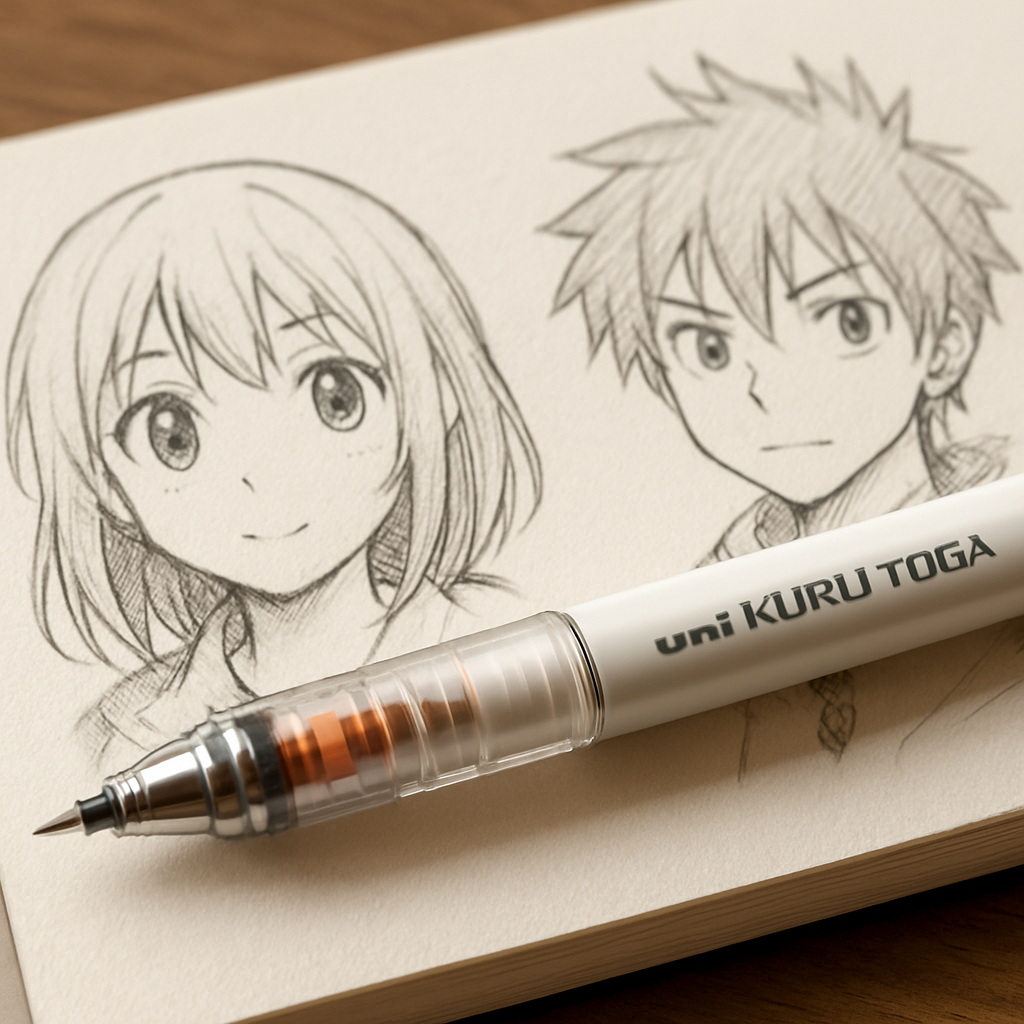
Bottom line: the Mitsubishi Uni Kuru Toga gives you the precision of a freshly sharpened tip without the constant stop‑and‑sharpen routine. For anyone juggling long studio sessions, class assignments, or quick commissions, that consistency translates to smoother lines, fewer interruptions, and a more enjoyable drawing experience.
Give it a try on your next anime character – start with a light HB outline, twist the barrel, and watch the pencil keep pace with your imagination.
Additional Tips for Anime Pencil Art
After you’ve chosen the best pencils for drawing anime, the next step is to fine‑tune how you use them. A tiny habit change can turn a good sketch into a line that feels alive, especially when you’re working on those delicate eye‑lashes or spiky hair.
Pick the right paper texture
Even the smoothest graphite will bite into a rough surface. For most Indian art students, a 70‑80 gsm sketchbook with a slight tooth gives you just enough grip without tearing the lead. If you’re after ultra‑clean line‑work, a Bristol board (around 200 gsm) lets the pencil glide like it’s on glass. The trick is to test a corner first – you’ll instantly see whether the graphite smudges or stays crisp.
Mind your grip and posture
We often see beginners clutch the pencil like a hammer, which forces the hand to fatigue after a few minutes. Try a relaxed tripod grip: thumb and index form a small “V”, middle finger rests lightly on the barrel. Keep your wrist relaxed and let your forearm support the movement. It sounds simple, but when you draw for a three‑hour class project, that slight shift keeps your hand from cramping.
And remember to tilt the paper slightly. A 15‑degree angle lets you control line thickness with the natural motion of your wrist, so you can get thin outlines for eyes and thicker strokes for hair without swapping pencils.
Layering and blending without smudging
Anime shading is all about smooth gradients. Start with a light HB or 2B to lay down the base tone, then build up with a 4B in tiny, overlapping circles. Use a soft blending stump or a clean cotton swab – avoid your fingertip because the oils will darken the graphite and create unwanted shine.
If you need a glossy finish on a reflective surface (like a robot’s visor), lightly press a white gel pen over the dried graphite. It lifts a bit of the lead, creating a subtle highlight that mimics a metal gleam.
Maintenance checklist for your pencils
- Store every pencil in a zip‑lock bag with a silica packet; humidity in Mumbai or Kolkata can make graphite swell and break.
- Give the barrel a quick wipe with a dry cloth every two weeks – dust buildup slows the rotation in self‑sharpening models.
- Rotate the lead of a mechanical pencil just enough to expose fresh graphite; over‑twisting can jam the feed.
- Replace erasers once they start crumbling; a fresh vinyl eraser lifts graphite cleanly without tearing the paper.
Develop a workflow that feels personal
One of the most underrated tips is to set a tiny “pause” after each major line. Step back, look at the line from a few feet away, and ask yourself, “Does this still read as the character I imagined?” That moment of reflection keeps the drawing cohesive and prevents you from over‑darkening a single area.
Finally, keep a small sketch notebook handy. Jot down the pressure you used for a particular shade or the angle you held the pencil for a certain hair style. Those notes become a personal cheat‑sheet that speeds up future projects.
With these extra tricks in your toolkit, the best pencils for drawing anime become extensions of your imagination rather than just tools. Give them a try on your next character design and watch how much smoother the whole process feels.
FAQ
What are the key factors to consider when choosing the best pencils for drawing anime?
Choosing the best pencils for drawing anime starts with three things: lead hardness, graphite composition, and barrel feel. Harder grades (2H‑HB) give you clean outlines, while softer grades (2B‑4B) let you build deep shadows. Look for a smooth, high‑grade graphite that resists smudging, and a wood or metal barrel that feels balanced in your hand for long sessions. Finally, consider how the pencil reacts to humidity – a sealed barrel helps.
Should I use mechanical pencils or wooden pencils for anime line work?
Both mechanical and wooden pencils have a place in anime art, but they serve different needs. Mechanical pencils give you a consistent 0.5 mm tip, perfect for ultra‑fine eye lines or mech details, and you never have to worry about sharpening mid‑stroke. Wooden pencils, especially 2B‑4B grades, provide a richer core that responds to pressure changes, which is ideal for soft shading and dramatic hair. Switch based on the task, not brand loyalty.
How does paper texture affect the performance of the best pencils for drawing anime?
Paper texture is the silent partner that can make or break a line. Smooth Bristol board lets a hard‑lead pencil glide like a pen, preserving crisp outlines for eyes and accessories. A lightly toothed sketchbook (70‑80 gsm) gives the graphite something to grip, which is useful when you’re building up soft shadows with a 4B. Test a corner first: if the lead smears, move to a smoother surface for tighter work.
What grades of lead are ideal for different parts of an anime illustration?
The right lead grade depends on what part of the character you’re drawing. For clean outlines and facial structure, stick to HB or 2H – they stay light and won’t overwhelm delicate features. When you move to hair, clothing folds, or deep shadows, shift to a 2B or 3B for smooth darkening without harsh lines. Save a 4B or 5B for dramatic night scenes or glossy surfaces where you need a rich, velvety black.
How can I keep my pencils from breaking or swelling in humid Indian climates?
India’s monsoon season can turn graphite soft and brittle, so protecting your pencils is crucial. Store them in zip‑lock bags with a silica packet, or use a dedicated dry box to keep moisture out. For wooden barrels, a light coat of wax (beeswax works well) creates a barrier against swelling. Rotate the lead gently in mechanical pencils and avoid leaving them uncapped for long periods – a dry environment keeps the point sharp and consistent.
Is a self‑sharpening pencil worth the investment for anime artists?
Self‑sharpening pencils like the Uni Kuru Toga can be a game‑changer for artists who need uninterrupted flow. The tiny internal mechanism rotates the lead a fraction of a millimeter with each twist, delivering a constantly fresh point. This reduces the need to stop and sharpen, which is especially handy during long studio sessions or live‑drawing classes. Just remember to keep the barrel clean of graphite dust, and you’ll enjoy steady, reliable lines.
Where can I find reliable reviews of the best pencils for drawing anime?
If you’re looking for trustworthy comparisons of the best pencils for drawing anime, start with independent art‑community forums and hobbyist blogs that publish hands‑on tests. Websites that specialise in drawing tools often rank pencils by lead consistency, durability, and price‑performance. You can also check out the review sections on major e‑commerce sites, where you’ll see real‑world feedback from Indian students and freelancers who have already tried the products in local conditions.
Conclusion
We’ve walked through the whole toolbox – from the buttery 4B of the Faber‑Castell 9000 to the reliable 2B of the Mitsubishi Uni Kuru Toga, and everything in between.
What matters most is matching the pencil’s feel to your own workflow. If you spend hours on a single panel, a self‑sharpening lead keeps the line fluid. If you sketch in a humid Mumbai studio, a sealed wooden barrel and a wax coat protect the graphite from swelling.
Remember the three quick checks we keep at the back of our mind: hardness for the line you need, barrel ergonomics for marathon sessions, and moisture resistance for India’s climate.
So, what’s the next step? Grab the pencil that ticks those boxes, store it in a zip‑lock bag with a silica packet, and test a simple character pose. Notice how the tip stays sharp, the shadows stay smooth, and the whole process feels less like a chore and more like a conversation with your art.
At Drawing Pencils Guru we’re always adding fresh reviews and workflow hacks, so keep an eye on the site for updates. Happy drawing, and may your anime lines be as clean as your coffee‑break thoughts.
Enjoy the creative journey!
