

Ever picked up a pencil and wondered what the little “HB” stamped on the barrel actually means? You’re not alone—most of us have stared at that cryptic code while trying to decide if it’s the right tool for a quick sketch or a detailed illustration.
In our experience, “HB” is the sweet spot on the graphite hardness scale, right between the hard “H” grades and the soft “B” grades. Think of it as the Goldilocks of pencils: not too hard, not too soft, just right for everyday drawing, note‑taking, and even light shading.
So why does that matter to you, whether you’re a student in Delhi, a hobbyist doodling during a coffee break, or a professional artist sketching concepts for a client? Because the right lead hardness can mean the difference between crisp, clean lines and a smudgy mess that ruins your work.
Imagine this: you’re in a cramped classroom, trying to quickly diagram a geometry problem. You grab a pencil, press down a little too hard, and the lead snaps. Or picture yourself on a rainy monsoon afternoon, layering gentle gradients for a portrait, only to find the lead too hard to blend. Both scenarios scream for a better understanding of that “HB” label.
Here’s the good news: once you get the HB pencil meaning, you can choose the perfect tool for any situation without wasting money on a whole box of random grades. It also helps you build a balanced pencil set, mixing in a few softer B’s for deep shadows and a few harder H’s for fine details.
What if you could confidently pick up the right pencil every time, knowing exactly how it will behave on your favorite sketchbook paper? That’s the kind of confidence we aim to give you at Drawing Pencils Guru, where we break down the jargon and get you drawing faster.
Ready to stop guessing and start drawing with purpose? Let’s dive in and explore what “HB” really stands for, how it fits into the graphite spectrum, and how you can make the most of it in your art and studies.
TL;DR
The HB pencil sits at the perfect midpoint on the graphite scale—hard enough for crisp lines yet soft enough for smooth shading—so you can sketch, take notes, or add subtle depth without swapping tools. Mastering hb pencil meaning lets Indian students, hobby artists, and pros work faster and confidently today.
Understanding HB Pencil Grading: History and Standards
When you first saw “HB” on a pencil, you probably wondered why a simple letter‑and‑letter combo mattered at all. The story behind that label stretches back to the 19th‑century graphite experiments that tried to tame a wildly unpredictable material.
Back then, manufacturers in Europe started rating lead hardness with a numeric system: the higher the number, the harder the lead. In the early 1900s, the German standard (known as the Faber-Castell scale) merged the hard (H) and soft (B) families into a single continuum, inserting “HB” right in the middle as the sweet spot.
Why “HB” became the benchmark
Hardness matters because it dictates how much pressure you can apply before the lead crumbles, and how smoothly the graphite deposits on paper. Hard leads (H, 2H, 4H…) hold shape but struggle to blend, while soft leads (B, 2B, 4B…) shade beautifully but wear out fast. HB, sitting at the midpoint, gives you enough bite for clean lines yet enough give for gentle shading.
Think of it like the perfect cup of chai—strong enough to wake you up, mellow enough to sip slowly. That balance is why schools across India have standardized on HB for exams: you get legible, consistent marks without the frustration of broken tips.
Standardizing the scale
The International Organization for Standardization (ISO) later codified the graphite grading into the ISO 9177:1991 standard, which still references the H‑B continuum. Today, most reputable pencil makers, from Faber‑Castell to Dixon, follow this guideline, so an HB in Delhi behaves the same as an HB in London.
But the story doesn’t end with numbers. The actual composition—graphite mixed with clay and sometimes wax—determines how the lead feels. More clay yields a harder lead; more graphite, a softer one. That’s why two HB pencils from different brands can still feel a shade different.
Here’s a quick way to test: draw a line, press lightly, then press harder. If the line darkens smoothly without the tip snapping, you’ve got a true HB.
How standards affect you
Understanding these standards helps you build a balanced set. If you know the HB sits in the middle, you can add a 2H for fine architectural lines and a 2B for deep portrait shadows, knowing each will complement the HB’s behavior.
And if you ever wonder why some art supply stores group pencils by “drawing” versus “writing”—the answer lies in these very standards.
In our experience at Drawing Pencils Guru, many Indian students assume any pencil will do for schoolwork. We’ve seen them struggle with overly soft leads that smudge exam sheets. By choosing a genuine HB that adheres to ISO standards, they get consistency, which translates to better grades and less stress.
Want to see the grading in action? Check out this short video where we compare an HB to its neighboring grades and watch how the line quality changes.
Notice how the HB holds its shape while still delivering a nice, velvety stroke? That’s the magic of the standardized blend of clay and graphite.
Beyond the studio, the HB’s reliability has even seeped into other design fields. For instance, a recent article on luxury shoulder bag packaging mentions how designers use HB pencils to sketch preliminary concepts before moving to digital renderings. The consistency of the HB line ensures their sketches translate accurately to the final product.
And if you’re curious about broader creative tools, the Rebelgrowth platform often highlights how mastering fundamentals—like understanding HB pencil meaning—lays a solid foundation for any artistic or entrepreneurial pursuit.
So, the next time you pick up a pencil, remember: that tiny “HB” isn’t just a label; it’s a centuries‑old standard that guarantees you a reliable, versatile tool for drawing, writing, and everything in between.
Understanding the history and standards behind HB pencils empowers you to make informed choices, whether you’re sketching a Delhi street scene or drafting a design brief for a high‑end bag.
Ready to put this knowledge to work? Start by testing the HB in your own sketchbook, then expand your set with confidence.
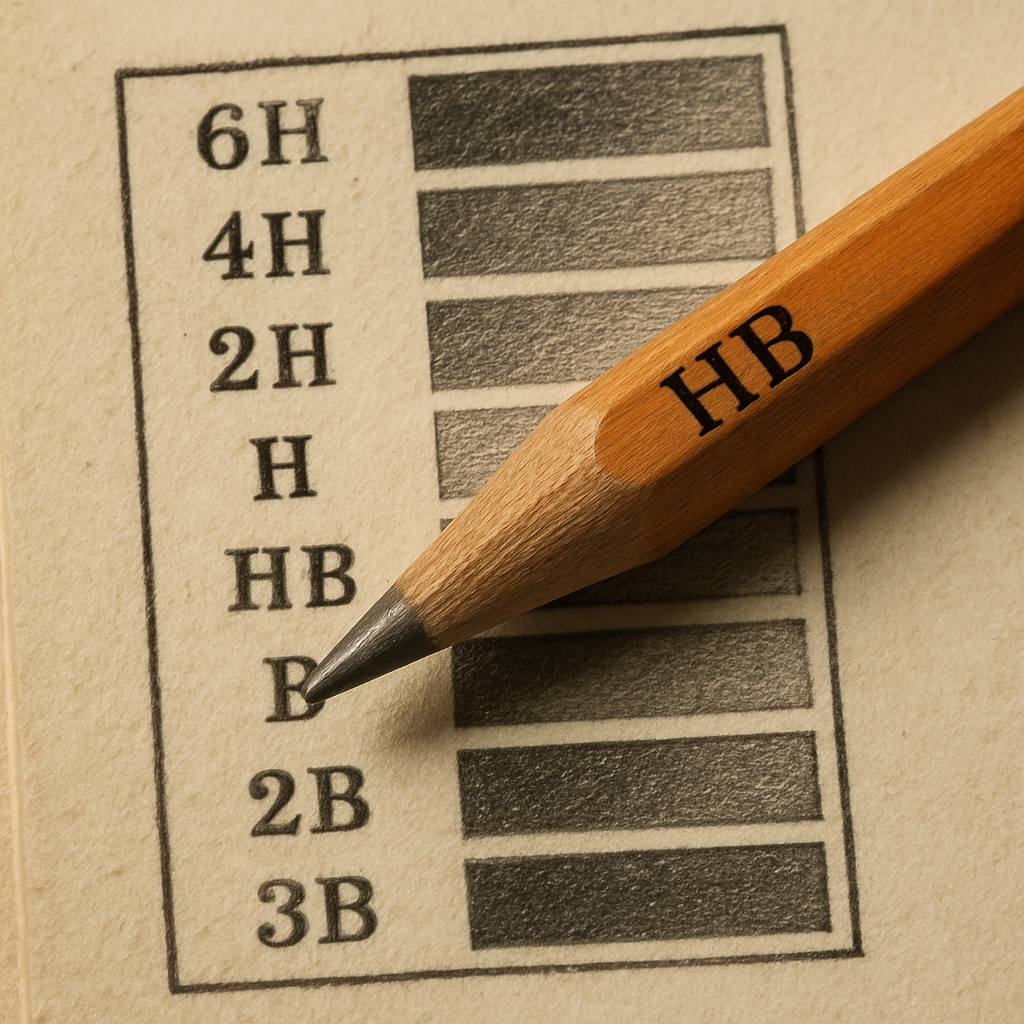
HB vs. Other Pencil Grades: Comparison Table
When you finally understand the hb pencil meaning, the next logical step is to see how that middle‑ground grade measures up against the extremes. That’s why a quick side‑by‑side look can save you a lot of guesswork.
Do you ever wonder why a hard “2H” feels like a ruler while a soft “6B” seems to melt into the paper? The answer lies in the balance of clay and graphite, and how each blend reacts to pressure, paper texture, and your own hand speed.
Key characteristics at a glance
Below is a compact table that breaks down the most common grades you’ll meet in Indian classrooms, art studios, and sketchbooks. It focuses on what matters to students, hobbyists, and pros alike—darkness, durability, and ideal use cases.
| Grade | Lead Hardness (Clay ↔ Graphite) | Typical Darkness | Best For |
|---|---|---|---|
| 2H | High clay, low graphite | Very light | Fine technical drawing, architectural lines, precise drafting |
| HB | Balanced clay and graphite | Medium gray | Everyday sketching, note‑taking, light shading |
| 4B | Low clay, high graphite | Dark, rich | Portrait shading, expressive sketches, deep shadows |
Notice how the 2H column reads “very light.” That’s because the extra clay keeps the lead firm, so it leaves only a faint mark even when you press hard. If you’re drafting a mechanical part, that firmness prevents the tip from tearing.
On the other end, the 4B row shows a “dark, rich” output. The higher graphite content means the lead is softer, so it deposits more material with less pressure. That’s perfect when you want a smooth gradient on a Bristol board but can be a nightmare on cheap newsprint because the lead will wear down fast.
And the HB? It sits right in the middle, giving you enough darkness for clear sketches while still holding a point long enough for detailed work. That’s why most Indian school kits include an HB as the default.
Practical takeaways for your toolkit
So, what should you actually do with this info? First, match the grade to the paper. Rough newsprint loves a hard lead like 2H—it won’t smudge as easily. Smooth, high‑gloss paper rewards the softness of a 4B, letting you build depth without extra layers.
Second, think about pressure. If you tend to press hard, a 2H will stay sharp longer, while an HB will give you a comfortable gray without the lead breaking. If you like a light touch, a 4B will still produce a dark line without you having to force it.
Finally, consider portability. Students in Delhi often carry a single pencil for exams—HB is the safest bet. Artists in Jaipur who travel with a sketchbook may want a small set: 2H for line work, HB for general sketching, and 4B for finishing shadows.
In our experience, swapping grades on the fly is the fastest way to level up your drawings. Grab a cheap 2H, an HB, and a 4B, then run a quick test on three pieces of paper: newsprint, sketchbook, and glossy illustration board. Watch how each grade behaves, and you’ll instantly internalize the hb pencil meaning in real‑world terms.
Bottom line: the table above isn’t just data—it’s a decision‑making tool. Use it to pick the right pencil before you even open your case, and you’ll spend less time fiddling and more time creating.
Practical Uses of HB Pencils in Writing, Sketching, and Technical Drawing
Ever wonder why the same HB pencil you pull out for a math test also shows up in your sketchbook when you’re drafting a concept for a client? That’s the magic of the hb pencil meaning – it sits right in the middle of the graphite scale, giving you enough darkness for clear notes and enough softness for subtle shading.
In the classroom, you need a line that stays legible even if you tap the paper a little hard. An HB gives you a medium gray that doesn’t break when you press, so you can write equations fast without the lead snapping. For students in Delhi or Mumbai, that reliability means one pencil can survive an entire semester of exams.
Writing with confidence
When you’re scribbling notes, the goal is speed, not perfection. Because the HB core balances clay and graphite, you can vary pressure without suddenly jumping from a faint line to a blackout. Try this: write a paragraph, then go back and press a bit harder on the same line – you’ll see a richer tone, but the pencil won’t crumble.
Tip: keep a small metal or wooden sharpener in your bag and give the tip a quick shave before each lecture. A freshly pointed HB holds its shape longer, which translates to fewer interruptions during a long lecture.
Sketching on the fly
For artists, the HB becomes the workhorse of the sketchbook. Its versatility lets you draw quick gesture lines, then deepen edges or add light shadows without swapping tools. As Vaessen Creative points out, “the balanced nature of HB pencils makes them suitable for a wide range of creative techniques” – you can go from a delicate contour to a bold stroke with just a change in pressure.
Here’s a mini‑exercise you can try at your desk: start a portrait with loose, light lines, then, without picking up another pencil, press a bit more to render the nose bridge and cheekbones. You’ll notice the same pencil can give you both structure and depth.
And if you’re mixing media, use the HB as a base for coloured pencils. Lightly sketch the outline, then layer colour on top. The HB line stays visible enough to guide you, yet it won’t interfere with the vibrancy of the pigments.
Technical drawing and design
Engineers, architects, and drafters often think they need a hard 2H for precision, but an HB can be a surprisingly solid choice for many everyday drawings. Its consistent line weight means you get uniform strokes for floor plans, circuit diagrams, or product sketches.
Because the lead isn’t overly hard, you can still erase and redo sections without a jagged edge. In India’s bustling design studios, where revisions happen fast, that eraser‑friendliness saves time and paper.
Practical tip: when working on a CAD‑free concept, lay down your initial dimensions with an HB, then use a ruler to reinforce straight edges. The pencil’s medium hardness ensures the line stays crisp enough for the ruler to glide smoothly, yet it won’t wear down after a few passes.
And when you need a darker line for emphasis – say, highlighting a critical measurement – simply add a little more pressure. The HB’s “middle ground” response gives you a darker tone without the grainy texture you’d get from a 4B on rough paper.
Maintaining your HB for the long haul
Even the most balanced pencil can suffer from dullness or breakage if you ignore care. Store your HB in a sturdy case, especially if you travel between Mumbai’s monsoon‑soaked cafés and Jaipur’s desert workshops. A quick tap‑sharpen before each session keeps the tip tight and reduces breakage.
Finally, remember that the hb pencil meaning isn’t just a label – it’s a promise of flexibility. Whether you’re writing a research paper, sketching a concept for a client, or drafting a technical schematic, the HB adapts to your hand, your pressure, and your paper. That adaptability is why we, at Drawing Pencils Guru, recommend keeping a reliable HB in every artist’s and student’s kit.
Choosing the Right Pencil for Your Needs: Factors Beyond HB
So you’ve got the HB in your kit and you love how it writes, but now you’re wondering if there’s a smarter way to pick a pencil when the project changes. The truth is, the HB is a great all‑rounder, yet the world of graphite offers subtle levers you can pull to match paper texture, pressure style, and the finish you’re after.
First, think about the surface. Rough newsprint loves a harder lead because the grit will otherwise chew up a soft core like it’s chewing gum. On the other hand, a smooth, coated Bristol board rewards a slightly softer lead – it lets the graphite glide and settle without bouncing off.
1. Match the paper texture
Grab three sheets: a cheap sketchbook, a medium‑weight drawing paper, and a high‑gloss illustration board. Try the same HB on each. You’ll notice the line on the sketchbook looks a bit lighter and wears down quicker, while the gloss board gives you a richer gray with fewer strokes.
From there, you can decide whether to stay with the HB or reach for a 2H on the rough paper, or a 4B on the glossy board for deeper shadows. It’s the kind of micro‑adjustment that saves you from constantly re‑sharpening.
2. Consider your hand pressure
Do you press hard like you’re carving a name into wood, or do you hover with a feather‑light touch? If you tend to press, an HB will darken nicely without breaking, but you might find a 2H gives you more control on fine technical lines. If you’re a light‑touch artist, a 4B can give you that dark tone without having to force the pencil.
Try this quick test: draw a straight line, then overlay it with a second line using a bit more pressure. Notice how the HB shifts from medium gray to a deeper tone. That’s the “pressure‑responsive” quality many students in Delhi love – you get two tones from one tool.
3. Factor in the medium you’ll layer on
When you plan to add watercolor washes, a harder lead (H or 2H) won’t leave a stubborn imprint that shows through the transparent colour. For charcoal‑like depth in a mixed‑media piece, a softer B grade will blend better with the charcoal’s texture.
In our experience, many Indian art students pair an HB with a 6B for the final shadows, then finish with a kneaded eraser to lift highlights. That workflow keeps the sketch clean and the darks rich.
4. Practical checklist before you start
- Identify the paper type you’ll use.
- Test your pressure: light, medium, heavy.
- Decide if you’ll layer colour, water, or ink.
- Pick a complementary grade (2H, HB, 4B) based on the above.
Once you’ve run through the checklist, you’ll know exactly which pencil to pull out of the case, saving you the endless back‑and‑forth.
And if you ever wonder how the choice of paper influences graphite, our Choosing the Best Paper for Colored Pencils: A Detailed Guide walks you through the texture‑to‑lead relationship in depth.
One more thing: a quick tip we’ve seen work wonders for students in Mumbai’s monsoon‑filled cafés. Keep a small tin of sandpaper (grit ~400) in your bag. When the HB feels a bit dull on glossy paper, a light rub restores a fine point without over‑sharpening, keeping the lead from splintering.
Remember, the HB isn’t a one‑size‑fits‑all, it’s a flexible foundation. By matching it to paper, pressure, and the media you’ll use, you turn that middle‑ground pencil into a precision tool.
Need a perspective outside the art world? Eye‑care professionals like Dr Rahul Dubey often stress the importance of ergonomic tools to prevent strain – the same principle applies to choosing a pencil that feels right in your hand for long study sessions.
Bottom line: treat the HB as your starting point, then tweak the grade based on three simple factors – paper texture, pressure style, and subsequent media. That’s how you move from “good enough” to truly confident drawing.
Caring for and Maintaining HB Pencils for Optimal Performance
Ever notice your HB pencil suddenly feels soft, the tip blunts faster than it should, or the graphite flakes off the paper like sand? That’s the moment when a little bit of care can turn a frustrating day into a smooth drawing session.
We’ve seen students in Delhi rush to class with a dented pencil, and artists in Jaipur struggle to get a clean line on glossy illustration board because the lead was already compromised. The good news? Most of those problems are preventable with a few simple habits.
Store Them Right
First things first – where you keep your pencils matters. A cool, dry drawer or a sturdy pencil case protects the lead from humidity, which can cause swelling and breakage. In the monsoon season, you’ll notice a soft, mushy feel if the pencil sits in a damp bag. Slip a small silica packet into your case; it’s cheap, reusable, and does wonders for keeping moisture at bay.
Do you ever toss your sketchbook into a backpack and wonder why the HB looks dull a few pages later? Try placing the pencil in a vertical slot, point up, so gravity doesn’t press the tip against the lid. It’s a tiny tweak, but it keeps the point sharper for longer.
Sharpening Secrets
Sharpening seems straightforward, but the angle you use can change how long the lead stays intact. A 15‑degree angle gives a fine point without thinning the wood too much. If you’re using a handheld metal sharpener, rotate the pencil slowly – a rushed spin creates uneven wood and can split the lead.
For those who love a clean, precise tip, a rotary sharpener with a built‑in lead guide is worth the investment. It removes just enough wood, leaves a consistent angle, and reduces the risk of a “splintered” tip that feels like a sandpaper brush on paper.
And here’s a quick hack: after sharpening, give the tip a gentle tap on a scrap piece of paper. That tiny tap removes any stray wood fibers that might otherwise catch on the paper surface.
Cleaning the Lead
Sometimes the problem isn’t a dull tip, but a dusty or oily residue that interferes with the graphite flow. A soft brush – even an old paintbrush – can sweep away fine wood dust from the tip. If you’re working in a cafe with a lot of steam, a quick wipe with a lint‑free cloth does the trick.
We’ve also experimented with a light rub of a fine‑grit sandpaper (around 400) on the tip when the HB feels too “soft” on smooth paper. The sandpaper smooths the lead just enough to restore a crisp line without over‑sharpening.
Protecting Against Humidity
India’s climate swings from dry desert air in Rajasthan to humid monsoons in Mumbai. Those changes can make a difference in how the clay component of your HB reacts. When you know a rainy week is coming, keep an extra pencil in a sealed zip‑lock bag with a dry‑rice packet. The rice absorbs excess moisture, keeping the lead stable.
Do you ever forget and leave your pencil on a windowsill? A quick glance at the weather forecast can save you the hassle of a broken tip mid‑sketch. It’s a tiny habit, but it adds up.
Quick Fixes on the Go
If you’re in the middle of a class and the HB starts to feel spongy, a fast solution is to run the tip over a piece of coarse cardstock. The extra texture re‑compacts the lead, giving you a firmer feel in seconds.
Another pocket‑friendly tip: carry a small piece of sandpaper (the same 400‑grit we mentioned) in a zippered pouch. A light swipe restores a fine point, especially on glossy illustration board where a dull tip can leave streaks.
And don’t underestimate the power of a proper eraser. A kneaded eraser lifts graphite without grinding the lead, preserving the tip’s shape for the next stroke. It’s a habit many students skip, but we’ve seen it extend the life of a single HB by weeks.
So, what’s the bottom line? Treat your HB like a trusted partner – store it smart, sharpen with care, keep the tip clean, guard against humidity, and have a couple of quick‑fix tools in your bag. By doing that, you’ll get consistent, reliable lines whether you’re drafting a technical diagram in a lecture hall or sketching a portrait in a bustling café.
Remember, the HB pencil’s “middle‑ground” nature is its greatest strength, but only if you nurture it. A little attention now means fewer broken tips later, and more time doing what you love: drawing.
FAQ
What does “HB” actually stand for on a pencil?
HB is a shorthand that combines the letters H (hard) and B (black). The “H” part tells you the lead has enough clay to stay sharp, while the “B” part means there’s enough graphite to give a medium‑dark mark. In practice, an HB sits right in the middle of the graphite scale, offering a balanced mix of durability and darkness that works for most everyday tasks.
How does the hardness of an HB pencil compare to pure H and pure B grades?
Think of an HB as the Goldilocks of pencils – not too hard, not too soft. A pure H pencil is higher in clay, so it leaves a lighter line and resists wear, making it great for fine technical work. A pure B pencil has more graphite, producing a darker, softer line that’s perfect for deep shading but dulls quickly. HB lands between them, giving a medium gray that’s versatile for both line work and light shading.
Is an HB pencil suitable for both writing and sketching?
Absolutely. Because the lead is balanced, you can write quickly without the tip breaking, and you’ll still get a legible, medium‑gray line on standard notebook paper. When you switch to sketching, that same pencil lets you vary pressure – a light touch yields a faint guideline, while a firmer press gives you richer tones for basic shading. It’s why most Indian school kits include an HB as the default.
Will an HB pencil work on different paper types like newsprint and glossy board?
Yes, but the experience changes. On rough newsprint, the HB’s medium hardness helps it stay sharp longer, though the line may appear a bit lighter and wear faster. On a smooth, glossy illustration board, the graphite glides more easily, producing a darker, smoother mark. If you notice the tip getting dull on glossy surfaces, a quick swipe with 400‑grit sandpaper can restore a crisp point.
How can I get the most consistent line from an HB pencil?
Start by sharpening at a shallow angle (around 15 degrees) so the wood supports the lead without thinning it too much. Keep a small piece of coarse cardstock in your bag; a light rub re‑compacts the lead when it feels spongy. Also, store the pencil in a dry case and tap the tip on a scrap sheet after sharpening to knock off any stray wood fibers that could catch on paper.
Does humidity affect the performance of an HB pencil?
Humidity can make the clay component swell, leading to a softer, mushier feel and a higher chance of breakage. In monsoon‑soaked Mumbai or humid classrooms, tuck your HB in a zip‑lock bag with a silica packet or a dry‑rice sachet. When you know a rainy week is coming, keep an extra pencil sealed away; you’ll notice the difference in tip firmness and line consistency.
Can I use an HB pencil for shading and blending colored pencils?
Yes, the HB’s medium darkness provides a subtle base that won’t overpower colored layers. Lightly sketch your outlines with an HB, then build color on top. When you need to blend, the HB can be gently smudged with a blending stump or a soft fingertip without creating a harsh charcoal‑like texture. For deeper shadows, you can switch to a softer B grade, but the HB remains a reliable starter for most blended work.
Conclusion
So, you’ve trekked through history, standards, and practical tips – now it’s time to lock down what the hb pencil meaning really means for you.
In short, an HB sits right in the middle of the graphite scale, giving you a line that’s dark enough to read and soft enough to shade without constantly swapping tools.
Think about those long lecture halls in Delhi or the bustling cafés of Mumbai where you need a reliable pencil that won’t snap under pressure. That reliability is the core of the hb pencil meaning.
What’s the biggest takeaway? Match the grade to your paper, pressure, and the next medium you plan to layer – whether it’s colour, ink, or watercolor.
Quick checklist: pick the right paper texture, test light‑medium‑heavy pressure on a scrap sheet, and keep a small silica packet in your case for humid days.
When you follow those steps, the HB becomes more than a “middle‑ground” tool; it turns into a trusted partner that adapts to every sketch, note, or technical drawing you tackle.
Ready to put this knowledge into practice? Grab three HB pencils from different brands, run the three‑paper test we described, and let the results guide your next art or study session.
Remember, at Drawing Pencils Guru we’ve seen countless students and artists level up simply by respecting the hb pencil meaning and caring for their tools.
Give your sketchbook the consistency it deserves, and you’ll spend less time fixing mistakes and more time creating the work you love.
