
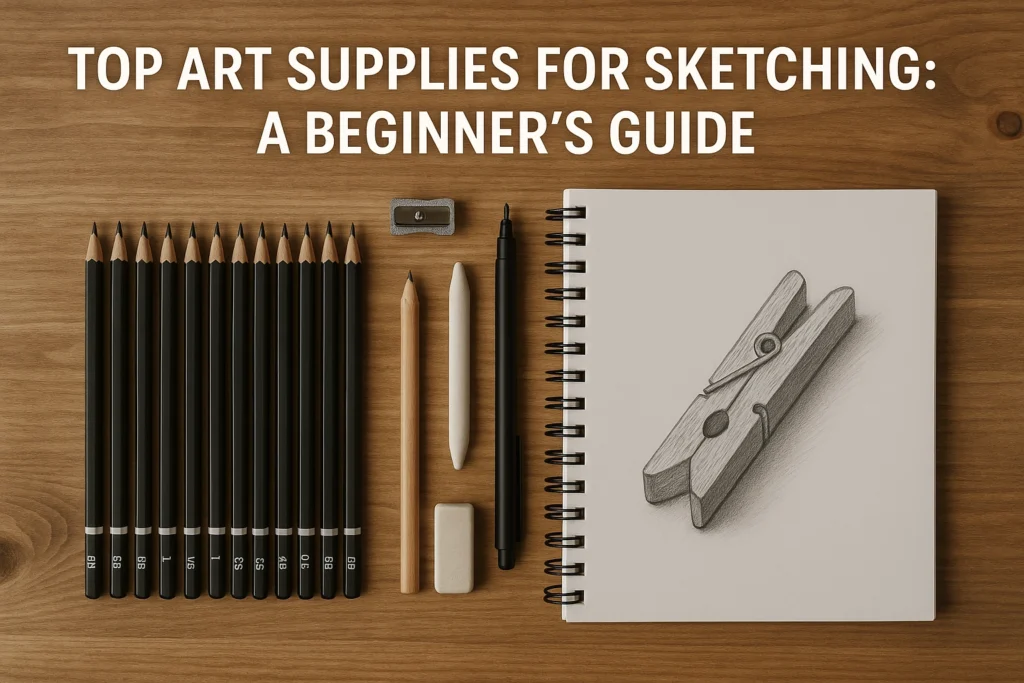
Ever stare at a blank page and wonder which pencil to pick? You are not alone. Getting started with drawing should feel fun, not confusing, yet the store aisles can be a maze. This beginner friendly guide will cut through the noise and show you the art supplies for sketching that actually help you learn, practice, and enjoy the process.
In this list, we will cover the essentials, from pencils and sketchbooks to erasers, sharpeners, and blending tools. You will get budget friendly picks, simple upgrades when you are ready, and tips on paper textures, lead hardness, and ink choices. We will explain what each item does, why it matters, and how to set up a small, portable kit.
By the end, you will know exactly what to buy first, what you can skip, and how to start sketching the same day. Grab a notebook, a cup of coffee, and let us build your starter set one smart choice at a time.
1. Essential Graphite Pencils for Sketching
Start with the right range
- Learn the graphite scale and when to use each grade. Graphite pencils run from 9H hardest to 9B softest, with HB as the midpoint and F sitting between H and HB. Hard H grades give pale, crisp lines for light construction, perspective grids, and hairline textures. Softer B grades deliver rich darks for shading, gesture lines, and atmospheric depth. Try this mini exercise: block in a face with 2H, define features with HB, then push shadows with 4B to 6B. For a quick refresher on how pencil grades work, see this guide from Winsor and Newton, how to understand pencil grades.
- Prioritize quality and smoothness, they affect every mark. High quality cores use consistent graphite and binder ratios, which means no scratchy grains and predictable values from H through B. Look for centered cores, cedar or basswood casings that sharpen cleanly, and leads that resist crumbling when you rotate the pencil. Test before a big sketch session, draw a slow circle with HB, then shade from 2H to 4B, the gradient should look even, erase cleanly, and the point should last through multiple strokes. On smoother papers like Bristol, very hard H grades can skate, on toothy sketch pads, mid Bs like 2B to 4B blend more evenly.
- Start smart with a curated beginner set from Drawing-Pencils.com. For new artists in India, a balanced kit saves guesswork and supports your learning curve. Look for a range such as 4H, 2H, HB, F, 2B, 4B, 6B, plus a kneaded eraser, vinyl eraser, metal sharpener, and a blending stump. Use it intentionally, map forms in 2H, commit lines in HB or F, shade mid tones with 2B, reserve 6B for accents and cast shadows. Curated sets from Drawing-Pencils.com come with guidance and reliable delivery, so your essential art supplies for sketching arrive ready to use.
2. Selecting the Right Sketch Pads
1. Understand paper textures and weights
Paper surface shapes your lines and blending. Hot pressed is smooth, ideal for crisp contours, fine hatching, and ink. Cold pressed, also called NOT, has a light tooth that grabs graphite for soft B pencils and charcoal. Rough sheets have pronounced texture that adds sparkle to highlights and energy to gesture. Weight matters too: 75 to 130 gsm for quick dry studies, 160 to 250 gsm for layering or light washes, and 300 gsm for wet work that must not buckle. For a quick primer on textures and gsm, see Understanding fine art paper.
2. Why high quality pads pay off
Quality pads, a core art supply for sketching, protect your work and make practice feel easier. Acid free, lignin free sheets reduce yellowing in India’s humid climate, so your studies and finished pieces last longer. Stronger sizing means cleaner erasing with kneaded or vinyl erasers, fewer scars in the fibers, and sharper edges on crosshatching. Heavier papers stay flatter under blending and repeated layering, so values build smoothly instead of streaking. Many artists find that consistent tooth helps them control pressure better, which speeds up skill growth and makes switching between H and B pencils more predictable.
3. What to pick on Drawing-Pencils.com
On Drawing-Pencils.com, start with an Everyday Graphite Sketch Pad, 120 to 140 gsm, smooth or hot pressed, for line work and HB to 2H studies. Add a Toothy Charcoal Pad around 160 gsm for 2B to 8B shading, tonal blocks, and easy blending with stumps. Keep a Bristol Smooth Pad near 200 gsm for ink and colored pencil when you want crisp detail and minimal feathering. If you add watercolor accents, choose a Mixed Media Pad between 250 and 300 gsm to resist buckling. For portability, pick an A5 or A4 spiral pad with micro perforated sheets, 50 to 100 pages.
3. Choosing Art Kits for Beginners
1. Why starter kits make sense
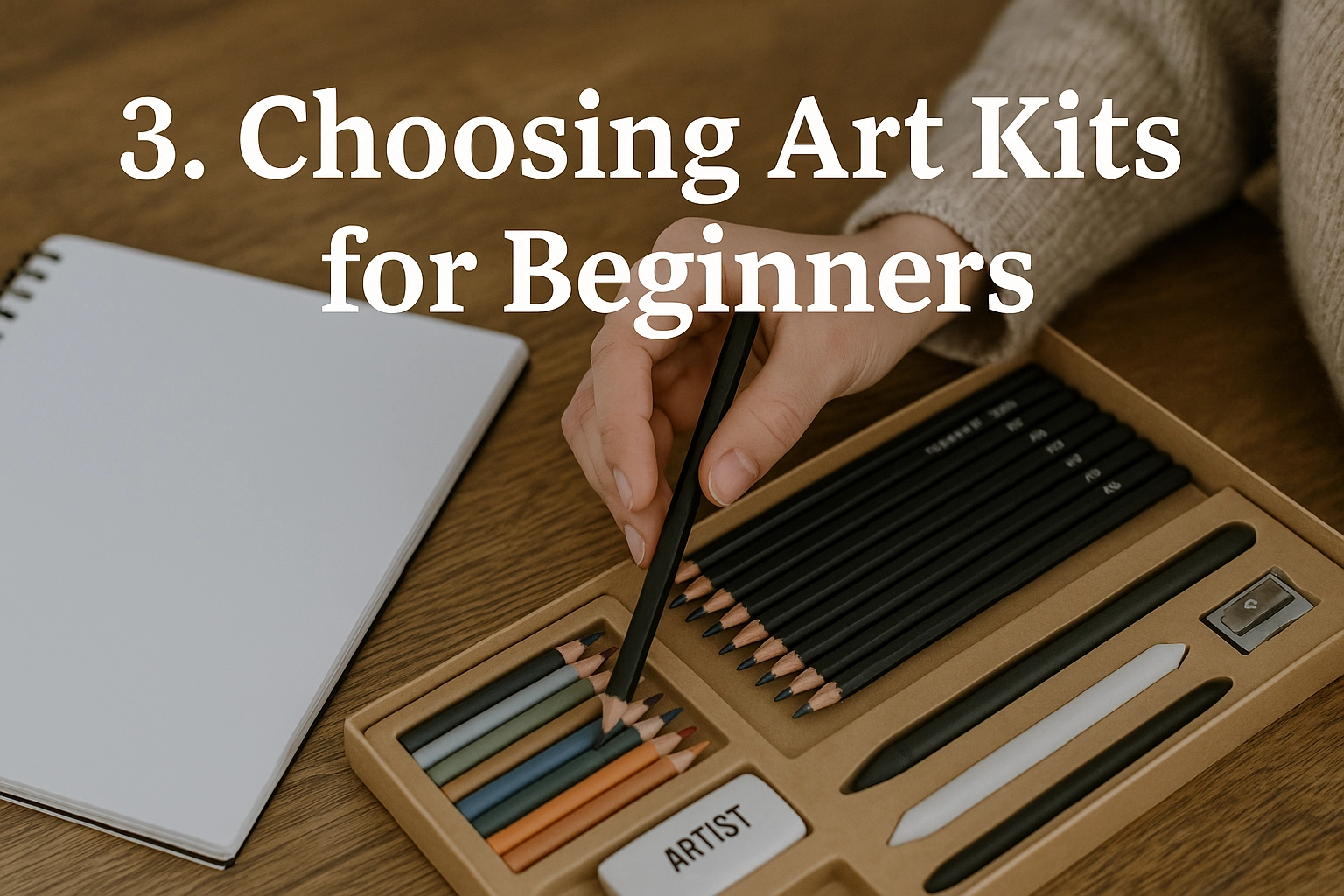
Starter art kits remove guesswork and save beginners both money and time. Bundles are typically more affordable than piecing items together, a smart way to access quality art supplies for sketching, as noted in this guide to starter kits. Because tools are selected to work together, you can start practicing immediately rather than researching each item. Variety inside a kit encourages experimentation and faster skill growth, and completing early projects boosts motivation, points echoed in these beginner friendly kit insights. For many first timers, that quick win is the difference between dabbling and building a daily drawing habit.
2. What a robust sketching kit should include
Reach for kits with a practical pencil spread, at least 2H, HB, 2B, and 4B, with options to expand toward the full 9H to 9B range as you progress. Pairing a kneadable eraser with a firm vinyl block gives you both gentle lifting and precise edge cleanups. Include two blending stumps for smooth gradients, plus a metal sharpener and a small sanding block to keep points razor ready. Choose an acid free A5 or A4 sketchbook, ideally 100 to 120 gsm, to prevent buckling and show through. If you prefer bold contrast, add charcoal pencils or sticks for deeper blacks.
3. Customizable and travel friendly kits from Drawing-Pencils.com
For sketching on the move, Drawing-Pencils.com offers portable sets in slim zip cases with elastic loops, mesh pockets, and a pocket sketchbook. Customize grades to your style, for example extra 2B and 4B for shading, a 2H for light guides, and a charcoal pencil for dramatic studies. Aim for a kit under 700 grams with a case profile near 3 centimeters so it slips into a backpack and protects points. Artists, students, and hobbyists across India benefit from quick delivery and simple guidance notes that explain when to choose 9H versus 9B.
4. Budget-Friendly Art Supplies
1. Shop smart to stretch your budget
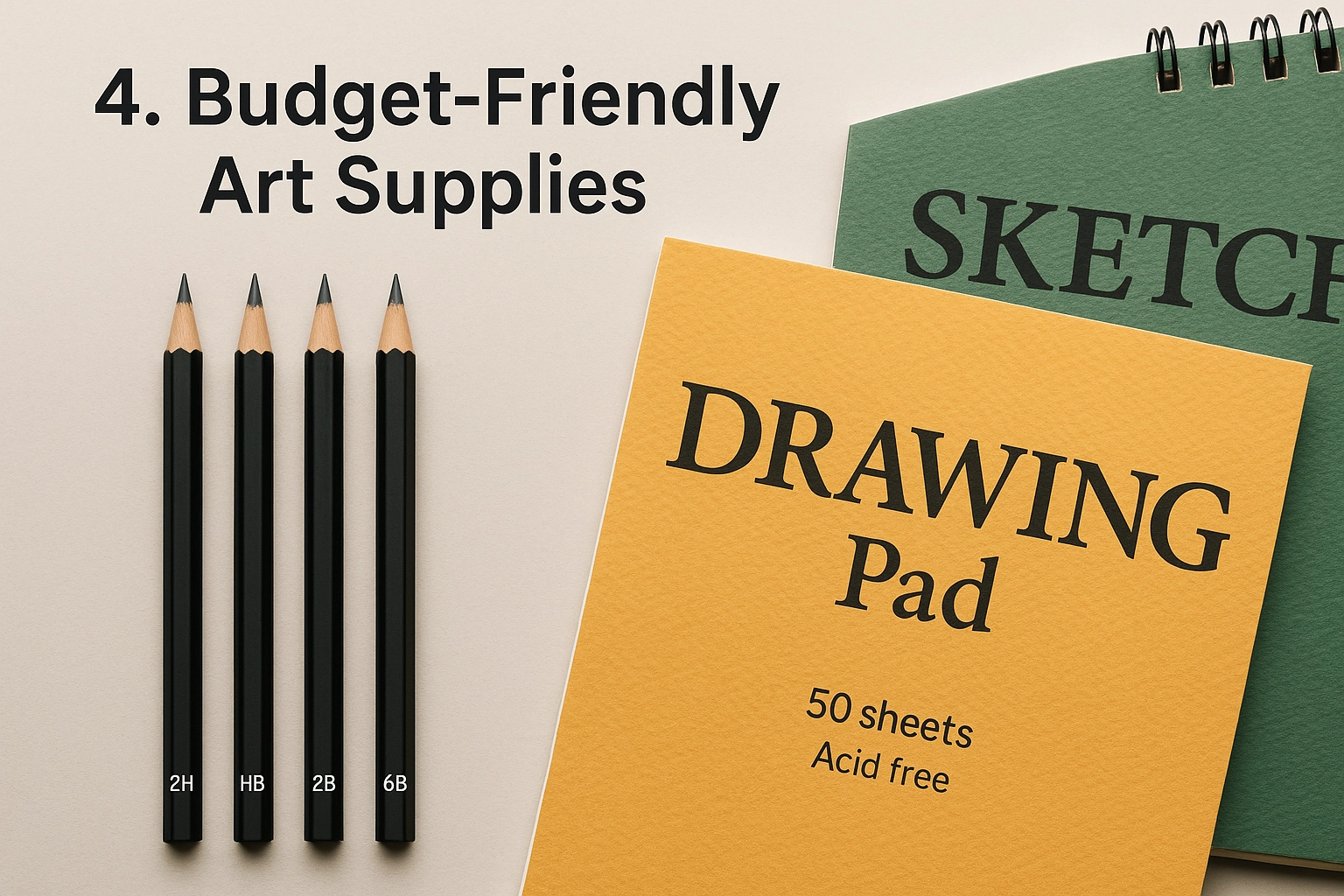
Start with a lean pencil lineup that still covers the graphite scale, which runs from 9H hardest to 9B softest with HB as the everyday midpoint. For beginners, a 2H, HB, 2B, and 6B set handles layouts through deep shading, and buying a small kit usually lowers per-piece cost; also compare pads by calculating per-sheet price. Sign up for sales and clearance alerts, many bundles add erasers and blenders at no extra cost, and check specs like break-resistant cores and acid-free paper in the 120 to 160 gsm range. Add a kneaded eraser and two paper stumps, small upgrades that deliver smoother gradations, cleaner highlights, and fewer re-dos.
2. Start sustainable, stay creative
Choose pencils made from FSC-certified wood or switch to a refillable mechanical pencil to cut waste, with HB leads perfect for daily sketching and notes. Pick recycled or FSC-certified pads in the 120 to 160 gsm sweet spot, buy second-hand tools when possible, and repurpose paper offcuts for thumbnails and swatch cards. Try simple DIY options like vine charcoal, and use the evaporation method for dirty rinse water so dried residue can be disposed of safely rather than washed into drains. Durable metal sharpeners with replaceable blades and reusable blending tools mean fewer disposables and better long-term value.
3. Value picks at Drawing-Pencils.com
Look for Faber-Castell EcoPencils, made from FSC-certified wood, a reliable balance of quality and planet friendly sourcing at beginner budgets. Our curated Starter Sketch Kits combine grades from HB through 8B with a kneaded eraser and blenders so you get the essentials without guesswork. Pair them with an acid-free A4 sketch pad or smooth Bristol board in the 120 to 160 gsm range for crisp lines and clean erasing. Refillable 0.5 or 0.7 mm mechanical pencils with spare HB leads, plus budget charcoal and graphite combo sets, support daily practice and exploration, with guidance and delivery across India.
5. The Role of Accessories in Sketching
Accessories that boost your sketches
- Erasers that draw with light
Kneaded erasers are your precision tools for lifting graphite without roughing the paper, perfect for hairline highlights or reflective edges on glass. Pair them with a vinyl eraser when you need a clean, decisive lift on darker grades like 4B or 6B, and keep a soft gum eraser for gentle overall cleanups. Treat the eraser like a drawing instrument, dabbing and shaping light rather than scrubbing. Work on durable paper so repeated lifting does not pill the surface; many beginners find that high quality sketch pads and Bristol boards handle erasing and reworking better. Action tip: pre-plan highlights, then “pull” them out with a kneaded eraser in short taps instead of dragging, which can smear graphite. - Sharpeners that control line quality
A reliable sharpener keeps your lines crisp across the graphite range and reduces breakage, especially with softer B grades. Use a two-stage manual sharpener or a craft blade plus a sandpaper block to control point length, switching between a long, tapered tip for fine hatching and a shorter, stout tip for shading. Understanding grade behavior helps, HB is a popular everyday choice, and B or H grades change how often you need to sharpen; see this pencil lead hardness guide for quick reference. Rotate the pencil as you draw to maintain a consistent edge, which keeps hatching uniform and saves time. Action tip: keep two pencils of the same grade on hand, one needle-sharp for detail and one blunt for massing tone. - Blending tools that add depth and realism
Blending stumps and tortillons soften edges, build gradients, and unify tones without adding skin oils like finger smudging can. Use light circular motions to merge midtones, then return with a clean stump for highlights and a chamois or soft brush for large, airy transitions. Refresh stumps on a sandpaper pad to avoid muddying values, especially when moving from dark 6B passages to lighter H areas. Start testing blends on smoother papers, such as Bristol, which shows subtle value shifts more clearly. You can find reliable kneaded erasers, precision sharpeners, blending stumps, and complete starter sets curated for beginners at Drawing-Pencils.com, with guidance and delivery across India to support your creative journey.
6. Maintaining and Storing Your Art Supplies
1. Keep tools in top shape
Clean after every session. Wipe graphite dust off pencil barrels with a soft cloth, then knead your eraser to lift grit that could scratch paper. Sharpen deliberately, use a manual sharpener for graphite, and a craft blade with a sandpaper block for charcoal to prevent snapping and extend usable length. Store supplies in a cool, dry spot around 40 to 55 percent humidity, keep erasers away from heat, and rotate pencils as you draw to minimize flat spots.
2. Organize for access and preservation
Create a simple working triangle, a desktop caddy for daily tools, a pegboard or drawer for occasional items, and a labeled box for backups. Sort graphite by grade families so you can grab values fast, B group for soft 2B to 9B, H group for hard 2H to 9H, with HB as your everyday middle. Use clear containers for visibility, add silica gel packs during monsoons, cushion charcoal sticks in a padded case, and keep sketch pads flat in acid free sleeves. Set a two minute weekly reset to sharpen, dust, refill caps and leads, and color code labels so the right art supplies for sketching are always at hand.
3. Smart storage picks from Drawing-Pencils.com
Explore pencil wraps with 24 or 36 slots to separate grades, zipped cases with elastic loops for travel, and modular drawer trays. Choose stackable hard shell boxes to protect charcoal, blenders, and erasers on the move, while brush rolls comfortably carry pastel and charcoal pencils. Add sketchbook bands with accessory pockets for a kneaded eraser and two pencils, plus archival sleeves or A4 portfolios to prevent edge curl. With curated kits, grade dividers, and travel cases delivered across India, Drawing-Pencils.com helps you protect your tools and find what you need fast.
Conclusion: Start Your Sketching Journey Today
Your next steps
- The right art supplies for sketching give you control, cleaner lines, and paper that holds up as you practice. Start with graphite that spans the range, 9B softest to 9H hardest, with HB most useful day to day. A practical starter set is 2H for light layout, HB for general lines, 4B and 6B for rich shading. Pair that with a 120 to 180 gsm sketch pad or smooth Bristol for crisp hatching and minimal smudge. Add a kneaded eraser and a blending stump, then test a 10-step value scale to train pressure control.
- Exploration is where skill compounds, so schedule mini experiments with charcoal, a small brush set, and even a tablet stylus. Try five-minute gesture pages, a charcoal portrait study, and a sheet that swatches every pencil grade to see real contrasts. Keep a notes column for paper weight, blending tools, and time spent. This helps you repeat what works faster. When you are ready to gear up, visit Drawing-Pencils.com for curated beginner sets, guidance, and delivery across India. Start simple, order a basic pencil range, a kneaded eraser, a precision sharpener, and an A5 pad, then draw daily.
