

Your lines live or die by control, value range, and consistency. The tool in your hand decides all three. If you are searching for the best pencil for sketch drawing, this guide will help you choose with confidence, not guesswork. As an intermediate artist, you already know how graphite grades behave and how paper tooth affects marks. What you need now is clarity on which pencils deliver reliable tone, crisp edges, and predictable blending.
In this comparison, I evaluate leading options across the criteria that matter on the page, core hardness accuracy, point retention, tonal depth from 4H to 8B, smudge resistance, and ease of erasing. You will learn when to pick a cedar-cased graphite for nuanced pressure control, when a mechanical pencil wins for precision, and how binder formulation influences shine and layering. I will also weigh price against performance, highlight brand consistency, and match pencils to sketching styles, loose gesture, structural construction, or high-detail rendering. By the end, you will know exactly which pencils belong in your daily kit, which grades to prioritize, and how to build a streamlined set that supports clean starts and confident finishes.
Understanding the Comparison Criteria
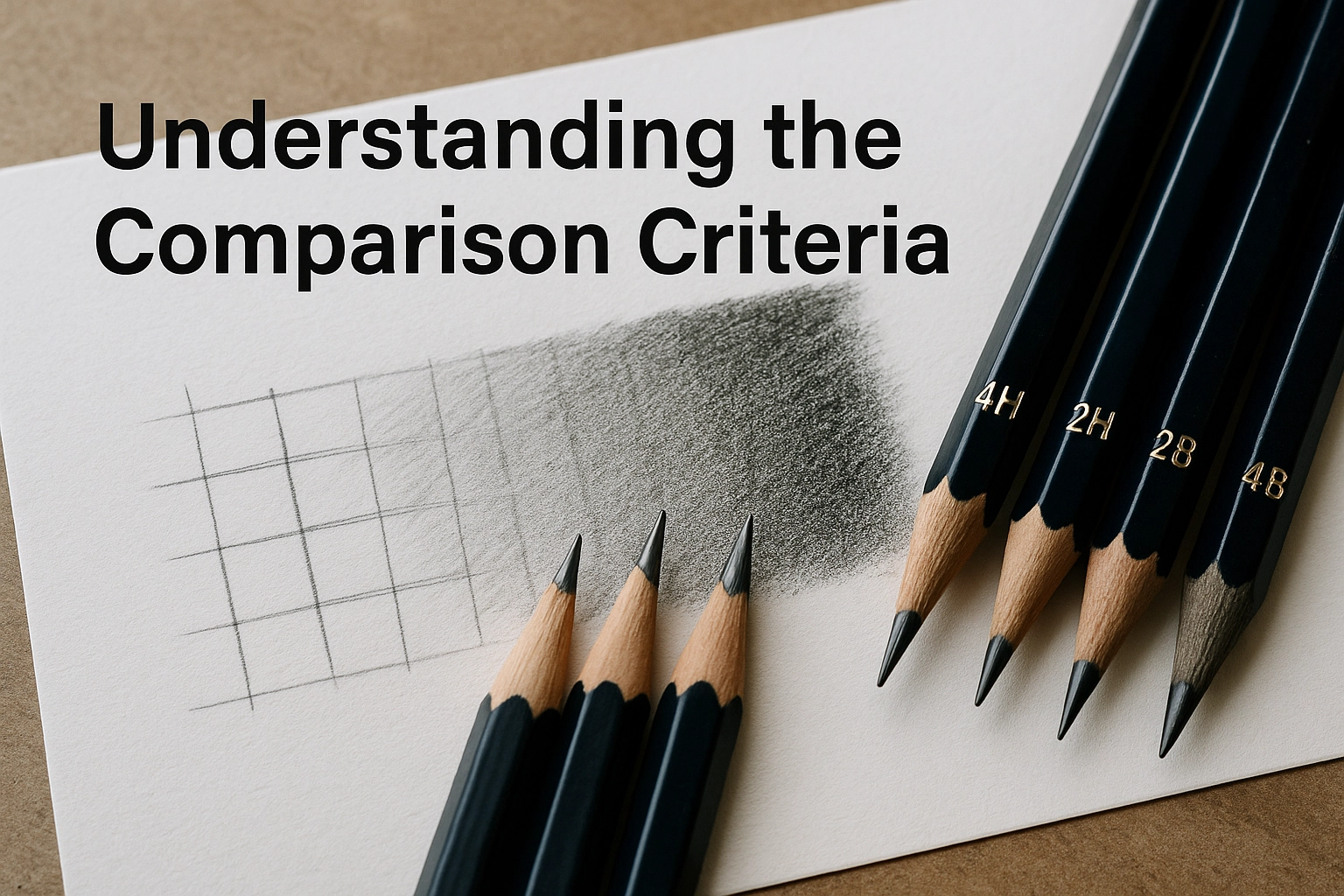
Grade, durability, and smoothness
For a fair comparison of the best pencil for sketch drawing, start with grade. Hard grades 2H to 4H keep a needle point for clean construction lines, while 2B to 6B produce dark masses for shading and tonal studies. Durability is critical; bonded, break resistant cores waste less in sharpening and withstand firm hatching, and premium sets are recognized for high break resistance and consistent laydown Best drawing pencil performance factors. Smoothness affects blending and edge control, so look for refined graphite mixes that leave clean strokes and minimal clumping, as seen in reviews of smooth graphite cores. A smart core set for intermediates is 2H, HB, 2B, and 4B, then expand into 6B or 4H as your subjects demand.
Eco friendly and trending materials
Eco friendly materials now influence purchase decisions as much as tonal range. Wood free recycled paper pencils reduce timber usage and perform well for sketching, though the casing can feel softer in aggressive sharpeners. FSC sourced woods and bamboo barrels support responsible forestry, and bamboo’s slightly larger diameter can steady the hand during long shading passes. In India, entry pencils can start around Rs. 75 per piece, so building a sustainable, multi grade set is achievable without straining the budget.
Design and ergonomics
Ergonomics drives control and comfort across multi hour sessions. Triangular barrels encourage a relaxed grip, hexagonal barrels aid precise alignment and stop table roll, and micro textured coatings improve traction without hotspots. For line work and crosshatching, match 2H to HB with slimmer 7 to 7.5 mm barrels; for expressive shading, pair 2B to 6B with slightly thicker or cushioned grips to reduce pressure. If you sketch on the move, mechanical or clutch pencils provide consistent line width and no sharpening, and 2 mm leads let you switch from point to chisel quickly. A quick test is to time a 10 minute value scale and a 10 minute contour study; even wrist comfort and even tones indicate the right balance and core recipe.
Graphite Grades and Qualities
Soft to hard grades, 9B to 9H
Graphite sits on a spectrum from 9B to 9H, determined by the graphite and clay blend in the core. Softer B grades, especially 4B to 9B, lay down velvety, dark strokes that blend easily and mask paper tooth. They excel for shadow masses, atmospheric perspective, and gesture work, though they wear fast and smudge readily. Harder H grades, from H through 9H, cut finer, lighter lines and hold a point for long sessions. They are ideal for construction lines and delicate crosshatching, but excess pressure can score the sheet and produce shiny areas. This soft to hard contrast is summarized in this complete grade overview.
Why HB is the anchor grade
HB is the anchor in the middle, balancing hardness and blackness so it records intent without committing to deep value. It erases cleanly, resists heavy smudging, and still accepts layering, which is why artists and hobbyists use it to block proportions and test edges. The nearby F grade holds a slightly finer point for marginally crisper contours. A practical workflow is to start with HB or F for structure, push form with 2B to 4B, then reserve 2H for subtle plane breaks and reflected lights. See a concise explanation in this guide to HB and F characteristics. A compact set of HB, 2H, 2B, 4B, and 6B will cover most sketch scenarios for intermediate artists in India.
Keys to effective shading
Keys to convincing shading come from three variables, hardness, layering, and pressure. Establish light scaffolding with H grades, glaze midtones with B grades using overlapping hatch patterns, then reinforce accents with softer cores. Build value in thin passes rather than one heavy layer, this reduces bloom and mottling while preserving paper texture. Control value by pressure, a lighter touch multiplies the steps between grades, a heavier touch accelerates darkness but risks indents with hard pencils. Before a finished piece, test a five-step scale on your chosen paper and tune your sequence accordingly, as recommended in layering best practices.
Top Pencils for Sketch Drawing
Side-by-side analysis: Faber-Castell, Apsara, and peers
Among intermediate artists, Faber-Castell’s 9000 series is a benchmark for consistent grading, smooth laydown, and strong core bonding that resists breakage. Sustainability credentials make it attractive to creators who value responsibly sourced wood and cleaner manufacturing, as noted in this sketching pencil brands comparison in India. Apsara stands out for price to performance in India, with dark, durable cores that hold a point well and reliable cedar for clean sharpening, see this overview of top pencil brands in India. Nataraj’s 621 is a practical soft-shading choice for atmospheric gradients and subtle edge transitions. Globally, sets like Mars Lumograph and Derwent remain highly rated for 2025, with artists praising slightly coarse tooth for tactile feedback and controlled texture. For a balanced everyday trio, pair a firm HB for structure, a 2B or 4B for mid-tone massing, and a 6B for deep accents, then add a dedicated soft option when you need punchy shadows.
Why Kokuyo FitCurve leads among mechanical pencils for design finesse
For precision-first tasks, the Kokuyo FitCurve brings a centered balance point near the grip, which reduces wobble during long contour passes and measured ellipses. A firm rubber grip supports relaxed pressure control, while a retractable tip helps prevent lead snaps during transport. The integrated twist eraser is practical for edge cleanup and small corrections, saving time during rapid iterations. Choose 0.5 mm HB for construction lines and perspective grids, then switch to 0.7 mm 2B for expressive hatching and silhouette refinement. Mechanical pencils are favored for portability and quick sketch workflows, and FitCurve aligns with that need while staying comfortable over multi-hour sessions.
Explore Drawing-Pencils.com’s curated selection for robust sketch drawing
Our curated kits simplify the path to the best pencil for sketch drawing by combining dependable cores and thoughtful accessories for Indian creators. A typical build includes Faber-Castell 9000 for line control, Apsara Drawing for dark thumbnails, and Nataraj 621 for soft shading, supported by a kneaded eraser, quality sharpener, and a blending stump. Start with HB to lock proportions, shift to 2B or 4B for form modeling, and finish with 6B accents and FitCurve line crispening on edges and textures. This approach balances premium feel with smart budgeting, ideal for students stepping into intermediate workflows. Explore our selections to match your technique, then scale up to full sets when your projects demand broader grade coverage.
Trending and Innovative Pencil Features
Eco-friendly materials and measurable impact
Sustainability has shifted from a nice-to-have to a core criterion when choosing the best pencil for sketch drawing. Traditional pencil production is linked to significant tree loss, with an estimated 82,000 trees felled annually for pencils, a signal that material choices matter for artists and the planet estimated annual tree loss. Recycled-paper and composite-barrel pencils lower energy use across the lifecycle, and manufacturing with recycled paper can cut energy consumption by up to 60 percent, a meaningful reduction for high-volume buyers energy savings with recycled paper. Plantable and biodegradable options add end-of-life value while avoiding synthetic lacquers and solvent-based finishes. Compared with conventional cedar barrels, eco builds may sharpen slightly differently and sometimes feel smoother under grip, but modern bonding has largely closed performance gaps. For intermediate artists in India, a practical approach is to seek third-party forest certifications, recycled content percentages above 50 percent, non-toxic finishes, and transparent sourcing statements in product listings.
Personalized pastel aesthetics and bespoke builds
Design-forward pencils are trending, and not just for looks. Pastel barrels with low-contrast markings reduce visual clutter on the desk, and matte finishes improve micro-grip during long shading sessions compared with glossy lacquer. Custom sets let you map pastel barrel colors to Graphite Grades, for example mint for 2H, blush for HB, and lavender for 4B, which speeds up grade switching in complex studies. Bespoke touches such as engraved initials, curated grade ranges, and modular tins support disciplined workflows, especially when you alternate between technical linework and expressive shading. The trade-off is cost and availability, yet for many artists, faster identification, better ergonomics, and greater studio cohesion justify the upgrade.
Digital-interactive workflows that still feel analog
Digital-interactive pencils and workflows are rising because they extend traditional technique rather than replace it. A common hybrid setup pairs a graphite kit with a pressure-sensitive stylus, using tilt and curve profiles that mimic B to H grades; this lets you block compositions on paper, then refine values digitally without losing pencil character. Mechanical pencils complement this flow for rapid thumbnails, while scanning or photographing pages preserves paper texture that you can overlay in software for tooth and grain realism. Pros include speed, non-destructive edits, and consistent palettes; cons include a learning curve and the need to calibrate friction with matte screen covers. Actionable tip: build a grade map that links 2H, HB, 2B, 6B to four stylus brushes, then standardize layer naming and pastel color labels so analog and digital files stay synchronized. Together, these innovations help you assemble a kit that is sustainable, expressive, and ready for cross-media production.
Experts’ Recommendations for Intermediate Artists
Pencils that build skill and use cases
Intermediate artists benefit from a deliberate mix of graphite behaviors rather than a single favorite pencil. Use 2H to HB for clean construction and tight hatching, then step into 2B to 4B for midtone modeling and soft edges; a soft 6B remains your depth anchor. Smooth, break resistant cores reduce snaps during pressure changes, which keeps your stroke consistent while you practice value scales and edge hierarchy. If you prioritize line accuracy for architecture or anatomy, pair a 0.5 mm mechanical loaded with HB for uniform line weight with a 2 mm clutch loaded with 2B for broad planes and knife edge shading. Artists who enjoy bolder massing can add a woodless graphite stick for fast block ins without the drag of wood. Ergonomic grips and slightly coarse lead textures provide better tactile feedback, helping you refine pressure control across long sessions.
Precision, depth, and kits for a complete workflow
To achieve precision and depth, many professionals use a three pass workflow, layout, modeling, then accents. Start with ghosted 2H to HB guides, switch to 2B or 4B for planar shading, then reserve 6B for accents at the focal point and cast shadows. Substitute a charcoal pencil only where graphite tops out in value, and lift highlights with a kneaded eraser to keep edges crisp rather than blurry. For portability and speed, mechanical pencils in 0.5, 0.7, 0.9, and 2 mm earn high marks, but they can feel glassy on smooth papers, a trade off worth testing. Value seekers in India can practice daily with reliable study pencils near Rs 75 per stick, saving premium cores for final work. Versatile kits simplify progress, a 12 piece graphite grade run ensures consistent feel across steps, while mixed kits add charcoal, woodless graphite, erasers, and sandpaper. Choose break resistant cores, ergonomic barrels, sustainable wood, and plentiful refills, then curate tools that match your practice plan for the best pencil for sketch drawing outcomes.
Conclusion & Actionable Takeaways
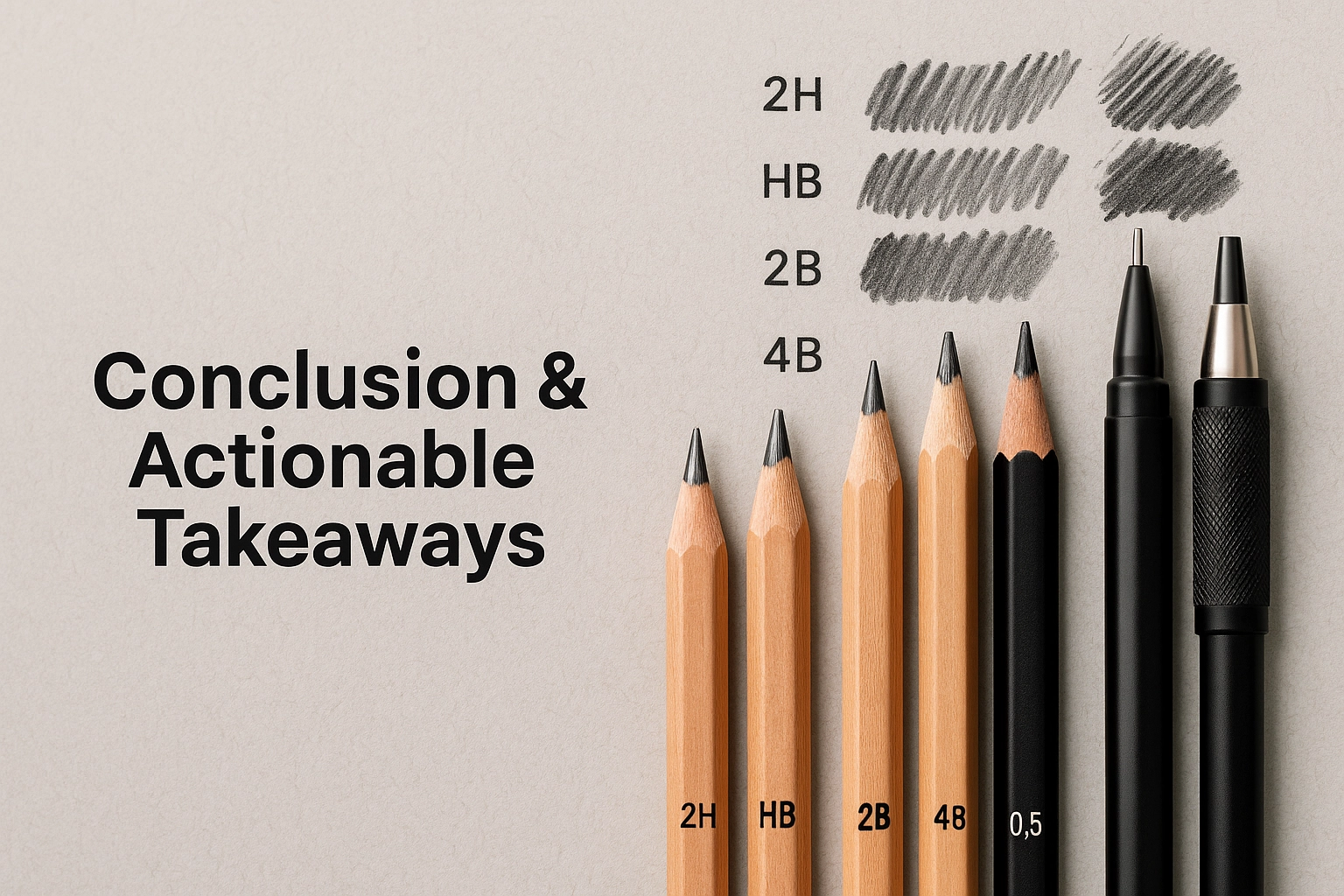
Our comparison indicates that intermediate sketchers gain the most control from a tight, purposeful range. Wooden graphite in 2H to HB delivers clean construction and minimal smudge, while 2B to 6B creates rich shading and soft blends. Mechanical pencils, in 0.5 to 0.7 mm and 2 mm clutch formats, excel for portability and quick gesture work, though they offer less tonal mass and a different paper bite. Consistent grading, break-resistant cores, ergonomic grips, and sustainable manufacturing are the features that most affect results. Price to performance matters in India, where quality options like Lyra Rembrandt can start near Rs. 75 per pencil without compromising tonal reliability.
To choose your next best pencil for sketch drawing, define your primary use, then build a compact kit: try a core of 2H, HB, 2B, 4B, and 6B, plus a 0.5 mm or 2 mm mechanical for on-the-go drafts. Test each grade on your usual paper, log pressure and smudge, and prioritize comfort grips for longer sessions. Cross-check features with an in-depth overview of grades and types in this artist’s guide, and scan a 2025 pencils roundup to benchmark performance. Then explore Drawing-Pencils.com for curated, India-ready sets, eco-aware lines, and delivery that supports your next sketching milestone.
