

Ever grabbed a pencil and wondered why the line you get feels so different when you switch from an HB to a 2B? You’re not alone—most artists and students have stood at that crossroads, feeling the tug between crisp detail and buttery shadows.
Think about the last time you sketched a portrait. You probably started with an HB to map out the basic shapes, then reached for a 2B when you needed deeper tones for the hair or the shadows under the cheekbones. That shift isn’t just about darkness; it’s about control. An HB holds its point longer, giving you steady lines for precise work, while a 2B yields a softer lead that deposits more graphite with less pressure, perfect for smooth gradients.
In our experience at Drawing Pencils Guru, we’ve seen beginners waste money buying a whole box of 2B pencils, only to struggle with smudging on fine details. A simple trick is to pair an HB for initial sketches with a 2B for layering and blending later on. This two‑pencil workflow mimics what professional illustrators do: start hard, finish soft.
Here’s a quick three‑step routine you can try right now: (1) Outline your subject using an HB, keeping the hand light; (2) Switch to a 2B and build up shadows in broad strokes, remembering that less pressure equals smoother tones; (3) Blend the transition with a blending stump or a soft cloth for that seamless look. If you’re curious about why the HB behaves the way it does, check out HB Pencil Meaning Explained: A Clear Guide for Writers and Artists for a deeper dive.
And if you’re looking for visual inspiration, consider browsing the landscape paintings at Gratitude Studios. Seeing how seasoned artists handle light and shadow can spark ideas on when to reach for that soft 2B versus the crisp HB.
So, what’s your next move? Grab both pencils, sketch a simple still life, and notice how the line quality changes. You’ll quickly feel the confidence that comes from mastering the hb vs 2b pencil dynamic.
TL;DR
Choosing the right lead—hard HB for crisp outlines and soft 2B for rich shadows—lets you control line weight, texture, and blending without over‑working your drawing.
Our three‑step workflow—sketch with HB, shade with 2B, finish with a blending stump—delivers professional‑grade depth while keeping your toolkit simple and affordable for beginners today.
Understanding Pencil Grades: HB and 2B Explained
When you pick up an HB versus a 2B, the difference isn’t just a number on a chart – it’s a feeling in your hand. That tiny shift from a hard to a soft lead changes how the graphite bites into paper, how much pressure you need, and ultimately how the line looks.
Think about the last time you tried to render a subtle curve on a portrait. With an HB you probably found the line crisp, almost laser‑sharp, letting you map the anatomy without smudging the surrounding area. Switch to a 2B, and the same stroke becomes buttery, laying down more pigment with a gentle hand. That softness is why many artists reserve 2B for shadows, hair, or any part that needs a richer, smoother tone.
What the numbers really mean
HB sits smack in the middle of the pencil hardness scale. It’s not “hard” like a 9H, but it’s definitely tougher than a 2B. The “H” stands for hard, the “B” for black (or soft). The higher the B, the softer the lead and the darker the mark. A 2B is two steps softer than the midpoint, meaning it deposits more graphite per stroke.
Why does that matter? A softer lead leaves a thicker layer of graphite, which translates to deeper darks with less effort. But it also wears down faster, so you’ll need to sharpen more often – a small price for that velvety finish.
Practical workflow tips
Here’s a simple two‑pencil routine that works for beginners and seasoned illustrators alike:
- Start with an HB to sketch the basic shapes. Keep the hand light; you want the lines to guide, not dominate.
- When you hit the first shadow, swap to a 2B. Lay down broad strokes, then go back with the HB for finer details if needed.
- Finish by gently blending with a stump or a soft cloth – the 2B will smooth out nicely, while the HB edges stay crisp.
Notice how the transition feels natural? The HB gives you structure, the 2B adds depth. It’s like building a house: the frame comes first, then you add the interior finishes.
Does this workflow sound familiar? Many art students in India tell us they used to buy a whole box of 2B pencils hoping it would solve every problem. In reality, they ended up with smudgy sketches because the soft lead was too aggressive for initial outlines. By pairing the two grades, you get the best of both worlds without the waste.
Another tip: pay attention to paper texture. A smooth Bristol board lets the 2B glide effortlessly, while a rougher watercolor paper will bite into the lead, giving you a grainier, more tactile feel. Experiment – you’ll discover which combo feels right for your style.
Watching that short demo can help you see the contrast in real time. Notice how the artist switches pencils mid‑drawing, adjusting pressure to keep the line weight consistent.
Now, let’s talk about maintenance. An HB holds its point longer, so you can sketch for minutes without re‑sharpening. A 2B, however, dulls quickly – keep a good quality sharpener handy, and consider a rotating cutter for a clean, precise tip. A well‑sharpened 2B will give you those smooth gradients without the grainy edges that happen when the tip is jagged.
What about erasing? Because a 2B leaves more graphite, a soft kneaded eraser works best for lifting highlights without tearing the paper. An HB’s lighter marks are easier to remove with a standard vinyl eraser, but you’ll still want the kneaded type for fine adjustments in the shadows.
Finally, remember that your choice of pencil is just one piece of the puzzle. The right grip, posture, and lighting all influence how you perceive the line. When you combine a comfortable grip with the HB‑2B duo, you’ll notice a smoother, more confident hand.
Give it a try today: sketch a simple apple with an HB, then shade the darker side with a 2B. Feel the difference. You’ll quickly see why this pairing is a staple in studios worldwide.
And if you’re looking for a place to pick up quality drawing supplies, you might browse a few trusted retailers that ship internationally – they often have bundles that include both HB and 2B pencils, plus a sharpener and eraser to get you started.
Happy drawing!
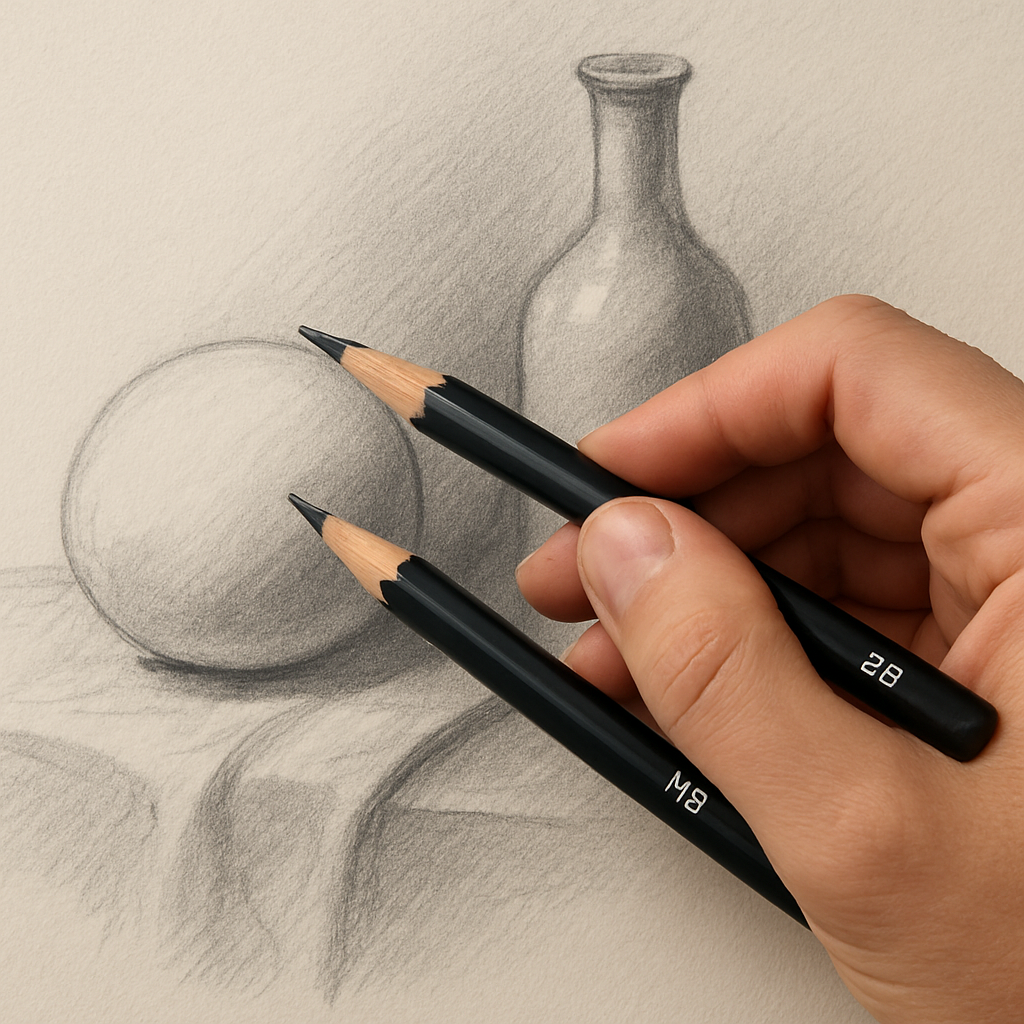
Choosing the Right Pencil for Sketching
When you sit down with a fresh sketch pad, the first decision you face is surprisingly simple: which pencil should you pick up first?
Most of us reach for the HB because it feels familiar, like the classic school pencil you used for math tests. That hard lead gives you crisp, clean lines that stay sharp longer, so you can outline a building, a hand, or a still‑life without constantly sharpening.
But the moment you want to add a hint of shade or a soft transition, the 2B swoops in like a quiet whisper. Its softer graphite lays down more material with less pressure, letting you build depth in a single stroke. That contrast is the heart of the hb vs 2b pencil conversation.
Match the Pencil to the Paper Texture
Imagine you’re sketching on a smooth, hot‑pressed Bristol board. The surface is so slick that an HB slides across it like a knife on ice, giving you precise control. If you try a 2B on that same board, the lead can smudge and leave a greasy sheen that’s hard to clean up.
Now picture a slightly textured, 80‑gsm sketch paper that’s common in art classrooms across India. Its tooth catches the softer 2B, distributing the graphite evenly and preventing buildup. In that scenario, the 2B becomes your go‑to for shadows, while the HB still handles the fine outlines.
Think About Your Subject
If you’re drawing an architectural study or a technical diagram, you probably want every line to stay light and exact. An HB’s hardness keeps the marks faint enough to erase later without tearing the paper. That’s why many engineering students in Delhi favor the HB for preliminary drafts.
Conversely, when you’re rendering a portrait, a landscape, or any scene where tone matters, the 2B adds that buttery quality to skin, foliage, or clouds. A light hand with a 2B can create a gradient that feels almost three‑dimensional, something an HB would struggle to achieve without heavy pressure.
Practical Workflow Tips
Here’s a quick three‑step workflow that works for most sketching projects:
- Start with an HB to block in the main shapes. Keep your hand relaxed; the harder lead will hold a fine point.
- Switch to a 2B for the first layer of shading. Apply gentle pressure and watch the tone build up naturally.
- Blend with a soft cloth or a blending stump (if you have one) to smooth the transition. If you need a darker shadow, go back to the 2B and add another light layer.
And remember, you don’t need a whole box of each grade. In our experience, one quality HB and one reliable 2B are enough to cover the vast majority of sketching needs.
Choosing the Right Brand
Not all pencils are created equal. Some brands pack a lot of clay into their HB, making the line feel a bit grainy, while others use a purer graphite mix that glides like silk. For Indian artists, Faber‑Castell, Camlin, and Staedtler are popular choices that balance hardness and smoothness.
If you’re on a tight budget, look for locally made HB pencils that meet the ISO 9175 standard—they’ll give you consistent hardness without breaking the bank. For the 2B, a slightly higher price often means a richer black and less breakage, which can be worth it if you sketch frequently.
Does this sound like a lot to remember? Not really. Think of the HB as your “outline buddy” and the 2B as your “shading sidekick.” When you pair them correctly, the hb vs 2b pencil debate fades into the background, and you’re free to focus on what really matters: the story you’re drawing.
So, next time you open your art bag, pull out that trusted HB, lay down the skeleton of your composition, then reach for the 2B to bring it to life. You’ll notice the difference instantly—crisper edges, smoother shadows, and a confidence that only comes from using the right tool for the right job.
Practical Test: Writing and Shading Comparison
Alright, let’s put the theory we’ve been chatting about into a quick, hands‑on experiment. Grab an HB, a 2B, a plain white sketch pad (80‑100 gsm is perfect), and a soft cloth or blending stump. We’ll sketch the same simple subject twice – once with the HB leading the way, then with the 2B taking over for shading. The goal? See, feel, and compare how each grade behaves when you actually draw.
Step‑by‑step test
1. Choose a familiar object – a mango, a coffee cup, or even the outline of a hand. Keep it small enough to finish in under five minutes.
2. With the HB, draw the basic outline. Use light pressure; notice how the line stays crisp and the point holds its shape.
3. Switch to the 2B. Layer shadows on the same drawing, still using a gentle hand. Watch how the graphite deposits more quickly and the tones deepen with barely any extra pressure.
4. Blend the 2B strokes with your cloth or stump. Pay attention to how smoothly the graphite spreads and whether any unwanted smudging appears.
What to look for
When you compare the two passes, ask yourself a few questions. Does the HB line feel “hard” enough that you can keep it thin for a long time? Does the 2B give you a buttery texture that lets you glide from light to dark without re‑sharpening?
Notice the point durability. In Anna Bregman’s extensive pencil‑brand review, she points out that many HB grades stay sharp for dozens of strokes, while softer 2B leads can dull faster but still lay down a richer tone pencil brand reviews. That observation lines up with what we’ll see on the page.
HB results
The HB outline should be clean, almost “graphite‑on‑paper” without much grain. If you press a bit harder, the line darkens, but it never turns glossy – it stays matte. This is why the HB is the go‑to for technical sketches, architectural lines, or any part of a drawing that you might need to erase later.
2B results
The 2B shading will feel softer under the tip, almost like the lead is melting into the paper. With a light hand you’ll get a smooth gradient; press a tad more and the area turns a deep, velvety black. Because the 2B deposits more graphite, you’ll see a subtle sheen on smoother paper – a pleasant visual cue that the tone is “rich”.
Practical takeaways
Here’s the quick checklist you can keep in your art bag:
- Use HB for any line you want to stay crisp or that may need adjustment later.
- Reach for 2B when you need depth, texture, or a quick dark area without layering dozens of strokes.
- If you’re on textured paper, the 2B’s extra graphite will “catch” in the tooth, giving you a more even shadow.
- On slick, hot‑pressed paper, stick with the HB for clean edges; the 2B can become greasy and hard to clean.
Try the test twice – once on a smooth Bristol board and once on a lightly textured sketch pad. You’ll notice the same HB vs 2B pencil dynamics, but the paper texture will amplify or mute the differences. That’s the sweet spot where you can decide which combination works best for your own style.
So, what’s the next move? Take the test, jot down your observations, and then build a tiny “pencil journal” in your sketchbook. A one‑sentence note like “HB held fine on Bristol, 2B smudged on rough” is enough to guide future sessions. The more you repeat this simple experiment, the faster you’ll develop an instinct for when to reach for each grade.
Performance Summary Table
Alright, let’s cut through the fluff and give you a clear picture of what really matters when you’re weighing hb vs 2b pencil choices. We’ve talked about line quality, shading depth, and paper interaction—now it’s time for a quick side‑by‑side snapshot you can pin to your sketchbook.
What should you look at first?
Think about the three things that decide whether a pencil feels right in your hand: the hardness of the lead, how the graphite lays on different textures, and how long the point stays usable before you have to sharpen again. Does that line up with your own experience?
Performance Summary
| Feature | HB Pencil | 2B Pencil |
|---|---|---|
| Line crispness | Very sharp, holds a fine point for dozens of strokes. Ideal for outlines and technical work. | Soft tip, blunts faster. Great for broader strokes and smooth gradients. |
| Shade depth | Light to medium darkness. Requires multiple layers for deep shadows. | Rich, dark tones in a single pass. Perfect for quick chiaroscuro. |
| Paper compatibility | Works best on slick, hot‑pressed surfaces where the lead glides without smudging. | Thrives on textured or medium‑tooth paper that catches extra graphite. |
| Erasing behavior | Eraser lifts cleanly, leaving minimal residue. | Leaves a faint graphite halo; a softer eraser helps avoid tearing. |
Seeing it laid out like this, you might wonder: which one should I keep in my bag for everyday sketching? The answer is usually “both.” When you start a drawing, grab the HB to lock down structure. Once the bones are in place, switch to the 2B for the flesh, the shadows, the atmosphere.
A quick decision checklist
Here’s a tiny cheat sheet you can jot on the back of a receipt:
- Need razor‑sharp lines that stay light? Reach for the HB.
- Want buttery darkness without layering? Grab the 2B.
- Working on smooth Bristol or tracing paper? Stick with HB for clean edges.
- Sketching on textured sketch pad or watercolor paper? Let the 2B catch the tooth.
- Planning a lot of erasing? HB will be kinder to your paper.
Does this feel like a lot to remember? Not really. Most Indian art students I’ve spoken with treat the HB as their “outline buddy” and the 2B as the “shading sidekick.” You can even label your pencils with a tiny sticker – it’s a habit that saves seconds in the studio.
Real‑world example
Picture this: you’re in a Delhi classroom, prepping a technical drawing for an engineering exam. You need crisp, light lines that you can erase without ghosting. The HB slides across the tracing paper, giving you that surgical precision. Later that evening, you sit down to sketch a mango for a social‑media post. A gentle hand with a 2B creates that velvety skin in one sweep, and you’re done before the mango turns brown.
Notice how the same two pencils cover both worlds? That’s the power of a balanced toolbox.
What to do next?
Take the table, print it, and tape it above your drawing station. The next time you pick up a pencil, glance at the row that matches your paper and ask yourself: “Am I after crisp structure or deep mood?” Let that quick question guide your choice, and you’ll spend less time guessing and more time creating.
And remember – the best way to internalise this is to run the quick test we outlined earlier on two different papers. The table will start to feel like a personal cheat code rather than a static chart.
Tips for Maintaining Your HB and 2B Pencils
We all know the heartbreak of a dull HB that refuses to stay sharp, or a 2B that flakes on the first swipe. The good news? A few simple habits keep both grades humming for months, not weeks.
Pick the right sharpener
If you’re using a cheap plastic blade, expect uneven points and broken leads. A rotary sharpener with a metal cone is the sweet spot for both hard and soft grades – the HB stays razor‑thin, while the 2B retains a rounded tip that lays down smooth shadows.
For a premium example, the Japanese Kitaboshi 2B pencils come with cedar wood that sharpens beautifully and rarely snaps. The same principle applies to any HB you trust; a quality wood core paired with a good sharpener extends the life of the lead dramatically. (See Kitaboshi 2B writing pencils for a real‑world product that showcases this balance.)
Mind your pressure
Harder HB leads love a light hand. Press too hard and you’ll flatten the tip, forcing you to sharpen more often. The softer 2B, on the other hand, thrives on a gentle glide – too much pressure will create a greasy sheen and accelerate wear.
Next time you start a sketch, pause and ask: “Am I trying to force a line, or letting the graphite do the work?” That tiny mental check can cut sharpening time in half.
Store them right
Humidity is the silent enemy. When pencils sit in a damp drawer, the wood swells and the lead can loosen, leading to breakage. Keep your HB and 2B in a dry, ventilated container – a simple zip‑lock bag with a silica packet does the trick.
For artists who travel between classrooms in Delhi and studios in Mumbai, a small, hard‑case pencil roll protects both grades from being knocked around or exposed to moisture.
Clean the tip regularly
A tiny dust ring builds up after a few strokes, especially on softer 2B. Lightly brush the tip with a soft, dry brush or even a clean paintbrush before each session. It removes excess graphite and prevents the lead from snagging on the paper texture.
For HB, a quick rub on a scrap piece of paper can shave away the faint burr that forms after sharpening, restoring that crisp edge.
Rotate your pencils
Instead of using the same HB for hours on end, swap between an HB and a 2B every 15‑20 minutes. The short rest lets the wood “settle,” reducing the chance of splitting and giving you a fresher feel when you return.
It’s a tiny rhythm change, but you’ll notice the difference when you move from a detailed architectural line to a soft portrait shading – the transition feels seamless.
Extend lead life with a light touch
When you’re layering shadows, try a feather‑light hand with the 2B first, then deepen with a second pass if needed. This two‑layer approach uses less graphite overall and keeps the tip from dulling too quickly.
Similarly, outline with an HB using the edge of the tip rather than the very point. You get a clean line without grinding the tip down to a nub.
So, what’s the ultimate checklist?
- Use a metal‑cone rotary sharpener for both grades.
- Store pencils dry, away from humidity.
- Brush the tip gently before each drawing session.
- Rotate HB and 2B regularly to let wood rest.
- Apply light pressure, especially with 2B.
- Consider quality wood pencils like Kitaboshi for reliable sharpening.
Want a quick visual rundown? Check out this short tutorial that walks through sharpening and cleaning techniques step‑by‑step. (Watch the pencil maintenance tutorial for a clear demo.)
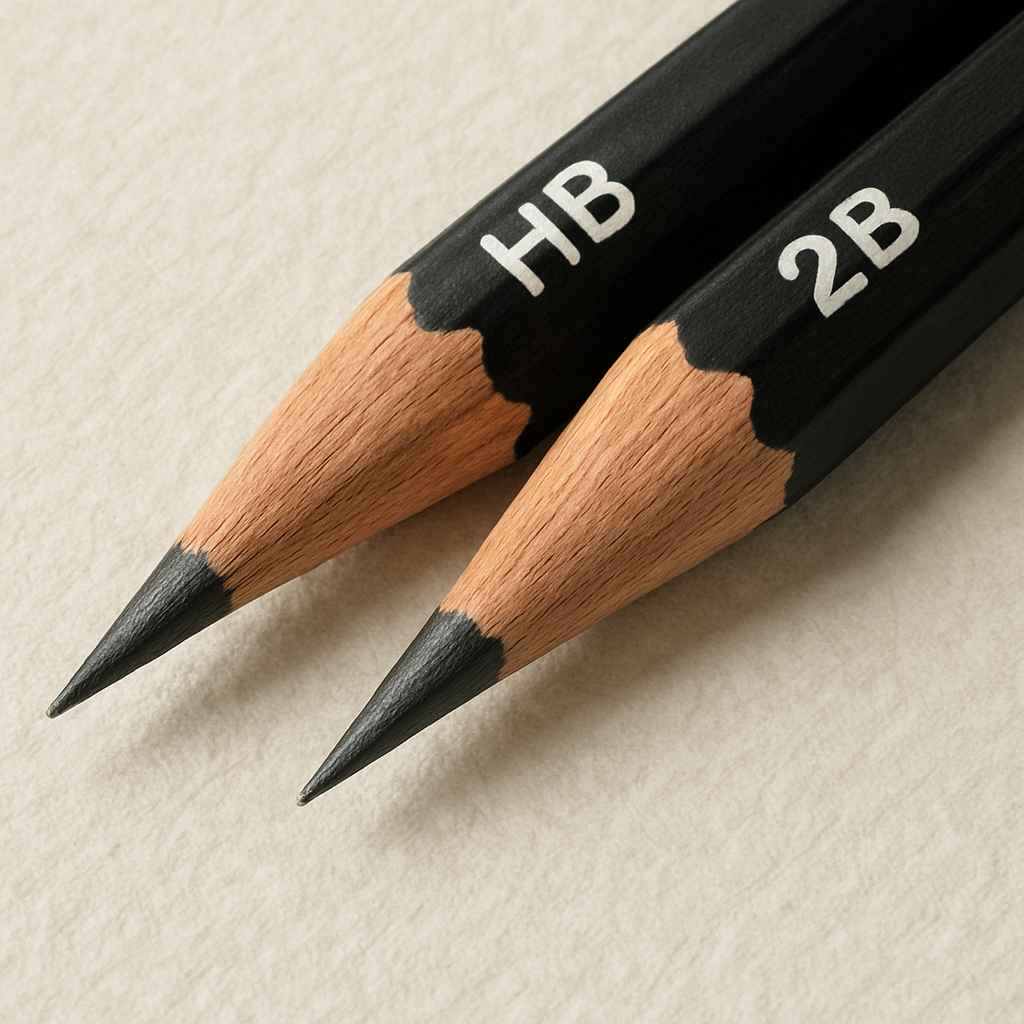
Common Misconceptions About HB and 2B Pencils
Myth #1: The core contains lead
One of the biggest myths floating around art classrooms is that an HB or 2B contains actual lead. In reality the core is pure graphite mixed with a touch of clay, a fact explained on the Unleaded Pencil page — so you’re not risking any toxic exposure when you sketch.
Myth #2: Softer means weaker
Because the word “lead” stuck around, many beginners assume that a softer 2B is somehow “weaker” or “inferior” to a hard HB. The opposite is true: softness just means more graphite per stroke, which gives richer darks, not less durability.
Myth #3: You need a whole box of 2B pencils
Another common misconception is that you need a whole box of 2B pencils to get good shading. What we’ve seen at Drawing Pencils Guru is that a single quality 2B, paired with proper pressure control, can produce the same depth as a whole set of softer grades.
Myth #4: HB is only for school, 2B only for pros
People also think the HB is only for school notebooks and the 2B is strictly for professional art. In Indian art schools we hear students swear by an HB for precise technical drawings, while the same students reach for a 2B when they switch to portrait work. The grade isn’t a status symbol; it’s a tool for the task at hand.
Myth #5: Pressing harder on an HB equals a 2B
Myth #5: “If I press harder with an HB I’ll get the same darkness as a 2B.” No amount of force can change the graphite‑to‑clay ratio. What changes is the texture of the mark: heavy pressure on an HB can make the line look muddy and may even break the tip, while a light hand on a 2B already gives you a deep, velvety tone.
Myth #6: Softer automatically smudges more
And then there’s the belief that the softer lead automatically smudges more. Smudging actually depends on paper texture and how you blend. On a hot‑pressed Bristol board, a 2B can stay crisp, whereas on a rough sketch pad the same HB will leave a faint grainy trail.
Fact‑checking your toolbox
So how do you separate fact from folklore? Here are three actionable steps you can test right now:
- Grab an HB and draw a 2‑inch line on smooth printer paper. Note the line stays light even with medium pressure.
- Switch to a 2B, repeat the line with the same pressure. Watch how the tone deepens without extra force.
- Now try both pencils on a medium‑tooth sketch pad. Observe that the 2B’s graphite catches the tooth, giving a smoother gradient, while the HB produces a slightly rougher, lighter stroke.
If you notice the 2B turning greasy on slick paper, back off pressure or add a light layer of tissue to absorb excess graphite.
Myth #7: You must sharpen a 2B to a razor tip
Some think you have to sharpen a 2B to a razor tip to get good shading. In fact, a rounded tip spreads graphite more evenly, which is often preferable for soft shadows. A too‑sharp 2B can gouge the paper and force you to re‑sharpen constantly.
Pro tip from the studio
Our experience shows rotating between HB and 2B every 15 minutes lets the wood settle, extending lead life and keeping both grades performing at their best.
Historical side note
Some still think modern pencils are the same as the ancient lead‑filled stylus. The story of Borrowdale graphite in 1564 and Conté’s clay‑graphite blend, highlighted in a short pencil history video, proves the technology has evolved dramatically, giving us the HB‑2B spectrum we use today.
Quick myth‑busting checklist
- HB = hard core, great for crisp lines, not “weak”.
- 2B = soft core, richer darks, not “inferior”.
- Pressure won’t change grade hardness.
- Paper texture decides smudge potential, not softness alone.
- Round 2B tips are fine for smooth shading.
By testing these ideas yourself, you’ll quickly spot the false beliefs and build a reliable workflow that lets you choose the right pencil without second‑guessing.
FAQ
What’s the real difference between an HB and a 2B pencil?
HB pencils have more clay in the core, so the graphite is harder and leaves a lighter, crisper line. A 2B contains less clay and more graphite, which makes it softer, darker, and quicker to lay down shade. In practice, you’ll notice the HB holds a fine point longer, while the 2B gives you that buttery black with just a light touch.
Can I use a 2B for technical drawing without ruining my work?
Yes, but you’ll want to adapt your pressure and paper choice. On smooth tracing paper a 2B can still produce clean lines if you keep the hand light; the extra graphite simply won’t smudge as much as it would on rough stock. For precise measurements, draw the initial geometry with an HB, then switch to a 2B for any quick shading or emphasis.
How does paper texture affect the performance of HB vs 2B?
Rough, medium‑tooth paper “catches” the soft 2B graphite, spreading it evenly and preventing a greasy sheen. That same texture can make an HB look grainy or faint. Conversely, hot‑pressed Bristol or smooth sketch paper lets an HB glide with a razor‑thin line, while a 2B may sit on the surface and look slick or smear. Matching grain to grade is the secret to consistent results.
Should I sharpen my 2B to a razor tip for shading?
Not really. A rounded tip actually distributes graphite more evenly, which is ideal for soft shadows and smooth gradients. Sharpening to a needle point can gouge the paper and force you to re‑sharpen constantly. Keep the tip gently rounded, and if you need a finer line, use the edge of the lead rather than trying to achieve a razor edge.
How often should I rotate between HB and 2B during a sketch session?
We’ve found swapping every 15‑20 minutes works well. The short break lets the wood settle, reducing split‑ends and extending lead life. Start with HB for the structural outline, then move to 2B for the first layer of tone. When you feel the tip dulling, switch back to HB for a few strokes, then return to 2B. The rhythm keeps both pencils performing at their best.
Are there any affordable Indian brands that deliver consistent HB and 2B quality?
Camlin and Staedtler are widely available across India and meet the ISO 9175 standard, which guarantees a reliable hardness level. In our testing, Camlin HB holds a fine point for dozens of strokes, while their 2B delivers a rich black without flaking. Staedtler’s 2B is a bit pricier but offers smoother lay‑down, which many art students appreciate for portrait work.
What simple test can I run to decide which pencil to use for a new project?
Grab a piece of the intended paper, draw a 2‑inch line with an HB, then repeat with a 2B using the same pressure. Observe the darkness, smoothness, and any smudging. If the HB line stays light and the 2B line feels buttery, you’ve confirmed the grade match. For a quick sanity check, add a second pass on the same line—if the 2B reaches the desired tone in one go, it’s the right choice for shading.
Conclusion
So, after all the testing and the quick sketches, what’s the bottom line for the hb vs 2b pencil debate?
If you need razor‑sharp outlines that stay light for erasing, reach for the HB; if you crave buttery darkness that builds tone in a single swipe, the 2B is your go‑to.
In Indian classrooms or a home studio, the same rhythm works: start with an HB to lock the structure, then switch to a 2B for depth, and rotate every few minutes to keep the wood happy.
A quick checklist to keep in your sketchbag: HB for crisp lines, 2B for rich shading, a metal‑cone rotary sharpener, dry storage, and a soft brush to clear dust.
Next time you pull out your pencils, ask yourself which story you want to tell – the precise blueprint or the atmospheric mood – and let the right grade do the talking.
Ready to experiment? Grab an HB and a 2B, run the simple line test we described, and note the differences in your own hand. The more you play, the faster the choice becomes second nature.
Remember, the hb vs 2b pencil conversation isn’t about picking a winner; it’s about building a flexible toolkit that adapts to any subject, paper, or mood you encounter.
