
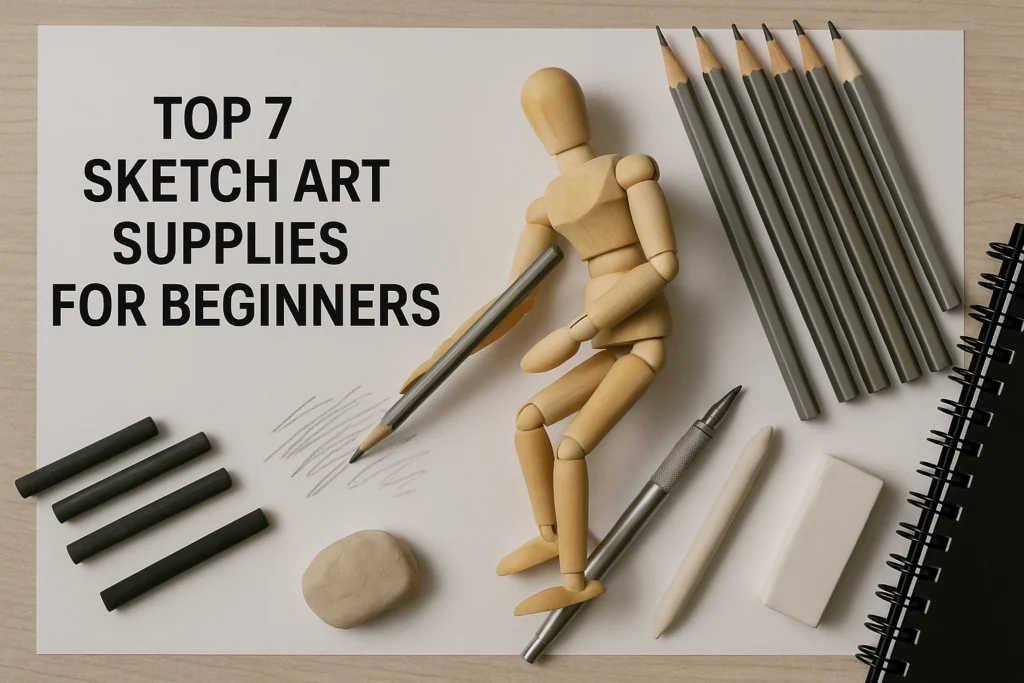
Got the urge to sketch but not sure what to buy? You are not alone. The art aisle can feel like a maze, and every pencil claims to be the best. This guide keeps it simple. We are walking through the top 7 sketch art supplies that give beginners the biggest boost, without draining your budget. Think practical tools that feel good in your hand, help you learn faster, and make it easier to enjoy the process.
By the end, you will know exactly which pencils to start with, what paper works for sketching, how erasers, sharpeners, and blending tools change your lines, and why a simple sketchbook beats fancy pads when you are learning. You will get clear reasons to choose each item, friendly tips for using them on day one, and a few money saving picks. Grab a seat, a cup of something warm, and let’s build a small, smart kit that helps you draw more, worry less, and grow your skills with confidence.
Graphite Pencils: A Beginner’s Must-Have
1. Understand the H to B grading system
Pencil grades describe hardness and darkness. H pencils contain more clay, creating hard cores and light, crisp lines. B pencils contain more graphite, feel softer, and lay down dark, velvety tones for shading. HB sits in the middle for everyday sketching. Review this quick guide to pencil grades explained to see the scale from 9H to 9B. Action tip, swatch 4H, 2H, HB, 2B, 4B, and 6B to map your value range, and note how pressure shifts each tone.
2. Use grades to sketch and shade with intention
Build a simple workflow. Block in proportions with 2H to avoid dents and crushed fibers, define edges with HB, then add mid-tones with 2B and deepen shadows with 4B or 6B. For texture, use hatching with H grades, cross-hatching with HB, and smooth blends with a tissue or stump using B grades. Keep a kneaded eraser to lift highlights cleanly and to soften edges. On readily available 110 GSM sketch paper in India, H grades keep lines crisp while B grades create rich contrast. Practice, fill a 10-step value scale, then shade a sphere using only 2H, HB, and 4B.
3. Pick a curated set that fits your style
Choosing pencils one by one can be confusing for your sketch art supplies. Opt for drawing-pencils.com for curated pencil sets tailored to portrait shading, technical line work, or travel sketching. A beginner bundle typically includes 4H, 2H, HB, 2B, and 4B, plus a sharpener and eraser, covering studies from gesture to finished tonal drawings. You also get guidance, reliable delivery across India, and consistent cores that sharpen cleanly and resist breakage. Tip, match your set to your goals, more Bs for bold tonal portraits, more H grades for architectural sketches. Next, we will look at papers that make those marks sing.
Colored Pencils: Adding Vibrancy to Your Art
1) Start with artist‑grade colored pencils
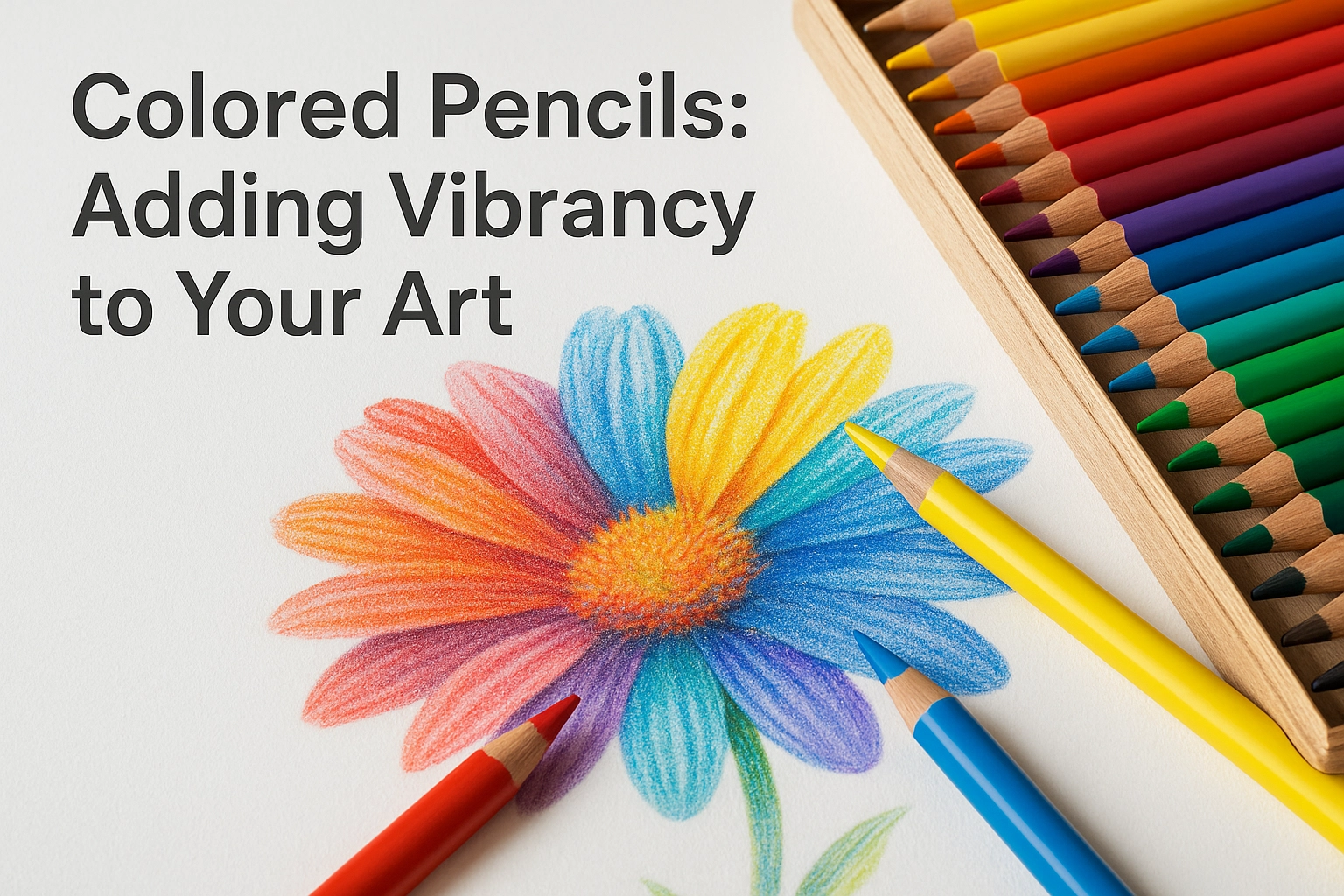
If you want vivid color without fighting your tools, pick artist‑grade pencils with high pigment load and smooth binders. Oil‑based cores hold a sharp point longer for crisp details, while wax‑based cores feel creamier and lay down color quickly; both layer beautifully when used lightly. For a quick primer on these differences, see this tested overview of oil vs wax characteristics for beginners best colored pencils for beginners. Beginners often do well with a balanced 24 to 36 color set, then add open‑stock singles for the hues you use most. As India’s stationery market grows across drawing and painting categories, a reliable colored pencil set is becoming a core part of sketch art supplies for students and hobbyists alike. If you are still choosing a first set, this walkthrough on student and artist options can help you match pencils to your goals how to choose the best colored pencils for beginners.
2) Blend for impact with simple, repeatable techniques
Build color slowly with 3 to 6 whisper‑light layers, rotating the pencil to keep the tip fresh, then glaze complementary or analogous hues for depth. Burnish at the end with a colorless blender or a very light pencil to fuse layers and remove visible strokes. For soft, painterly transitions, touch a brush with a tiny amount of odorless mineral spirits to the layered area, then let it dry before adding detail. Paper matters, so test on smooth cartridge or sketch pads around 110 GSM for studies, and move to thicker, smooth papers for heavy layering to avoid fiber fatigue. Practice a five‑step gradient strip and a shaded sphere weekly; most beginners see cleaner blends and richer color in two to three sessions.
3) Choose eco‑friendly options that support sustainable art
Look for pencils made from responsibly sourced or recycled wood, non‑toxic pigments, and minimal or recyclable packaging. Prefer metal tins over plastic boxes and buy open‑stock refills to reduce waste. Use a sturdy, replaceable‑blade sharpener to extend pencil life, and save clean wood shavings for compost if materials are plant‑based and non‑toxic. Ventilate when using solvents, or swap to low‑odor alternatives and cotton swabs to control usage. Pair eco‑pencils with locally made sketchbooks and durable tools so your practice stays planet friendly and budget smart over time.
Essential Sketchbooks for Every Artist
1) Match paper weight and texture to your medium
paper weight, measured in gsm, controls durability and bleed. Lightweight 50 to 90 gsm suits quick graphite studies, but buckles with wet media. Medium 90 to 150 gsm handles layered pencil and light ink, a solid daily driver. Heavy 150 to 300 gsm is best for ink washes or watercolor accents, it resists warping. For texture, hot pressed is smooth for crisp pen lines, cold pressed has gentle tooth that grips graphite, and rough paper favors bold charcoal. In India, 110 gsm cartridge sheets are common in sketch pads and give a bright, slightly rough surface. Learn more in this primer on choosing the right paper for drawing.
2) Keep work tidy with the right sketchbook style
Spiral bound books lie flat, making shading easier and page turns fast during gesture drills. Perforations let you remove a clean edge for framing or portfolio reviews. Thread bound hardcovers protect pages in backpacks and archive well, useful when you want a long term record of studies. Softcovers are light for urban sketching, but pair them with a simple folder for finished pieces. Practical setup, keep one A5 spiral for warm ups, one A4 hardcover for portraits, and label spines with dates. Number pages and keep a two page index up front to track topics, mediums, and locations.
3) Why drawing-pencils.com is a smart pick for budding artists
You get curated, acid free sketchbooks in beginner friendly weights, from 100 to 200 gsm for pencil focused work to heavier options for mixed media. Bindings include spiral and hardcover, so pages stay flat and protected in humid Indian weather. Surfaces span smooth to medium tooth, letting you pair HB to 4B shading with crisp ink lines. Starter bundles align with common pencil sets like 4H, 2H, HB, 2B, and 4B, keeping your sketch art supplies simple and affordable. Clear buying guides and reliable delivery across India help you choose confidently. Begin with one everyday book and one heavyweight pad, then expand as your style evolves.
Charcoal Pencils: Mastering Shadows and Depth
1) Understand charcoal pencil types and when to use them
Soft charcoal pencils, usually B grades, deliver deep, velvety blacks that are perfect for dramatic shadows and bold gesture lines. Medium, HB grades balance darkness and control, so they are great for midtones and general sketching without constant smudging. Hard, H grades create lighter marks, ideal for structure, hairlines, and crisp edges that need to stay clean. You will also see compressed charcoal in wood-cased pencils for darker, durable marks, and vine or willow charcoal for airy, erasable block-ins. A simple beginner trio, H for layout, HB for midtones, B for shadows, covers most studies. Pair your charcoal with cartridge paper around 110 gsm for a bright, slightly toothy surface that grabs pigment without shredding.
2) Build depth with beginner-friendly shading and texture techniques
Work from light to dark so you can refine values gradually, then press harder only where the deepest shadows live. Use hatching and cross-hatching to build tone with control, tighten spacing for darker passages, and open it up for lighter ones. Blend selectively with a stump or tissue to create soft gradients on cheeks, clouds, and fabric, then restore crisp edges by reintroducing line with an H pencil. Lift highlights with a kneaded eraser, pinch it to a point for hair shine or eye reflections, and tap to reveal textured pores or stone. Try scumbling, small circular or irregular strokes, to suggest bark, denim, or fur without overblending. Finish studies with a light coat of workable fixative to reduce smudging while you continue layering.
3) Prefer cleaner alternatives for mess-free sketching with drawing-pencils.com
If charcoal dust worries you, carbon pencils are a great swap, they give a fuller black than graphite, blend smoothly, and shed far less residue. Wood-cased compressed charcoal also keeps fingers cleaner and points consistent, especially for classroom or travel work. For toned papers, add a white charcoal pencil to pop midtones and highlights without resorting to chalk sticks. Explore curated carbon and charcoal options, kneaded erasers, blending stumps, and smudge guards at drawing-pencils.com, your hub for beginner-friendly sketch art supplies delivered across India. Pack a simple clean kit, one stump, a tissue, a kneaded eraser, and a paper towel under your hand, and you will keep pages tidy while still achieving rich depth.
Blending Tools: Elevate Your Sketch Details
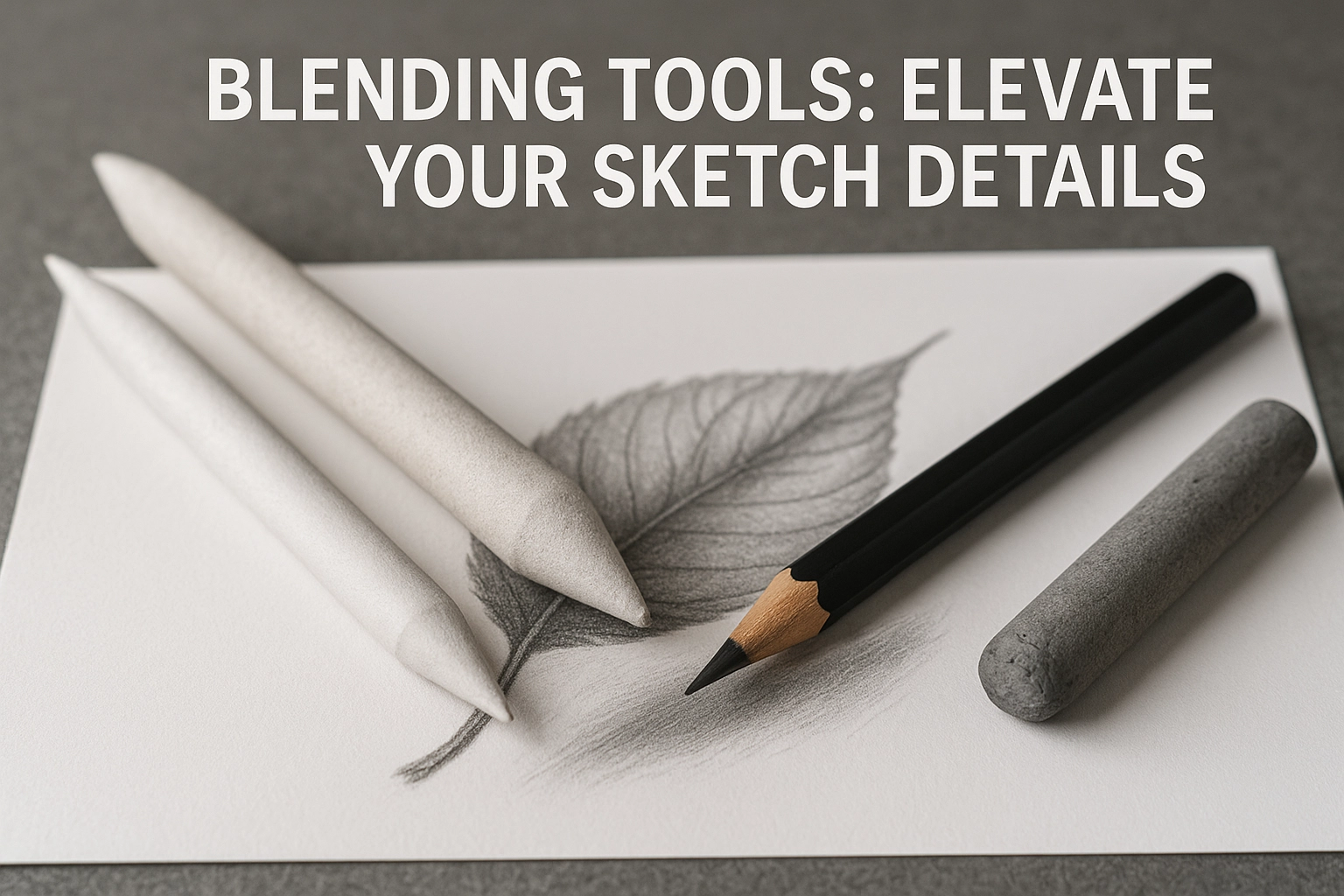
- Blending stumps are double-ended rolls of soft paper that spread graphite, charcoal, and pastel smoothly, great for broad tones and edges. Tortillons are tighter, single-ended and more tapered, perfect for threading between eyelashes, strands, and tiny shadow seams; see how each works in this quick guide Blending stumps and tortillons. Chamois cloth, soft paper towels, and soft blending brushes expand your options for large areas and whisper-soft transitions, each moving material differently across the paper surface; see this overview Beginning Drawing resource. Choose small, medium, and large sizes so you can switch tools as your drawing scales up or zooms in. Keep a kneaded eraser nearby to lift highlights without scuffing the paper.
- Start with a simple sphere study. Block values with an HB or 2B pencil, then use a stump in gentle circular strokes across the midtones, keeping the highlight clean. Tighten edges with a tortillon where form meets cast shadow, and soften reflected light with a brush or chamois to avoid muddying. Clean or sharpen stumps on a sandpaper pad so you do not drag dark residue into light areas, a small step that dramatically improves crispness. Time yourself for two 10 minute passes, one for rough blend, one for edge control, to build speed and consistency.
- For graphite sketches, start with 3 stumps and 3 tortillons across sizes 1 to 4, a kneaded eraser, a sandpaper block, and a soft brush. Pair them with smooth sketch paper around 120 to 160 gsm for seamless gradients; for textured studies, 110 gsm cartridge sheets give a brighter, toothier grab that shows lively strokes. Do a weekly drill, gradate a 5 cm bar from 9 steps of light to dark, then refine only with blending tools, not the pencil tip, to train pressure control. With sketch art supplies curated for learners, you avoid guesswork and waste. Find all-inclusive tools at drawing-pencils.com to master blending, with guidance and delivery across India that supports every stage of your creative journey.
Erasers: Perfecting Your Art with Precision
1) Know your eraser types and what they do
For clean corrections and creative effects, match the eraser to the job. Pliable kneaded erasers lift graphite and charcoal without scuffing the paper, perfect for pulling out soft highlights on hair or eyes. Vinyl or plastic erasers, covered in this buying guide to erasers, are gentle yet thorough, great for crisp edges around architectural lines and lettering. Gum erasers, which crumble as they work, reduce abrasion on your page, making them helpful for clearing large, lightly shaded areas, as noted on the general eraser overview. Precision tools such as eraser pens and eraser pencils target tiny spots, like catchlights or stray hatch marks between eyelashes. Action steps: keep one kneaded eraser for lifting, one vinyl block for clean removal, and a precision eraser for details; dab or roll the kneaded eraser rather than rubbing, and slice a vinyl eraser’s edge with a craft knife to refresh a sharp corner.
2) Use erasing to elevate your sketches
Think of erasing as drawing with light. After a light graphite block-in, lift the brightest areas to establish a clear light source, for example, the ridge of the nose or the reflective edge of a metal mug. Use a precision eraser to refine outlines, then soften the far edge with a stump so contours look natural rather than cut out. For texture, tap with a kneaded eraser to suggest pores, fabric weave, or tree bark, and drag lightly to imply hair strands. Protect finished lines with an eraser shield when cleaning backgrounds so you do not flatten your values. Always test pressure on the sketchbook margin and clean the eraser surface frequently to avoid smudging.
3) Reliable, precision picks at drawing-pencils.com
If you are building a starter kit, drawing-pencils.com curates erasers that balance control and paper safety for beginners. Look for kneaded erasers that lift without residue, vinyl block erasers for crisp corrections, and slim precision eraser pens for tight spaces. Add an eraser pencil for sharpenable accuracy and an eraser shield for safeguarding fine linework. Start simple with a three-piece bundle, kneaded, vinyl, precision, then expand as your style grows. With guidance, student-friendly pricing, and delivery across India, you can count on dependable erasers that help every mark, and every correction, serve your final vision.
Beyond Traditional Tools: Embracing the Digital Trend
1) Meet today’s digital tools and what they do
Digital sketching tools expand what your sketch art supplies can do, from clean line work to painterly textures. Illustration and painting apps give you layers, undo, and pressure‑sensitive brushes, which makes experimenting low risk and fun. To explore options side by side, browse the best digital art and drawing software of 2025. Many beginners like apps that simulate real media, such as Rebelle natural media simulation for watercolor flow or oil blending. Comic and animation artists often pick tools with panel, perspective, and frame controls. Pair your software with a tablet and stylus, most offer 4,096 to 8,192 pressure levels and tilt, so line weight and shading feel familiar if you already sketch with graphite.
2) Blend pencil‑and‑paper with digital polish
You do not have to choose sides. Keep loving your favorite sketchbook, then enhance the drawing digitally. Photograph or scan your sketch at 300 PPI, import it as the bottom layer, and set the layer above to Multiply for clean inking or coloring. Add soft digital shading where charcoal might smudge, or try a color test on a duplicate layer before committing. To keep the tactile charm, place a photo of your own paper texture on top, reduce opacity to 10 to 20 percent, and the final still reads as handmade. This hybrid approach suits India’s growing community of learners, where demand for sketch papers and sketchbooks is rising, while digital tools are gaining traction in 2025.
3) A simple path to integrate digital into your workflow
Start with goals, illustration, concept art, notes, or color studies. Choose one beginner‑friendly app from this list of must‑have software for digital artists, then learn three essentials, brushes, layers, and selections. Set a canvas preset, 2000 to 3000 px for web, 300 PPI at print size for portfolios. Calibrate your pen pressure curve so light strokes stay light. Create a routine, 20 minutes of warm‑ups, then one focused study, and save versions often. Over time, your physical and digital kits will support each stage of your creative journey.
Conclusion: Start Your Sketching Journey Today
- Invest in quality tools to grow faster Quality sketch art supplies reduce friction and improve control. A simple starter set of 4H, 2H, HB, 2B, and 4B gives range for line and tone. Practice on 110 gsm cartridge sheets for bright, slightly toothy studies that erase cleanly. In India, beginner pencil and paper kits often land near ₹1,239, so you can start without overspending.
- Explore consistently and practice with purpose Set a 20 minute daily sketch, switching grades each day to feel the difference. Alternate smooth sketch pads and textured papers to learn edge control and shading. Try a weekly theme, such as portraits in graphite, then a charcoal shadows study. As interest in sketchbooks rises nationwide, you will find more sizes and surfaces to test.
- Partner with drawing-pencils.com for guidance and momentum Let drawing-pencils.com be your partner as you begin. You get stage based guidance, practical tips, and delivery that keeps practice consistent. We also spotlight emerging choices, such as premium handmade sketchbooks that many artists love. Start with a small kit, track what you use most, then upgrade strategically with our help.
